 Willow Aliento
From panel van to boardroom – Noel Courtney’s awesome Airmaster adventure
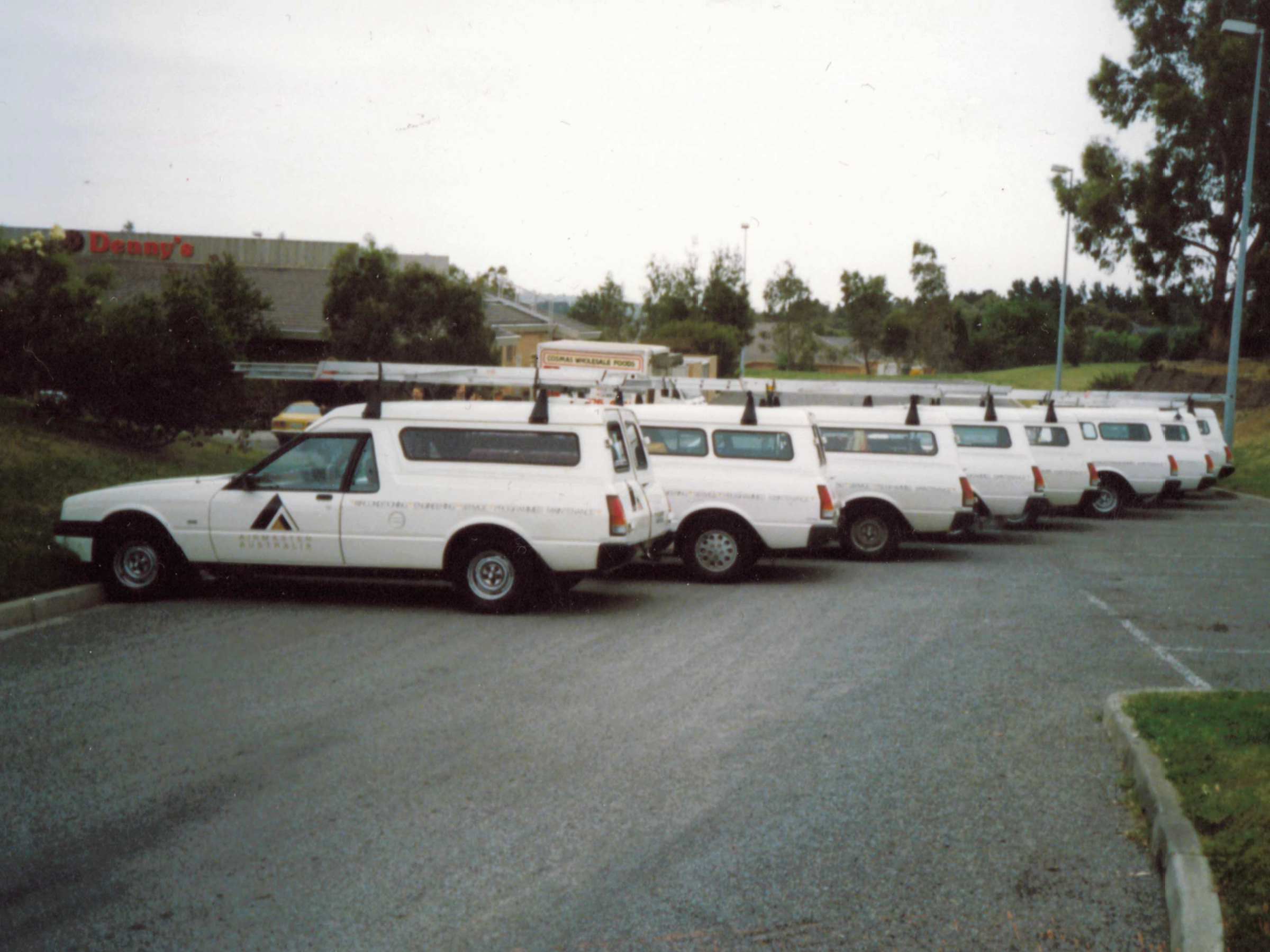
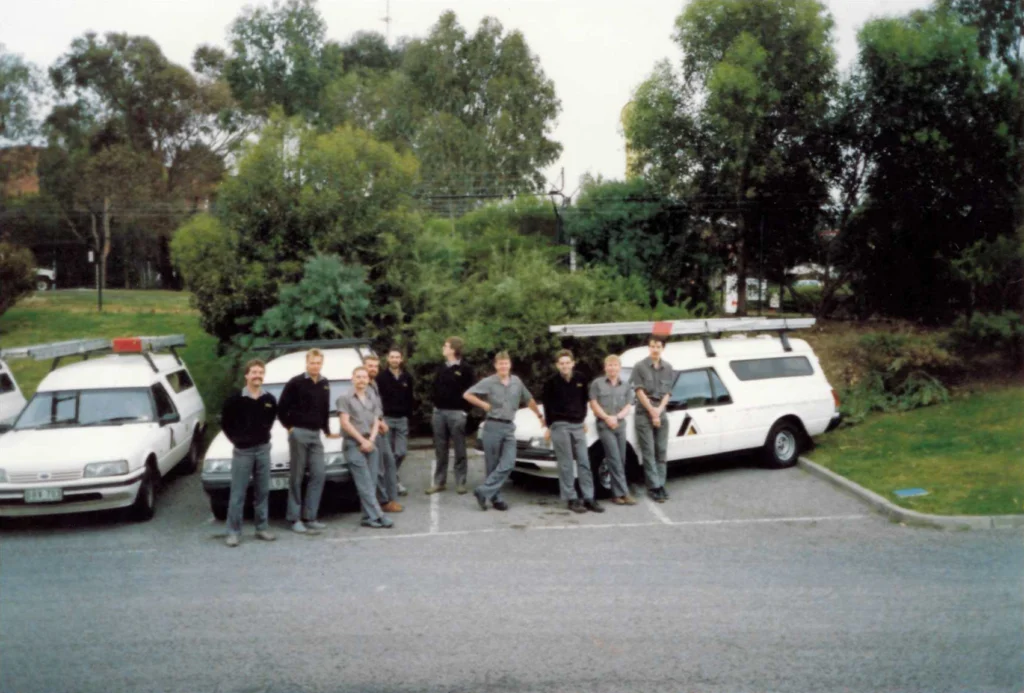
It’s always a seismic shift when the founder of a business steps down from day-to-day operations. For Airmaster, the retirement of Noel Courtney, M.AIRAH, as CEO is part of yet another evolution of the company and its structure. It’s been quite a trajectory – a story of how three guys with panel vans went on to become one of Australia’s most innovative, award-winning HVAC&R service providers.
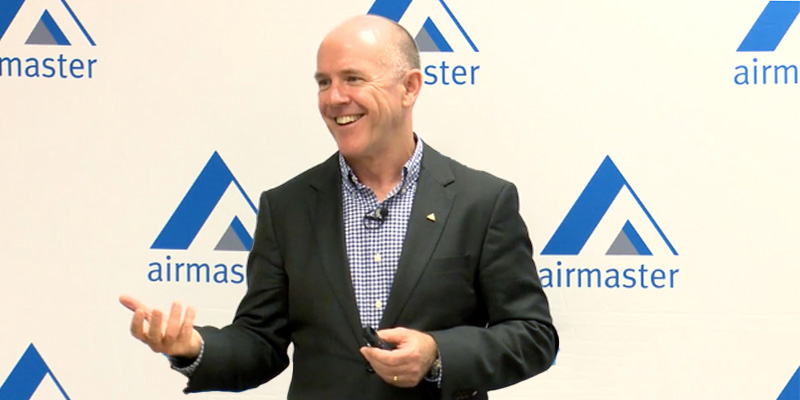
When Airmaster turned 30, the late Sean McGowan captured some of the thoughts of long-standing clients on video. One of them describes Courtney as “the Warwick Capper of air conditioning”; a technical expert with “no concept of the words ‘I can’t’.”
Other clients remark on his customer‑focused attitude, loyalty to colleagues and clients, his positive energy and his “epic” Instagram account.
They speak of his ability to negotiate service contracts that focused on quality and consistency. From the outset the three founders, Courtney, Russell Seebach and Barry Page, decided to focus on providing services to existing buildings, rather than new builds. This has proven to be a recipe for success, with the company growing across both geography and verticals – including becoming an early leader in performance analytics, electrification retrofits and predictive maintenance.
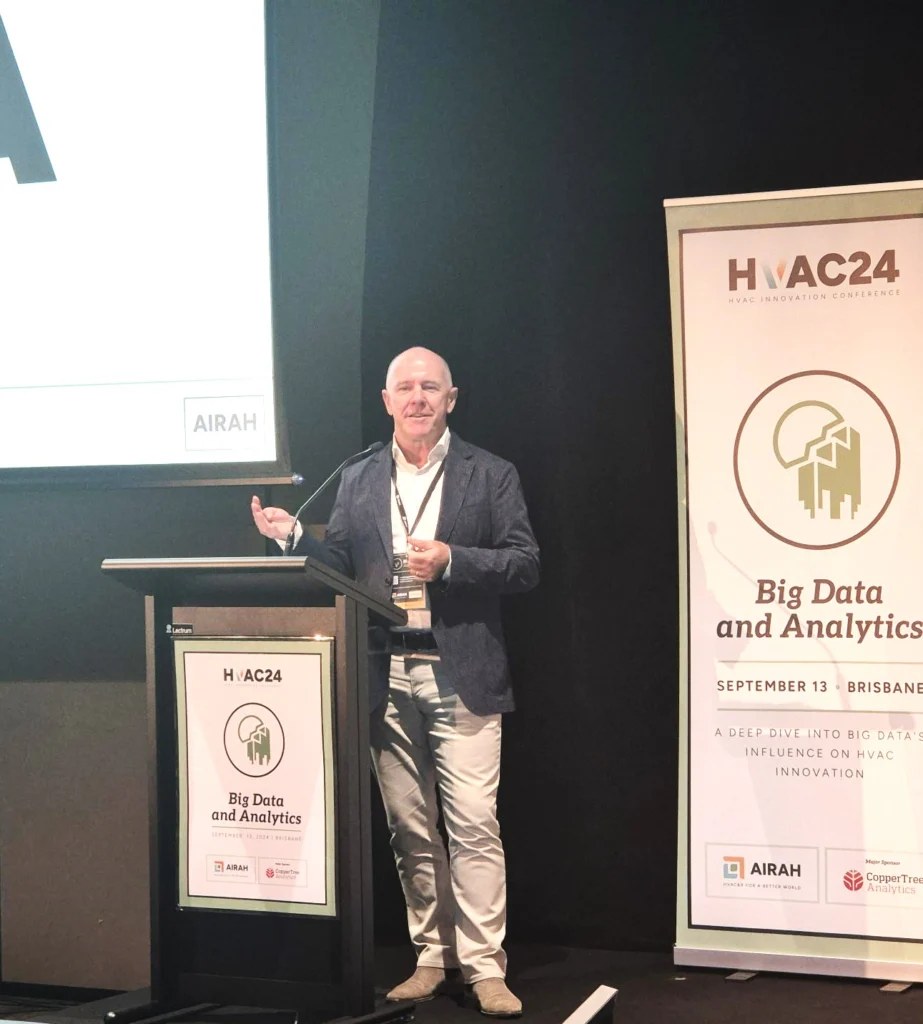
Courtney remains connected to Airmaster as Executive Chairman of the Board; however, he’s downed tools to take a well‑earned break for a few months in the South of France. While enjoying the R&R, he took the time to answer some questions for HVAC&R News.
Q: What are the moments in your Airmaster journey that represented a personal best or milestone?
NC: 1999/2000 was a breakout year for Airmaster when we started our interstate expansion. Our great customer, The Gandel Group (now Vicinity) bought the Myer Centre Brisbane and asked us to look after the site’s HVAC and Building Management System (BMS). We built the Brisbane office from zero to 12 employees in the first 12 months on the back of this great partnership. Sydney then followed in 2003, and Adelaide in 2004.
Q: What are some of the most important things you learned about navigating economic challenges?
NC: In 1991/92 we had Paul Keating’s “recession we had to have”, and that created the toughest financial markets anyone will ever experience. Interest rates were 17.5% and credit was tight. We learnt lessons about survival that set us up forever, we realised that cashflow was king, profit was second. We learnt who believed in us – customers, suppliers and employees – and we learnt that loyalty is a very important trait, one that we value as highly today.
Q: There have been enormous regulatory changes over the past few decades – is this kind of change coming from external shifts a positive, or a negative?
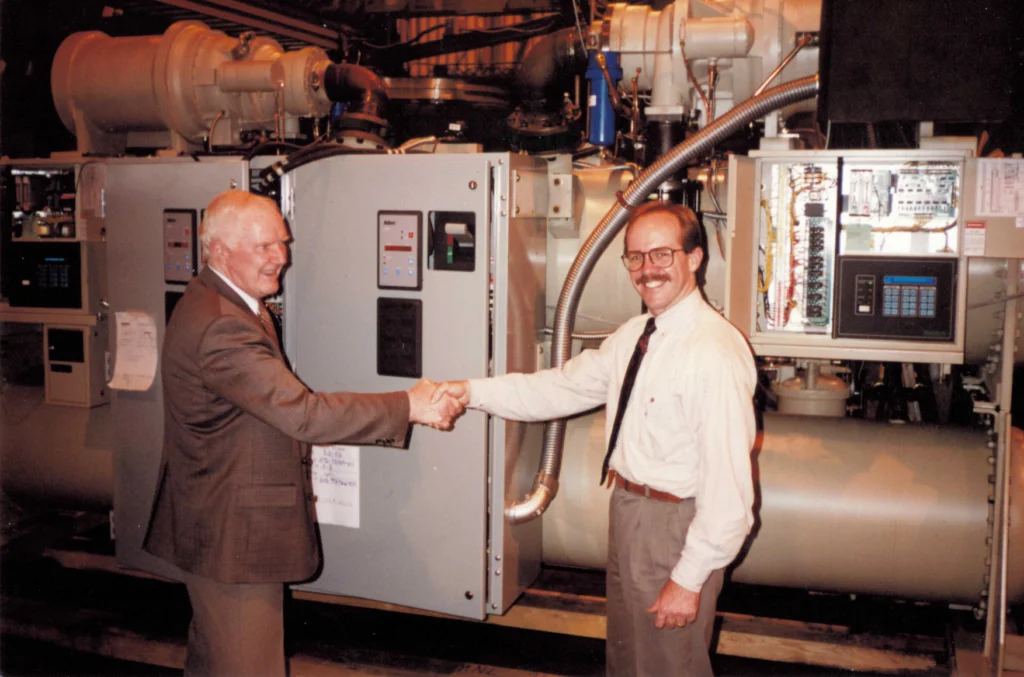
NC: The regulatory changes are by and large a positive; good companies were already following systems and processes that aligned with new regulations. We decided very early on to have a licensed Quality Assurance system, starting with ISO 9001 and then soon after ISO 14001. The administrative burden was and still is excessive and a drag on productivity and growth, but overall, we support most of the regulations that have evolved during our almost 40 years in business.
Q: Airmaster decided from the start to focus on existing buildings – what were some of the benefits and challenges of this? On a technical level, are existing buildings more challenging than new builds?
NC: Airmaster is a relationship-based business, we deal with end‑user customers or their appointed managers in the main; our model does not deal with the rigours of new build contracting, we are far more long-term focused. Operating in the built environment, particularly around compliance, major upgrades (think replacement chillers or BMS upgrades) without affecting the “business as usual” operation is a specialised skill set that we mastered through years of understanding how buildings work practically, as well as client and tenant expectations. So, both new builds and existing buildings are equally as complex, but the built environment is more suited to our skill set.
Q: What were your favourite projects?
NC: Oh, there are so many! Our early major upgrades for Hoyts Cinemas were a lot of fun, with our projects team from Victoria travelling around the country on a chiller upgrade tour spanning multiple sites and states. The year 2000 millennium bug also created a huge project for Kmart, Coles and Target where we travelled to every store upgrading Barber Colman control systems; that took us to lots of weird and wonderful places. We sent a team to Miyazaki Japan to do an energy upgrade for Sheraton Hotels who was a great customer in Australia, they trusted us and sent us to do this unbelievable project with many challenges but a fantastic outcome, not to mention experiences that will never be forgotten. We also did a major chiller optimisation project in Macau for MGM resorts, which ended up devouring more than a dozen technicians for over 12 months as we uncovered many issues along the way.
Q: How have clients changed in terms of what they want and expect?
NC: The changes and expectations occurred early. We could see our customers centralising decisions and reducing the number of suppliers to create efficiencies in their own administration and processes. We knew we would be more valuable if we could service national portfolios with our own technicians, and this made it clear to us that we had to become a truly national business. These days the expectation remains largely the same: efficient, value for money services, compliance and fast response when things go wrong; also, a single point of contact and continuous improvement advice from trusted suppliers.
Q: Where to now for Airmaster?
NC: Airmaster has just opened a new branch in Wellington NZ, Townsville and has announced an acquisition in Darwin, so our coverage of Australia and New Zealand continues to expand. We expect to exceed $1B in revenue as part of our five-year plan. There are a few additional acquisitions as part of the sales expansion, as well as new verticals such as electrical, data centre cooling and energy services.
Q: If you had to give a young person considering a trade career one piece of advice, what would it be?
NC: Grab the opportunity; learn, learn some more; do a dual trade; get BMS experience, even better get trained as a BMS tech – you will never look back. You certainly won’t be replaced by AI, and you will have pathways you never even thought of.
All images courtesy of Airmaster.
PREV
NEXT
Comments
Advertisements
Recent news
- Beijer Ref appoints new CEO
- Building ministers pledge NCC modernisation
- Recognising and celebrating progress and change
Latest events
- Recognising and celebrating progress and change
- Adam Morgan shines in Shanghai
- IOR opens nominations for J&E Hall Gold Medal
Leave a Reply