 Mark Vender
Clarification on air discharge requirements in AS 1668.2:2024
In response to queries about air discharge requirements in AS 1668.2: 2024, Standards Australia and the Technical Committee ME-062 Ventilation and Airconditioning have provided a clarification statement.
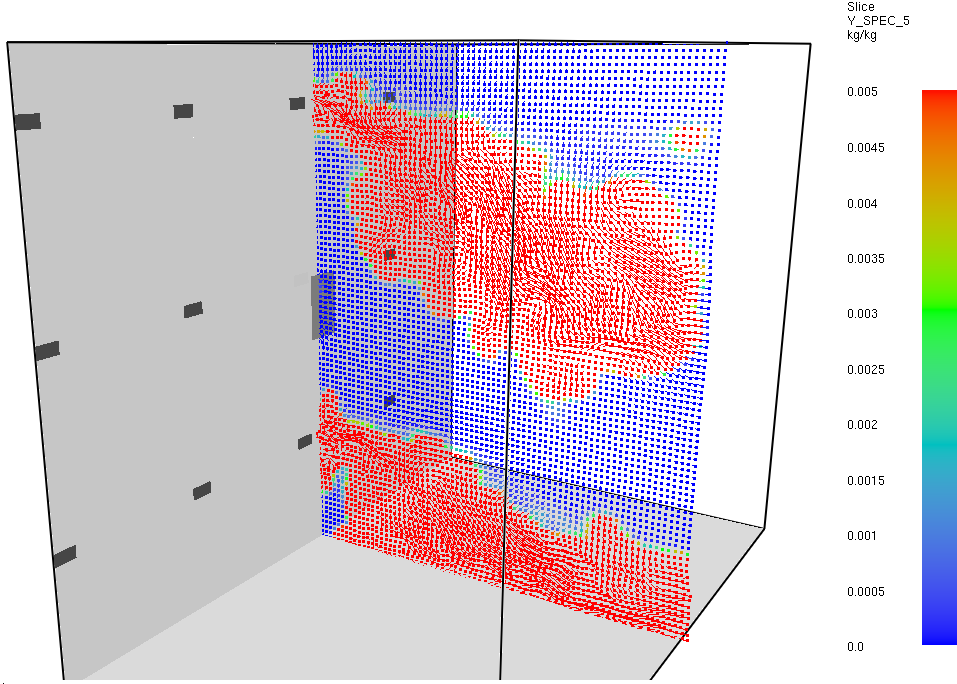
Questions have been raised about whether the 6m aggregation noted in the standard is intended to apply only to determining whether a discharge is objectionable under Clause 3.10.1 (against the Type A/Type B thresholds and as written in the 2012 edition), or whether it also governs the minimum separation distances to intakes, openings and boundaries under Clause 3.10.2, as written in the 2024 edition.
Standards Australia Technical Committee ME-062 Ventilation and Airconditioning has provided the following clarification statement:
AS 1668.2:2012 included a number of subjective performance requirements, including Clause 3.10.1, which required exhaust air to be discharged so as not to cause danger or nuisance to building occupants, occupants of neighbouring buildings, or members of the public.
The National Construction Code requires referenced Deemed-to-Satisfy Standards – DTS (See more about DTS and Performance Solutions here – What you need to know | NCC) to contain prescriptive requirements.
Standards containing subjective performance requirements are therefore unsuitable for this purpose.
For example, compliance with the prescriptive discharge requirements in Tables 3.3 and 3.4 of AS 1668.2:2012 did not, on its own, demonstrate compliance, as Clause 3.10.1 also had to be satisfied.
Accordingly, the discharge provisions in AS 1668.2:2024 have been revised to be fully prescriptive and no longer include subjective performance requirements.
These changes from the 2012 edition were deliberate and carefully considered.
AS 1668.2:2024 underwent the full Standards Australia standards development process, including the additional requirements applicable to primary NCC-referenced Standards.
This process included impact assessment, stakeholder consultation, and public comment.
No adverse comments on Clause 3.10 were received during these consultation stages. Following completion of this rigorous process, AS 1668.2:2024 was referenced in NCC 2025.
The committee responsible for the development and maintenance of the AS 1668 series will consider the inclusion of explanatory diagrams, where appropriate, in a future amendment to the Standard.
Since the publication of NCC 2025, which calls up the new version of AS 1668.2, Standards Australia and industry bodies such as AIRAH have been fielding questions in relation to Clause 3.10.1.
Many questions have centred on the interaction between Clause 3.10.1 and the minimum separation distance provisions that follow in Clause 3.10.2 (particularly relating to commonplace horizontal apartment exhaust configurations with separations less than 6m, that were no longer prohibited when the BCA referenced AS 1668.2:2012 in 2013).
Clause 3.10.1 in the 2012 edition required discharges to be designed “in such a manner as not to cause danger or nuisance” (which aligned with and accommodated BCA Volume 1’s contemporary performance requirement FP4.5, and then the current F6P5) with minimum separation distances set out in Table 3.4 (noting that these minimum separation distances were not deemed to deal with the requirement for not causing a nuisance). This reference to an unquantified outcome (such as nuisance) was considered to be unacceptable for a modern NCC referenced prescriptive standard for Deemed-to-Satisfy provisions.
In order to prevent designers from clustering multiple discharges close together in an arrangement where they effectively operate as one larger discharge, inadvertently applying separation distances in isolation (and without considering the possibility of causing a nuisance), previous requirements involving both separation distances and consideration of nuisance have been resolved into a single, measurable requirement, adopting a familiar separation strategy.
In the 2024 edition, Clause 3.10.1 states: “For the purposes of determination of flow rate, multiple discharges located within a single 6m radius shall be treated as a single discharge.” Table 3.5 (formerly Table 3.4) was also amended, with additional criteria to accommodate the quantified approach.
The specified 6m radius requires consideration of clustering within a simply measured straight line (as could be visualised within a notional sphere, centred at the discharge location), while the separation distances involve the shortest distance between discharges and openings (as could be measured with a piece of string).
Please note that Standards Australia is not a government agency, or a regulator, and is not involved in any regulatory oversight, certification, technical advice, or compliance. It cannot assist with applying a specific standard in an application or provide direction.
PREV
NEXT
Comments
-
Was the change to Clause 3.10.1 included in the public comment draft? The public comment draft I reviewed does not include this change.
If not, “no adverse comments received” needs qualifying, as there was no public opportunity to comment on it either way.
SA’s response refers to “stakeholder consultation” separately from public comment. Worth clarifying whether that’s where this change was reviewed, since that’s a considerably narrower process than public comment implies.
This matters beyond process. The change affects designs already in progress or completed under the prior clause, and practitioners had no public visibility of it before it took effect.
-
Correct Darren, the public draft I reviewed as well did not have that change.
This change was a surprise to myself and a large number of fellow colleagues within the industry.
-
-
Thanks Darren in highlighting that this change was not in the public comment draft.
It also seems to be absent from every piece of industry briefing material I’ve seen regarding AS1668.2:2024’s release. Standards Australia’s own ‘Spotlight on AS 1668.2:2024’ post, AIRAH’s ‘Need to know: key updates to AS 1668’, together with various strata compliance marketing blogs do not mention this change.
The general reasoning does makes sense to me. The 2012 version has the sentence in question as a ‘Note’ in Table 3.3 ‘Objectionable Effluent Discharges’. However ‘Notes’ in Australian Standards aren’t an enforceable requirement even if they say ‘shall’. Moving the ‘Note’ into the general text of the 2024 version makes it a binding rule, consistent with the standard becoming fully prescriptive.
However, the suggestion that this ‘Note’ moved to the general text now also governs ‘Table 3.5 Minimum Separation Distance’ to ‘Discharges not Deemed Objectionable’ isn’t in Standards Australia’s own quoted statement. That reads as this article’s own interpretation, not a Committee confirmation.
On this point, whether Clause 3.10.1 actually governs Table 3.5, Standards Australia remains silent.
This really does matter. Table 3.5’s sliding scale exists precisely because small, non-objectionable discharges are lower risk. Treating them as an objectionable cluster to then determine as one large discharge before that scale even applies defeats its purpose.
If that reading is correct, every Class 2 apartment building would require all ‘Discharges not Deemed Objectionable’ i.e. bathroom, laundry and domestic kitchen exhaust to be consolidated into a shared services riser with a common roof-level exhaust system (i.e. a Class 3 Hotel).
This would have immense real world cost consequences with regard to floor spatial, additional corridor ductwork runs, and not to mention sub-metering cost and complexity to the body corporate in perpetuity.
In an ever growing cost crisis across all industries, direct Committee confirmation on this very specific point would be very welcome.
-
Clause 3.10.1 calls up “for the purposes of determining flow rate, multiple discharges located within a single 6 m radius shall be treated as a single discharge. Table 3.4 – Objectional Effluent Discharges, refers to “flow rate” in determining if a discharge is objectionable. Whereas Table 3.5 refers to “airflow rate” in determining minimum separation distances.
One could interpret Clause 3.10.1 as applying to Table 3.4 (flow rate), not Table 3.5 (airflow rate).
What a mess, and the clarification published by Standards Australia Technical Committee ME-062 is of no help to practitioners. Ultimately, does the most stringent interpretation of this change improve indoor air quality ? The committee needs to produce quantifiable data & cost benefit analysis to justify imposing cost increases on the industry, as it remains unclear how the industry will address the 2024 revision.
Advertisements
Recent news
- Seeing all-electric stars in the NABERS Annual Report
- City Facilities Management secures decade-long Coles deal
- Delivering energy wins through cooling innovation
Latest events
- Adam Morgan shines in Shanghai
- IOR opens nominations for J&E Hall Gold Medal
- Nominations open for IIR scientific prizes
Leave a Reply