 Willow Aliento
Rebate programs – too complicated or just what the customer ordered?
Government schemes that offer rebates for the purchase of energy efficient residential cooling and heating equipment might at first glance seem like a free kick for HVAC suppliers and installers. However, for some, concerns around potential paperwork and admin have been taking the sweetness out of the deal.
In New South Wales and Victoria, energy savings schemes targeting consumers have identified reverse cycle air conditioning as a winner for both the environment and household budgets. Under the NSW Energy Savings Scheme (ESS) and the Victorian Energy Upgrades (VEU) program, incentives and rebates help reduce the upfront cost of systems and enable households to contribute to both emissions reduction and energy demand management.
Scott McKenry, Executive Director of the Energy Savings Industry Association (ESIA), explains that over the past 12 to 18 months, the landscape has shifted in a way that has made HVAC upgrades far more compelling for both households and industry.
“Rising energy prices have put real pressure on budgets, and at the same time there has been a growing narrative around the gradual move away from gas,” he says.
“Together, those forces have changed how people think about their heating and cooling, turning what might once have been a discretionary upgrade into a practical decision.”
Applying the rebates upfront has also helped, as people can see an immediate cost saving.
“In many cases, that means hundreds or even thousands of dollars off the initial cost, along with lower energy bills over time,” McKenry says. “At the same time, updates to the schemes have increased the value generated by each installation, so the same job today delivers more benefit than it would have just a few years ago.”
The increasing momentum around electrification is also a factor, he says.
“Programs are increasingly designed to encourage high efficiency electric systems such as heat pumps and reverse cycle air conditioning, while making gas systems less attractive over time.”
“That alignment means HVAC is no longer a niche part of energy policy. It is becoming a central part of how governments are delivering the transition to a lower emissions energy system, while still providing practical, immediate benefits to households.”
Navigating the VEU
The VEU program is well established and is fundamentally a decommissioning activity, he explains.
“The value sits in replacing hard-wired electric or gas ducted heating systems with high-efficiency reverse cycle alternatives. For both residential and commercial projects, incentives range from $3,000 to $6,000 depending on the product. Buildings need to be at least two years old, and the incoming unit needs to be appropriately sized for the space,” Electric Future National Business Development Manager Angus Taylor tells HVAC&R News.
“There is more compliance involved in VEU than many businesses expect, but we do the heavy lifting on that end, so contractors aren’t navigating that alone.”
Not just residential, opportunity for commercial upgrades
“The opportunity in NSW is significant and still largely untapped,” Taylor says.
“Depending on the product, incentives can sit anywhere between $3,500 and $8,000 per installation. What makes that number striking is the context: only around 6% of NSW AC businesses are currently engaged under the scheme, and most of that activity is in the residential sector.
“For both residential and commercial contractors who understand how to align their projects with eligible models and navigate the process, there is a real competitive edge available right now.”
He says the low uptake can be attributed to two causes.
“Firstly, there’s a lack of general awareness for many aircon businesses that these rebates exist. And many people aren’t aware they apply to commercial installations, not just residential,” he explains. “Businesses that use less than 1MW electricity per year are also eligible – which means your local café, school or office can also tap into the program.”
“Secondly, when the programs were first launched some years ago, many installers were turned off by the amount of admin. To quote what we hear regularly from installers: it was ‘too hard’.”
Admin angst
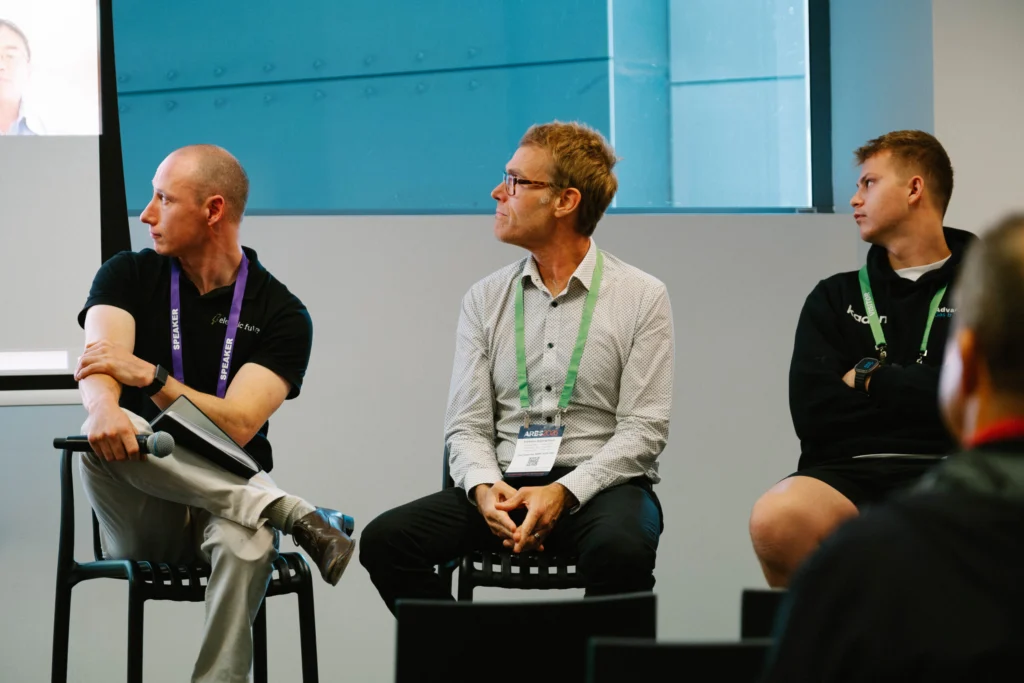
A panel discussion at ARBS 2026 featuring McKenry, Taylor, Jake Deppeler from Advanced Gas, and Electric Future’s Co-founder Caetano Mantovanni, looked at some of the complexities of accessing the schemes and how they can be resolved.
The crux of the challenge is claiming rebates often means needing to complete forms, upload documentation and lodge claims back at the office. However, that’s extra time an installer can’t afford to be onsite.
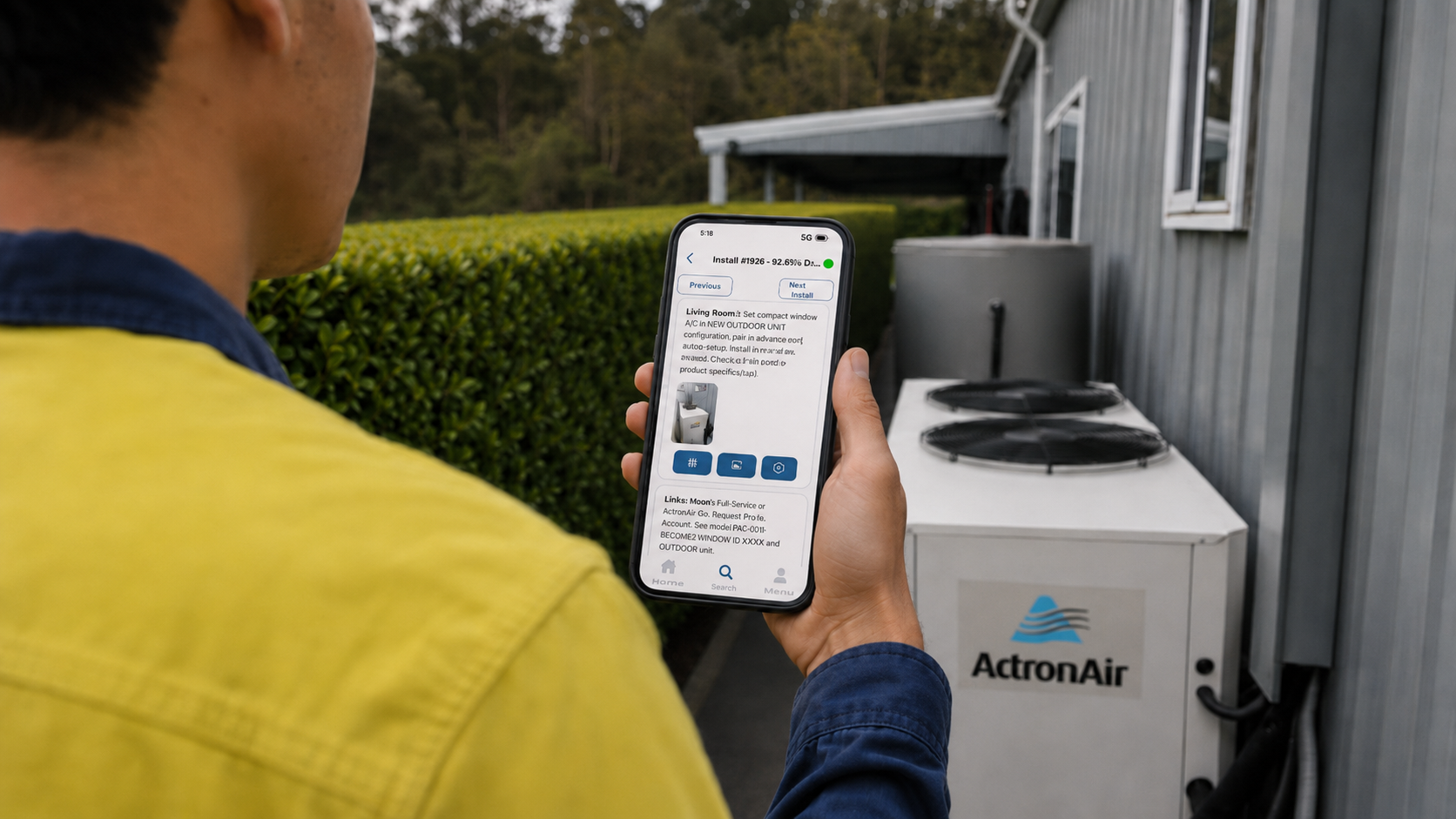
Electric Future has developed an app that aims to help ease the process. It streamlines the process using a mobile-first approach, so installers need to enter some key details in their phone, take a photo of the install, and hit submit.
Tradies who have been using the app report that it has made the process of accessing the rebates faster, and been beneficial for keeping cashflow steady, as approval times for rebates are within one to two weeks.
“What used to take hours now takes minutes. When a contractor can see that clearly, the conversation changes fast,” Taylor says.
The digital tools available include a rebate calculator, which enables AC installers to look up payable values across any model or product in either NSW or Victoria and print out a full database of rebates across every brand and model they work with.
“It’s a practical quoting tool, but it also makes something very clear quickly: the rates available, and how they compare,” Taylor says.
Find rebates in your state or territory
The Federal Department of Climate Change, Energy, the Environment and Water maintains a searchable directory of all rebates and assistance available from federal, state and territory programs.
Search the database here.
Not just a short-term sugar hit
The rebates in NSW and VIC are expected to remain in place well into the 2030s.
“One of the most important changes in recent years is the level of long-term commitment from government. These schemes are no longer being treated as short lived incentives,” McKenry says.
In Victoria, the VEU program has been extended out to 2045, and in New South Wales, targets under the ESS have been locked in and are expected to continue increasing beyond 2050.
“That kind of horizon changes the conversation completely. It gives businesses confidence to invest in capability and growth, and it gives consumers reassurance that support will still be there when they are ready to upgrade.
“Rather than a limited window, rebates are now part of a stable, ongoing framework that the industry can plan around.”
Taylor says the programs are also shaping how the industry evolves.
“Different states are taking slightly different approaches, with New South Wales moving toward more targeted outcomes and Victoria continuing to build a long-term market structure. Beyond those markets, Queensland is considering its options for establishing a scheme and may prove to be a significant opportunity.”
He believes new models may emerge that combine energy efficiency with our metrics such as reducing peak demand or improving thermal comfort, particularly to achieve health outcomes for vulnerable households.
The overall direction is for these programs to become a “core part of the energy system” rather than a supporting initiative.
For HVAC businesses, Taylor believes future success will mean learning to operate within a “more structured and regulated environment”.
“As the schemes mature, factors like eligibility, documentation, and product selection are becoming just as important as the installation itself.”
PREV
NEXT
Comments
Advertisements
Recent news
- Adam Morgan shines in Shanghai
- Next-gen solar
- Shaping the future of Building Energy Performance standards
Latest events
- Adam Morgan shines in Shanghai
- IOR opens nominations for J&E Hall Gold Medal
- Nominations open for IIR scientific prizes
Leave a Reply