 Laura Timberlake
UNEP OzonAction releases briefing notes on life-cycle refrigerant management options
UN Environment Programme (UNEP) OzonAction has released three briefing notes to assist industry with managing refrigerants across their life cycle.
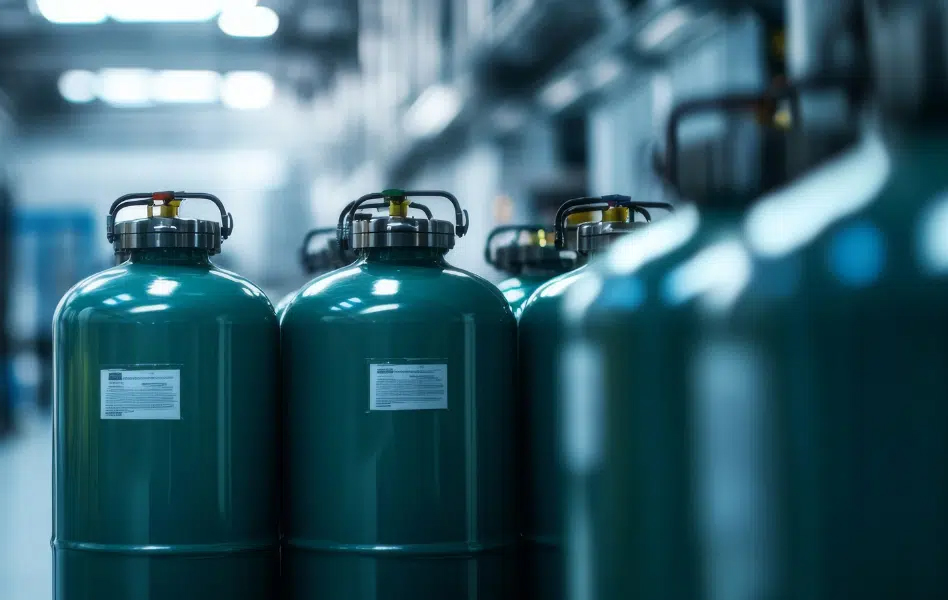
The briefing notes encompass policy, financing and technical guidance for across the refrigerant lifecycle, and comprise Policies for Life-Cycle Refrigerant Management, Financing Life-Cycle Refrigerant Management and Deep Dive into Life-Cycle Refrigerant Management.
Policies for Life-Cycle Refrigerant Management outlines how policies can play a vital role in promoting and sustaining life-cycle refrigerant management (LRM) in the refrigeration, air conditioning and heat pump (RACHP) sector.
UNEP OzonAction is a part of the UN Environment Programme’s Law Division, and works to the strengthen the capacity of governments and industry to inform on and enforce the policies required to implement the Montreal Protocol.
UNEP OzonAction describes LRM as “a framework for managing refrigerants in an integrated and coordinated way throughout their life cycle to limit their use and emissions.”
Some of the barriers that are delaying efforts in the space are identified as limited awareness and competence, policy and administrative challenges, lack of guidance or financial resources, and the various complexities in the industry.
The note recommends a comprehensive and cohesive national policy approach: aligned to legal frameworks and supported by enforceable regulations and economic incentives. It also suggests all frameworks need to align with any international agreements, such as the Montreal Protocol and the Paris Agreement.
Financing Life-Cycle Refrigerant Management delves into the potential finance options available to implement LRM.
According to the document, the limited awareness of LRM creates economic barriers in securing finance. The lessons learned from companies who have implemented LRM strategies need to be studied, to draw conclusions on what approaches are successful.
The document also breaks down the capital and operating costs in LRM activities; including leak detection, refrigerant recovery, reclamation and destruction.
The Deep Dive into Life-Cycle Refrigerant Management briefing note presents an overview of the technical and technology-specific aspects of LRM, acting as a summary of the Technology and Economic Assessment Panel (TEAP) Decision XXXV/11 Task Force Report on LRM.
It offers guidance from the design of equipment through to the reuse or destruction of the refrigerant.
The full list of resources by UNEP OzonAction can be accessed here.
PREV
NEXT
Comments
Advertisements
Recent news
- Adam Morgan shines in Shanghai
- Next-gen solar
- Shaping the future of Building Energy Performance standards
Latest events
- Adam Morgan shines in Shanghai
- IOR opens nominations for J&E Hall Gold Medal
- Nominations open for IIR scientific prizes
Leave a Reply