 Laura Timberlake
International recognition for climate-resilient buildings
Buildings are a key part of the climate change mitigation and adaptation imperative. That’s why at COP31, nine exemplar buildings across Asia, Europe and the Middle East have been recognised for outstanding sustainable design, construction, and energy performance.
The COP31 International Sustainable Buildings Competition, led by the UNEP-hosted Global Alliance for Buildings and Construction (GlobalABC) in partnership with the COP31 Presidency of Türkiye, incorporates two complementary initiatives.
The first is Türkiye’s inaugural YeS Honor Awards, which celebrates excellence in sustainable building design, construction, and management. The other is the World Championship for Energy Savings (WCES), an annual competition launched at COP30 by the GlobalABC and led by building performance specialist Action for Market Transformation (A4MT). This competition recognises verified energy performance in existing, renovated, and new buildings, using measured consumption data.
Director of UNEP’s Climate Change Division, Martin Krause, says buildings account for over a third of global energy demand and greenhouse gas emissions, yet too many are still being built and operated in ways that waste energy and lock in emissions.
“The solutions to change this already exist,” he says.
“These winning projects show what is possible when we put them into practice, and why we need to scale them much faster.”
The six winners of the YeS Honor Awards include:
- Passivistas: The Tavros Project, Greece – An existing residential building transformation that incorporated insulation, airtightness, heat-recovery ventilation, and solar energy to reach the EnerPHit Plus standard.
- Okayama City Hall, Japan – The design features shading, natural ventilation and efficient systems and has been assessed as achieving 53% less energy consumption than Japan’s national reference primary energy consumption, including solar generation.
- Villa Carmelha, Monaco – A predominantly timber structured building that features seawater-based heating and cooling, passive cooling and solar energy.
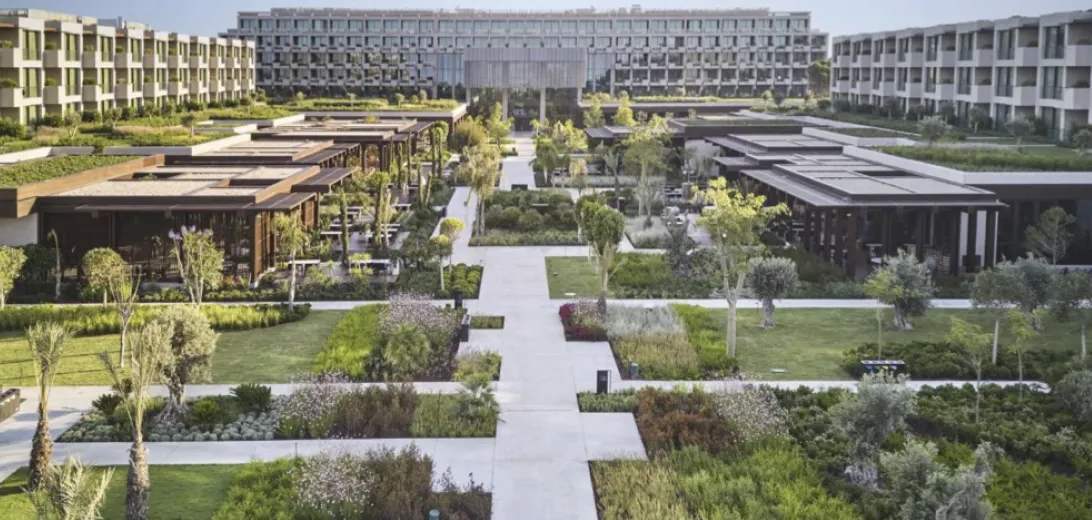
- Voyage Kundu Hotel, Türkiye – The hotel delivers modelled energy savings of around 30% across its building blocks.
- Al Shera’a – DEWA Headquarters, United Arab Emirates – The building is a LEED Platinum office, designed to generate more energy on site than it consumes annually.
- The Cambridge Central Mosque, United Kingdom – The mosque features sustainably sourced timber, natural ventilation, roof lights, heat pumps and solar panels; which aim to bring environmental design into a community place of worship.
The winning projects in the WCEC awards demonstrate practical solutions that can show policy makers and other stakeholders how to improve building performance. Projects range from renovating occupied homes and improving building operations through to financing upgrades through energy efficiency.
Director General of A4MT Cédric Borel says WCES shows that substantial savings are achievable today, and can be measured, compared, and verified.
“That is the evidence governments need to build stronger regulation, grounded in the most effective sufficiency and efficiency practices in the market, to deliver the necessary decarbonisation of the built environment,” he says.
The winners of the WCEC include:
- 26 York Street, Royal College of Surgeons in Ireland, Dublin, Ireland – This building delivered heating, cooling, and control improvements with verified energy savings of 40.5% (or approximately 876 MWh) during 2023, assessed using a 2019 reference period. The energy services provider is paid from the savings achieved, offering a model for financing improvements.
- HAMS Garments Limited, Gazipur, Bangladesh – A garment factory that delivered improvements, operational controls, and solar generation which supported a verified 78% reduction in operational CO₂ emissions and 2,420 MWh in energy savings during August 2024–July 2025.
- CCFED Sci-Tech Innovation Building, Guangzhou, China – The building maintained its energy consumption at 61.5% of its allocated WCES energy budget between April 2025–March 2026 by using efficient systems, solar power, and passive ventilation.
Feature image of Voyage Kundu Hotel, courtesy of UNEP.
PREV
NEXT
Comments
Advertisements

Recent news
- International recognition for climate-resilient buildings
- A solid alternative to vapour compression
- Why Australia needs a National Healthy Air Strategy
Latest events
- International recognition for climate-resilient buildings
- Electrification centre stage at COP31
- An international tribute to the late Pat McInerney
Leave a Reply