 Willow Aliento
Electrification centre stage at COP31
As the United Nations Climate Change Conference, COP31, commences in Antalya, Türkiye, world leaders are putting electrification of buildings and transport at the top of the agenda.
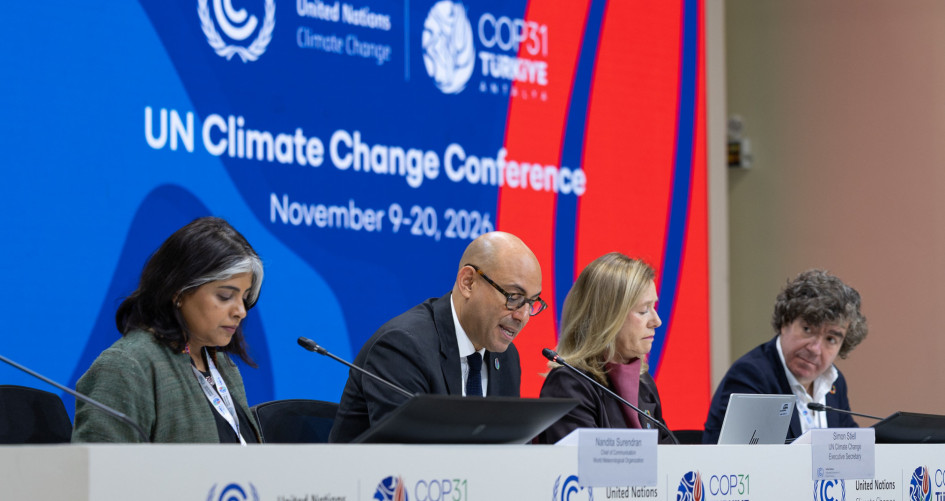
Coordinated by UN Framework Convention on Climate Change, COP31 is the central meeting of the world’s leading scientists, policy-makers, regulators and stakeholders to discuss progress, challenges and opportunities relating to climate change and the decarbonisation of the global economy.
It is being co-hosted by the governments of Australia and Türkiye between November 9-20, with the physical events including high-level meetings being held in Antalya.
Top of mind for speakers is the reality the global greenhouse gas threshold has now reached the point where global heating, weather system changes, and impacts across societies are now becoming apparent.
At a press conference for the World Meteorological Organization, UN Climate Change Executive Secretary Simon Stiell told attendees, “The world is getting dangerously hot.”
“Hundreds of millions of people (are) exposed to extreme heat across southern Asia.
Heatwaves in the northern summer smashed temperature records, and killed an estimated 50,000 people across Europe,” Stiell said.
“For too many people, climate change is deadly. A super El Niño is turbocharging climate impacts, delivering a deadly double-blow.
“The climate crisis is now a global health crisis of pandemic proportions. From toxic pollution to extreme heat, and climate disasters slamming through health systems and infrastructure.”
Steill said the continued burning of fossil fuels and fossil destruction are the root cause of the emerging health disaster, which is already affecting newborns, pregnant persons and maternal health around the world.
“Solutions to this global health crisis are well within our grasp. They sit right across the Action Agenda, on issues such as electrification,” he said.
“At this COP, nations face a choice: electric or shock. Rewire the global economy for the electric age. Or accept ongoing fossil fuel cost pain for families, firms, and governments, and of course that includes health systems.
“Efficient electrotech and clean energy are a vital cure for planet-heating pollution and spiralling household costs, amid the ongoing fossil fuel cost crisis.”
Flicking the switch
Ahead of the event on September 21, 2026, the COP31 35-by-35 Global Electrification Pledge was launched. It aims to raise electricity’s share of global energy use from the current estimate of 23% to 35% by 2035.
The Pledge commits governments, investors, business and other stakeholders to “Accelerate equitable electrification across sectors and economies through nationally determined policies, strategies and actions, reflected in national climate, energy and development planning processes.”
- Read the text of the pledge here.
Commitments to electrify buildings, transport, industry have already attracted support from 180 companies with US$1.69tn (approximately $2.47tn AUD) in revenues backing faster electrification.
Australian Energy Minister, Chris Bowen, who is COP31 President of Negotiations, says that the negotiations will be seeking “broad support for faster electrification, matched by practical delivery pathways”.
“When electrification is backed by clean power, stronger grids and storage, it can improve energy access, strengthen energy security and cut emissions across households, transport and industry.
“The global clean energy transition is well underway and the task at COP31 is to accelerate it. Ambition matters, but it must be backed by investment, infrastructure and implementation.”
This week the COP31 Presidency is co-hosting the first Electrification Forum with the European Union.
This will be an ongoing collaboration, operated by the newly-established Electrification Board which is chaired by the COP31 Presidency with the International Energy Agency (IEA) acting as its secretariat.
Following COP31, there will be regular meetings of governments, institutions, businesses and finance. This will be run by the Electrification Board, which is chaired by the COP31 Presidency with the International Energy Agency (IEA) acting as its secretariat.
The IEA will also be leading the Global Electrification Tracking Mechanism as part of this initiative, to monitor global and regional electrification trends.
“Electric technologies are often cost-competitive and can improve energy security for fuel importers,” said IEA Executive Director, Dr. Fatih Birol.
“COP31 is an important opportunity to strengthen the global focus on electrification, and the IEA is pleased to be supporting the Presidency including through our data-driven analysis that underpins the 35-by-35 Pledge.
“We look forward to maintaining momentum as custodian of the Electrification Forum and of tracking progress in the years to come.”
Many of the COP31 sessions are being web-streamed and are available as view-on-demand. You can catch up and access other statements, reports, documents and data at the UN Framework Convention on Climate Change COP31 website here.
Main Image: photo by Kiara Worth | UN Climate Change
PREV
NEXT
Comments
Advertisements
Recent news
- Electrification centre stage at COP31
- Victoria targets construction fall risks
- Building performance expands beyond operational energy
Latest events
- Electrification centre stage at COP31
- An international tribute to the late Pat McInerney
- Spreading ripples at Women of HVACR Summit
Leave a Reply