 Mark Vender
Dismay at US decision to relax HFC restrictions
HVAC&R industry groups and environmental activists alike have strongly criticised the US government’s decision to roll back restrictions on HFCs.
The decision revises requirements under the American Innovation and Manufacturing (AIM) Act of 2020 to reduce US consumption and production of HFCs (hydrofluorocarbons). Although the announcement does not change America’s overall commitment to an 85% HFC reduction by 2036, in line with the Kigali Amendment, it extends compliance deadlines and adjusts the rules for a range of applications including supermarkets systems, remote condensing units, cold storage warehouses, industrial process refrigeration, residential and light commercial air conditioning and heat pump systems, and some refrigerated transport and laboratory equipment.
The US Environmental Protection Agency (EPA) is also proposing to exempt all road refrigerant transport appliances from HFC leak repair requirements established in the 2024 Emissions Reduction and Reclamation (ER&R) Rule. Under the proposal, all refrigerated containers, regardless of their refrigerant charge size, would be exempt from the leak repair requirements.
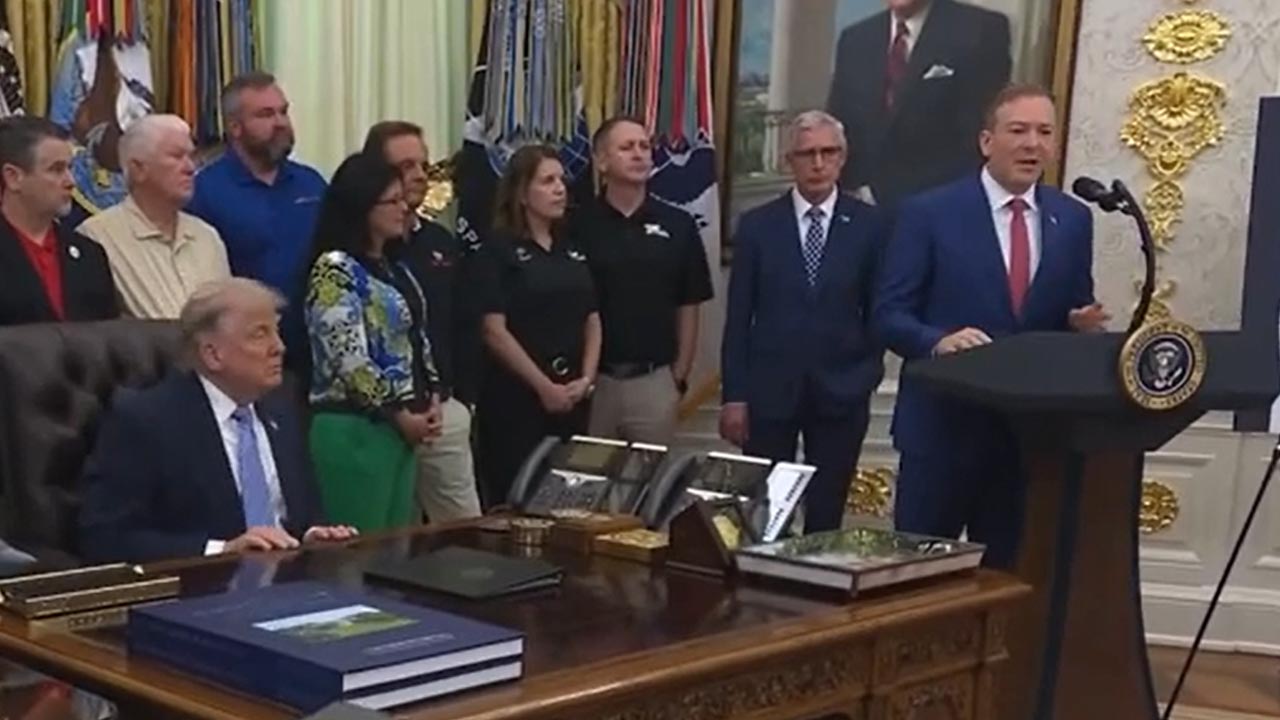
Speaking alongside President Donald Trump in the Oval Office on May 21, US EPA Administrator Lee Zeldin said the changes would provide greater flexibility for businesses, lower food prices and safeguard 350,000 high-skilled jobs. In total, the US government estimates that the rule changes would save more than USD$2.4 billion.
Industry and environmental groups did not share this positive outlook.
The Air-Conditioning, Heating, and Refrigeration Institute (AHRI) and the Alliance for Responsible Atmospheric Policy (the Alliance) say the rule increases the risk of higher prices by increasing the demand for existing refrigerants while reducing their supply, impacting refrigerant costs for supermarkets, commercial buildings, and residential dwellings.
“This rule works against basic supply and demand,” says Stephen Yurek, AHRI President and CEO. “By extending the compliance deadline, the EPA is maintaining and even increasing demand in the market for existing refrigerants while supply continues to fall under the AIM Act. So, instead of falling, refrigerant prices are likely to rise, resulting in higher service costs, and higher costs for consumers.”
The two groups have also noted that the decision will affect businesses that had been preparing for the change.
“American manufacturers did what Congress and the first Trump Administration asked them to do,” says John Hurst, Executive Director of the Alliance. “They invested in new equipment, new refrigerants, new production lines, and American workers. The Administration has now changed course in a way that weakens those investments.”
AHRI and the Alliance have also rejected the government’s claims that the market is not ready, noting that more than 90% of new residential and light commercial equipment already uses next-generation refrigerants that would have met the GWP limits.
The Environmental Investigation Agency has also condemned the move.
Avipsa Mahapatra, Climate Campaign Director at EIA US, has called the decision “a reckless step backward for climate action, public health and economic certainty”.
“The science on HFCs is settled, the alternatives exist and much of industry has spent years preparing for this transition. Rolling back timelines now creates needless uncertainty for businesses that have already invested billions in innovation, manufacturing and workforce training,” says Mahapatra.
“Weakening US leadership on HFCs sends the wrong signal globally and risks ceding economic leadership in next-generation cooling technologies to competitors abroad while locking American consumers into dirtier, more expensive systems for years.”
Commentators have pointed to issues with the EPA’s economic modelling and expressed concern that more leeway is being offered to supermarkets that have already made headlines for poor refrigerant management.
PREV
NEXT
Comments
Advertisements

Recent news
Latest events
- Adam Morgan shines in Shanghai
- IOR opens nominations for J&E Hall Gold Medal
- Nominations open for IIR scientific prizes
Leave a Reply