 Nick Johns-Wickberg
MHIAA launches R32-powered VRF system
Mitsubishi Heavy Industries Air-Conditioners Australia (MHIAA) has announced the launch of the KXZ3 series VRF system.
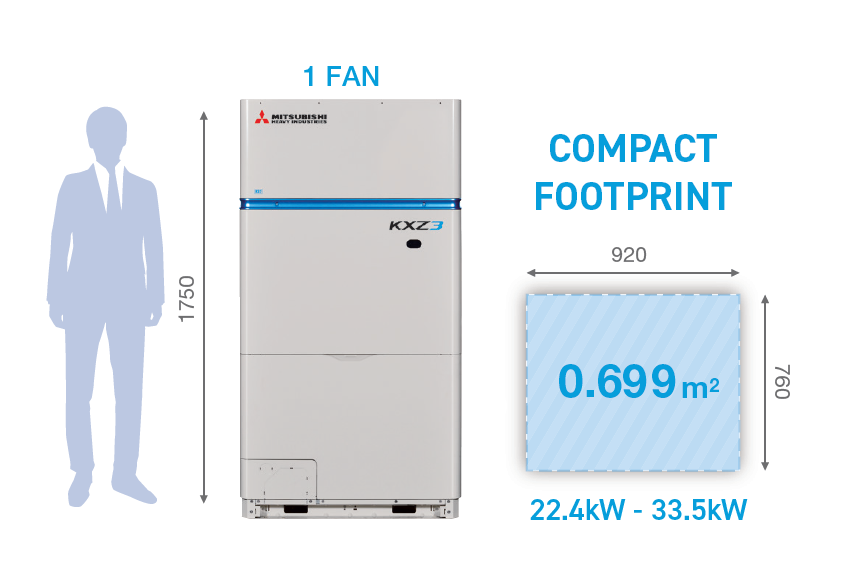
MHIAA says the KXZ3 series is the first large-capacity commercial variable refrigerant flow (VRF) system in Australia to adopt R32 refrigerant.
According to MHIAA, the KXZ3 enables developers and specifiers to achieve maximum NABERS ratings while improving efficiency and sustainability outcomes.
The company says the KXZ3 allows modular combinations of up to three outdoor units for a total capacity of 100.5kW, with extended piping lengths of up to 160m and maximum vertical separation of 30m. The series also supports a range of MHIAA indoor units, including ducted, cassette, wall-mounted, and ceiling-suspended systems.
In light of R32’s classification as mildly flammable (A2L), the KXZ3 comes with optional safety accessories including refrigerant leak detectors, alarms, shut-off valves, and ventilation systems. MHIAA says these components ensure compliance with AS/NZS refrigerant safety standards and provide targeted protection for different building requirements.
According to MHIAA, the KXZ3 also includes R32 scroll compressor, slim heat exchanger with 7.0mm copper piping, optimised airflow design, and VTCC+ control system for greater efficiency in partial load conditions. Energy-saving modes allow the system to meet strict building efficiency targets while maintaining reliable comfort and performance.
“We are extremely proud to deliver the KXZ3 to the Australian market – a system that not only pushes the boundaries of performance and flexibility but also leads the way in environmental responsibility,” says Akihiro Nakajima, Managing Director of MHIAA.
PREV
NEXT
Comments
-
An interesting development in the VRF industry, especially with the adoption of R32 in a large-capacity commercial system. The combination of improved efficiency, extended piping capabilities, modular outdoor unit configurations, and dedicated A2L safety measures makes the KXZ3 series particularly noteworthy. The focus on partial-load efficiency and compliance with Australian refrigerant safety standards also highlights how VRF technology is evolving toward more sustainable and practical commercial applications.
Advertisements
Recent news
Latest events
- South Australia’s HVAC&R Stars
- Making ripples, tending waves
- Recognising and celebrating progress and change
Leave a Reply