 Willow Aliento
The proof is in for biosolar roof innovation
Research has demonstrated that the first substantial installation of a biosolar roof in Australia at Bradfield City in Sydney’s West delivers improved energy generation while supporting biodiversity.
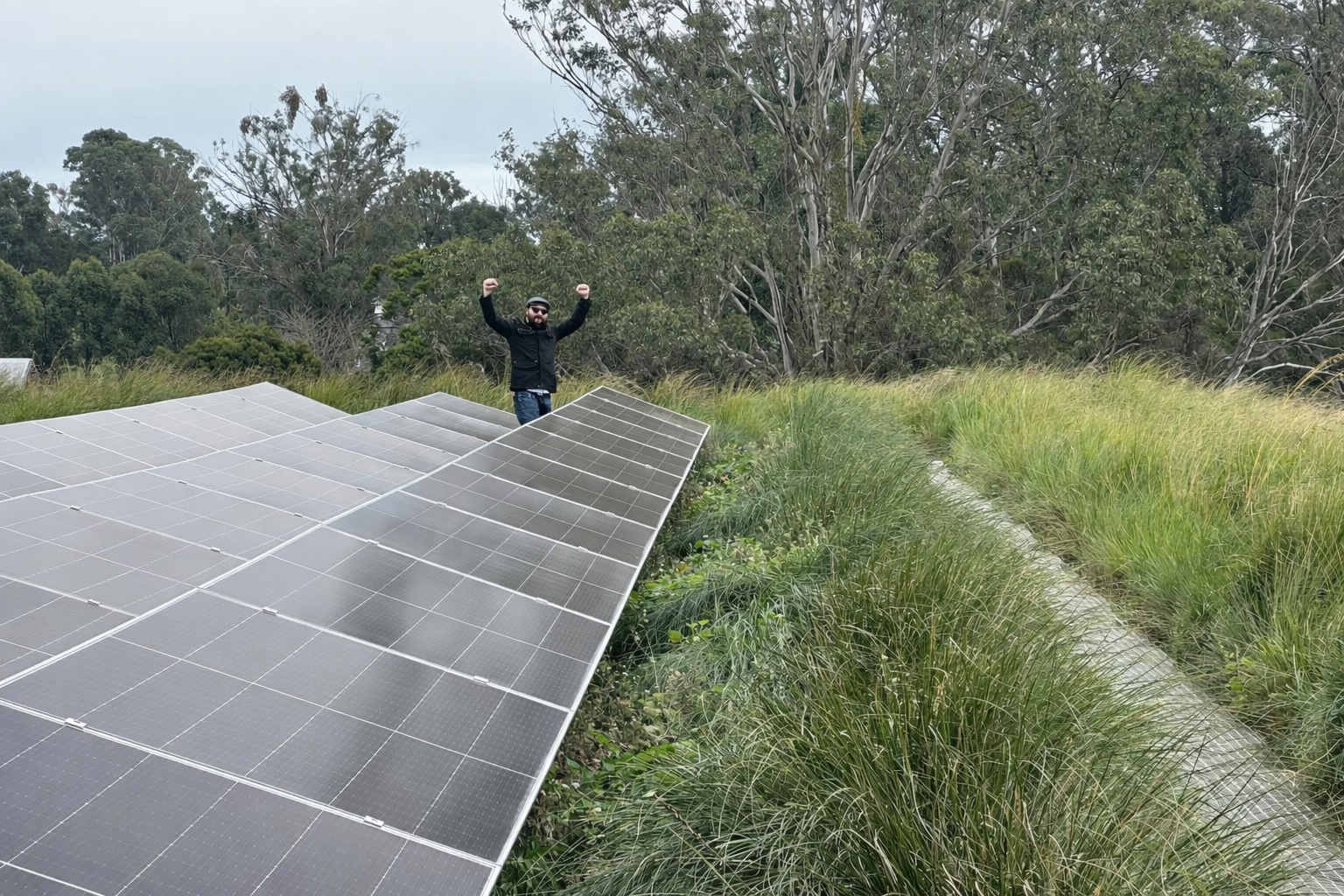
The research team from University of Technology Sydney (UTS), led by UTS Associate Professor Dr Peter Irga, partnered with the Bradfield Development Authority to install a 1,300sqm biosolar roof in the award-winning First Building.
The installation comprises 319 north-facing solar panels with more than 14,000 native Cumberland Plain plants in a roof-top landscape designed by Hassell in collaboration with green roof specialist, Three Owls Landscaping.
It is attempting to overcome a major challenge for solar photovoltaic (PV) efficiency, which is that in high temperatures, the panels become less effective. Generally, they perform best at 25oC, and efficiency drops by 2% for every degree above that threshold.
The native landscape mitigates this. Through evapotranspiration, the vegetation cools the surrounding environment. The pilot found the panels outperformed those on a conventional roof by an average of 11.1% during summer, with peak gains of up to 23.25% on very hot days.
During extreme heat events, the biosolar roof was up to 28°C cooler than a conventional aluminium roof.
“We found the cooling effect of the vegetation was highly dynamic, and became more effective as the ambient temperature rose,” Associate Professor Irga said.
“This means the hotter the day, the harder the plants work to moderate the building’s microclimate and keep the solar panels operating efficiently.”
- Read more about the research findings here.
The study also found the roof retained an average of 73 per cent of stormwater runoff, removed more than 90 per cent of key pollutants and supported 39 species of birds, insects, mammals and gastropods, demonstrating the benefits of integrating green infrastructure into urban development.
“The roof acts as a giant natural filter, substantially reducing the volume of toxic metals entering urban stormwater networks,” Associate Professor Irga said.
“At the same time, the vegetation captures roughly 65 grams of air pollutants each day, preventing nearly 24 kilograms of air pollutants from entering the local atmosphere each year.”
Under Bradfield City’s Master Plan framework, there is a requirement for 80% of suitable roof space on new buildings within Bradfield City to incorporate green or biosolar roofs.
BDA Chief Executive Officer Ken Morrison said the First Building assessment provides an evidence-based foundation for championing climate responsive design for the city’s future development.
“Bradfield City presents a once-in-a-generation opportunity to embed sustainable solutions from the outset in Australia’s first new city in a century,” Morrison says.
“These outstanding results demonstrate what can be achieved when sustainability is integrated from day one.
“As Bradfield City continues to grow, the goal is that sustainable, climate-resilient architecture will be the standard, not the exception.”
The biosolar roof approach is also being piloted on a range of prefabricated, modular cabins being developed by Future Property Group. Read more about the initiative here.
Main image: Dr Peter Irga on-site at First Building. Image courtesy of UTS.
PREV
NEXT
Comments
Advertisements

Recent news
- Adam Morgan shines in Shanghai
- Next-gen solar
- Shaping the future of Building Energy Performance standards
Latest events
- Adam Morgan shines in Shanghai
- IOR opens nominations for J&E Hall Gold Medal
- Nominations open for IIR scientific prizes
Leave a Reply