 Mark Vender
Circular thinking takes centre stage at REB26
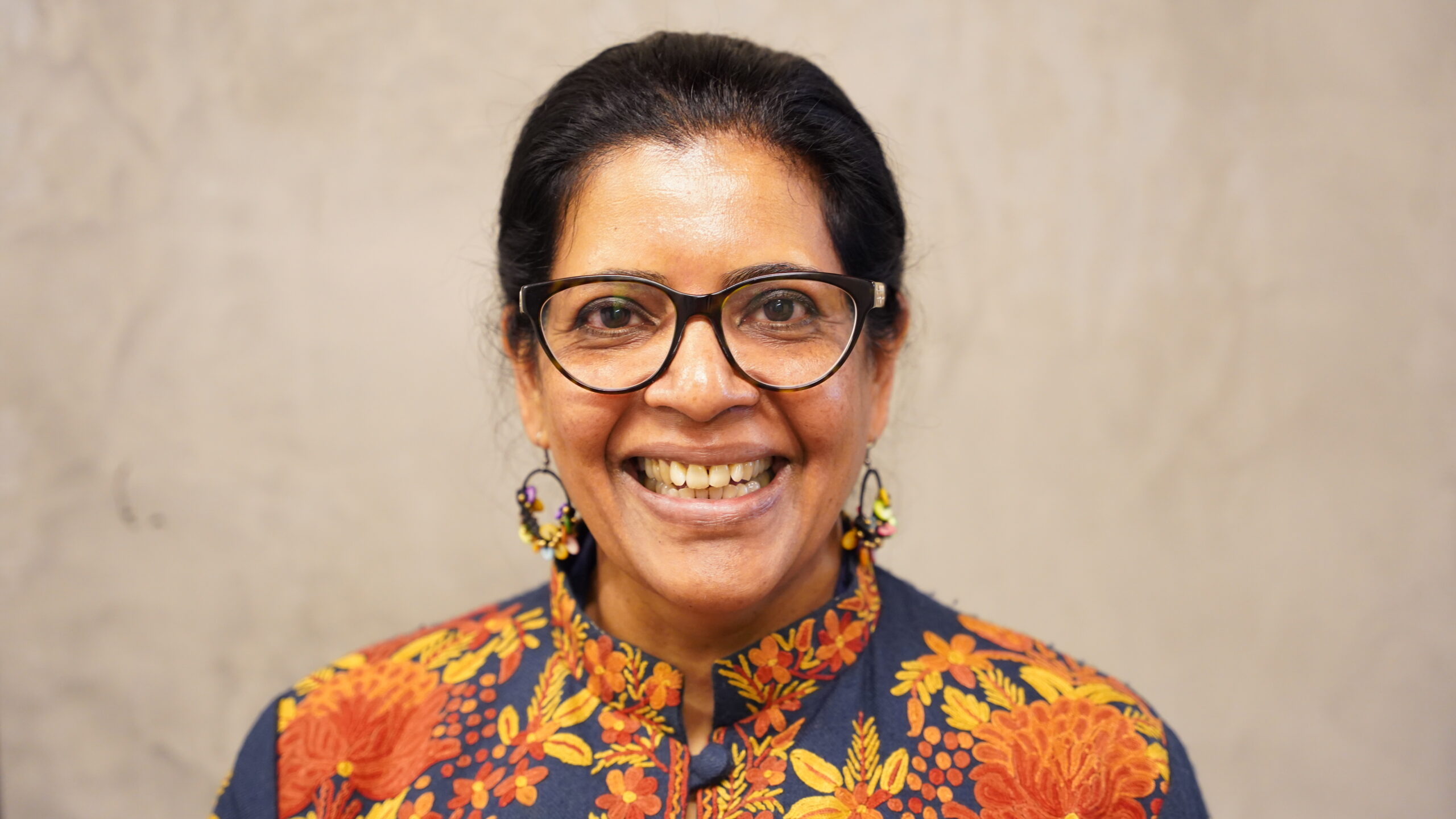
Professor Usha Iyer-Raniga, keynote speaker at the upcoming Reshaping Existing Buildings Conference, offers a preview of her presentation and shares her thoughts on improving circularity in Australia.
The inaugural Reshaping Existing Buildings Conference is set to take place from June 3–4 at Melbourne’s iconic MCG. Co-hosted by AIRAH and FMA, REB26 will explore how to overcome perhaps the built environment’s biggest obstacle to achieving net zero: improving our current building stock.
Over the two days of the conference, speakers will discuss retrofit strategies, electrification and enabling technologies such as heat pumps. Also on the agenda, new reporting requirements driving the decisions of owners and operators, and the human factors that can help or hinder the changes.
Underlying all these topics is the need to rethink our approach to managing the planet’s limited resources. Keynote speaker Dr Usha Iyer-Raniga will address this theme in her presentation “Transforming Australia’s built environment: circular and sustainability opportunities explored”.
Dr Iyer-Raniga is a professor at RMIT, a leader of global circularity initiatives, an author of multiple books on circular practices, and a speaker at international events including COP . She highlights that the triple planetary crises we are facing today – climate change, biodiversity loss, and pollution – are all linked to unsustainable production and consumption patterns. To change these, Dr Iyer-Raniga says we must move away from the so-called linear economy and transition to a circular economy.
Although the will to move to a circular economy is growing worldwide, locally we are lagging. Australia’s circularity rate is less than 5%, whereas in countries such as the Netherlands it is almost 30%.
According to Dr Iyer-Raniga, the fundamental problem stems from the fact that Australia has locked in the circular economy (CE) narrative around waste management. This dates back to 2017, when the Chinese government began restricting the import of solid waste and contaminated plastic waste in a policy initiative known as Operation National Sword.
“While the ‘China sword’ crisis was the catalyst for waste management, years on we need to turn our attention collectively to the CE vision, especially as Australia has a framework but no circular policy,” says Dr Iyer-Raniga.
“One may ask why the policy is important. It is, because otherwise circular transitions will always remain a toothless tiger with the best of intention and no action, no accountability.”
Dr Iyer-Raniga says Australia should look abroad at international approaches to circularity – as well as looking within.
“Generally, the Nordic countries are a good source of inspiration,” she says. “They have demonstrated circularity in action, and have often mainstreamed and scaled up where possible. But let us also not forget our First Nations People who led very sustainable and circular lifestyles for 65,000 years till the advent of European civilisation embedded the linear economy.”
REB26 focuses on our buildings, and Dr Iyer-Raniga says there is much work to do here to improve circularity.
“The built environment sector is very fragmented, especially in Australia,” she says. “We are also very risk-averse. While there is a lot of energy to make change, the reality is that the change can only happen when the supply chain collaborates and aligns to implement that shared vision.”
In order to retain the value of building materials so they can be reused over multiple lives, Dr Iyer-Raniga says we need new skills and construction practices.
“A building cannot be deconstructed (as opposed to demolished) if it is not designed to be deconstructed in the first place. For a building to be deconstructed, the construction requires skills to enable dismantling down the track. ”
For more information about REB26, including how to register, visit the conference website.
PREV
NEXT
Comments
Advertisements

Recent news
- Seeing all-electric stars in the NABERS Annual Report
- City Facilities Management secures decade-long Coles deal
- Delivering energy wins through cooling innovation
Latest events
- Adam Morgan shines in Shanghai
- IOR opens nominations for J&E Hall Gold Medal
- Nominations open for IIR scientific prizes
Leave a Reply