 Willow Aliento
World Ozone Day: marking a decade of the Kigali amendment
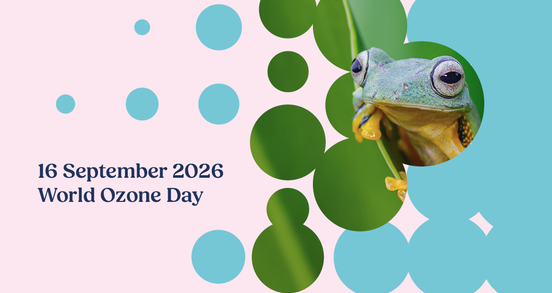
September 16 marks the anniversary of the adoption of the Kigali Amendment to the Montreal Protocol. In 2026, with the theme “Global action for a cooler planet”, the international community reflects on a decade of progress.
The Montreal Protocol is widely regarded as one of the most successful examples of international cooperation to achieve a global environmental goal, in this case, eliminating ozone-depleting chemicals to protect the Earth’s natural radiation shield. It came into force in 1989.
In 2016 the Kigali Amendment added action on hydrofluorocarbons, or HFCs, chemicals with high global warming potential which were commonly used in refrigerants within air conditioning and refrigeration systems.
Australia helped lead talks on Amendment and was one of the first countries to ratify the agreement. The national HFC phase-down started on January 1, 2018, with a target to cut bulk HFC imports to 15% of baseline levels by 2036.
Australian Refrigeration Council Chief Executive Officer Mark Lamb says government and industry have worked together to support this progress.
“The Kigali Amendment showed that environmental action and economic growth can work together. Cutting emissions from high global warming refrigerants needs strong rules. It also needs skilled workers who can use new technologies safely,” Lamb says.
Australia’s HFC import quota system, the ARCtick licensing scheme, and the recovery of refrigerants in end-of-life equipment work together to improve refrigerant management.
“Every refrigerant recovered instead of released helps. So does every system installed correctly and every technician who keeps their skills up to date,” Lamb says.
“On World Ozone Day, we thank ARCtick permit holders across Australia. Their skills and care help protect the environment now and into the future.”
United Nations Secretary-General António Guterres issued a message to mark the day, which is also known as International Day for Preservation of the Ozone Layer.
“Ten years ago, the world added a new chapter to one of its greatest environmental success stories,” Guterres writes.
“Building on the Montreal Protocol, which put the ozone layer on the path to recovery, nations adopted the Kigali Amendment to tackle a new threat: hydrofluorocarbons (HFCs) – potent greenhouse gases used for cooling.
“This year’s theme, Global action for a cooler planet, highlights a defining climate challenge. As temperatures rise and extreme heat becomes more common, access to efficient cooling saves lives. We must meet that need fairly and sustainably.
“Fully implemented, the Kigali Amendment alone could avoid up to 0.5 degrees Celsius of global warming by the end of the century – and twice as much when paired with energy-efficient cooling. This is essential for health, food security, livelihoods, and climate resilience.”
The UN’s Ozone Secretariat and United Nations Environment Program (UNEP) have developed a range of fact sheets and other resources, access them here.
- Watch the World Ozone Day 2026 Message by UNEP Executive Director Inger Andersen here.
PREV
NEXT
Comments
Advertisements
Recent news
Latest events
- South Australia’s HVAC&R Stars
- Making ripples, tending waves
- Recognising and celebrating progress and change
Leave a Reply