 Willow Aliento
CSIRO goes to the edge with CO2 cooling
Data centre developments often come under fire for their massive thirst, competing with communities, agriculture and nature for both groundwater and surface water supplies. CSIRO’s new data centre project in Queensland, however, is utilising advanced cooling solutions to conserve precious H2O.
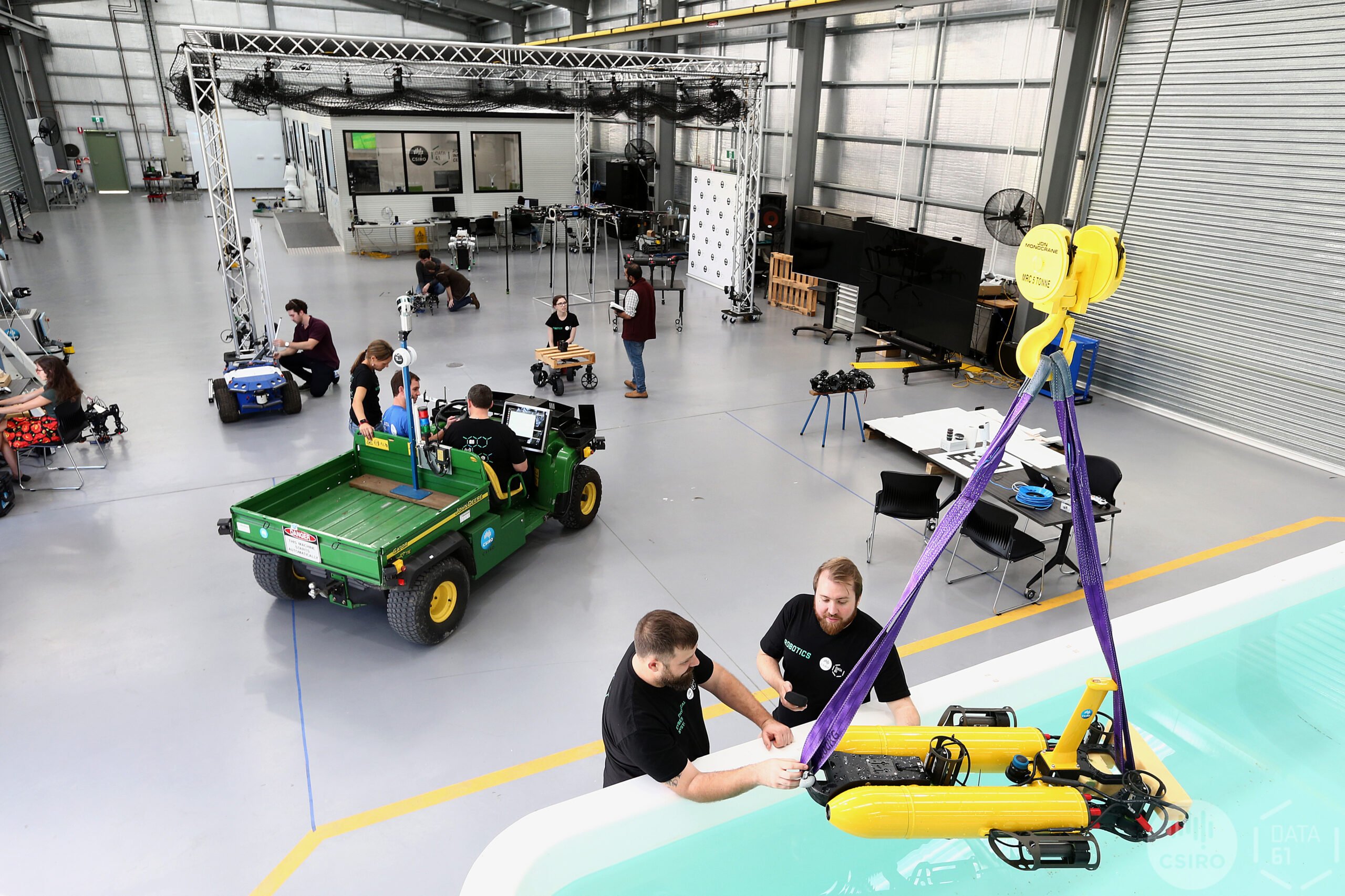
The compact Vetra data centre, based at CSIRO’s Queensland Centre for Advanced Technologies (QCAT) in Pullenvale, is delivering high-performance AI computing for Australia’s largest robotics testing facility.
Known as “edge computing” the co-location of the small, modular data centre alongside where AI data is being generated and processed means faster, more secure data operations.
Unlike traditional, remote cloud-based data infrastructure, Vetra provides super-fast, on-site processing with will enable robots and sensing systems to respond faster, learn continuously and operate more safely in complex physical environments.
Liming Zhu, Director of CSIRO’s Data61, says Vetra delivers sovereign, trusted AI computing close in physical proximity to where data is generated.
“AI is rapidly moving beyond digital systems into the physical world, including robots, infrastructure, sensing and safety critical environments,” Dr Zhu says.
“Vetra enables real‑time physical AI research by bringing high performance computing to the edge, where proximity to data allows systems to respond, learn and operate safely in complex environments in ways that are not possible with cloud only or distant data centre approaches.”
According to Dr Zhu, the initiative’s physical form of sovereign AI capability also establishes a model and technology approach that can be replicated for other locations where on-site AI is required.
Vetra currently includes 48 high-performance graphics processing units (GPUs) which can perform thousands of complex mathematical calculations at the same time on large sets of data. The infrastructure is modular and has been designed so it can expand over time as data processing demand grows.
The environmental impact of the data centre has been reined in through the use of carbon dioxide-based cooling systems and closed-loop liquid cooling, reducing reliance on traditional water-intensive cooling methods.
Under normal operation, CSIRO says the infrastructure wastes almost no water for cooling and is expected to save around 225 tonnes of carbon dioxide emissions each year.
CSIRO’s Chief Technology Officer, Angus Macoustra, says the infrastructure had been designed from the ground up with sustainability in mind.
“High-performance AI systems generate a lot of heat in dense, enclosed spaces. Vetra shows how advanced technology can be delivered in a way that significantly reduces water use and emissions,” Macoustra says.
Dr Peyman Moghadam, Head of CSIRO’s Embodied AI Cluster says the infrastructure works alongside CSIRO’s larger supercomputing systems in Canberra as part of an integrated “edge‑core‑cloud” approach, handling immediate, local processing first, before sending data to larger centres for deeper analysis.
“Robots and physical AI systems need to keep learning from the physical world, not just from internet datasets or simulations,” Dr Moghadam says.
“Vetra gives us the missing edge layer for this workflow, helping turn real-world robotics data into better, safer and more adaptable AI systems.”
PREV
NEXT
Comments
Advertisements

Recent news
Latest events
- South Australia’s HVAC&R Stars
- Making ripples, tending waves
- Recognising and celebrating progress and change
Leave a Reply