
“Quantifying the benefits of good indoor air quality is the Holy Grail, and for good reason. The World Green Building Council’s Health, Wellbeing and Productivity in Offices report suggests productivity improvements of between 8 and 11% as a result of better air quality alone.” – Tony Arnel
I made this statement nearly a decade ago, in Ecolibrium’s 2017 ‘A breath of fresh air’ feature. At the time, good indoor air quality, or IAQ, was framed as optimisation and part of a broader productivity narrative – better buildings, healthier occupants, higher ratings. The market for products, technologies and skills was booming, and HVAC&R specialists were upskilling at speed.
Twist the clock back further to 2007, and the productivity case for IAQ was being made at Melbourne’s 500 Collins Street. A floor-by-floor upgrade, which introduced chilled beam air conditioning and state-of-the-art building services, created the conditions for a natural experiment, because the same staff returned to the same floors. Sustainability Victoria’s landmark post-occupancy study found that average sick leave fell by 39% and the cost of sick leave by 44%, typing speeds and accuracy increased by 9% and lawyers’ billing ratios lifted by 7% despite a reduction in hours worked. The message for building owners was unmistakeable: IAQ was a productivity enhancer, a performance lever and, therefore, tenant magnet.
The productivity argument still holds, but the pandemic turned “fresh air”’” into basic public-health infrastructure, as essential as safe water. In 2026, the operating terrain is rougher and “unexpected events”’” are no longer exceptional. Smoke infiltration during bushfire seasons, respiratory outbreaks, extreme weather… these are now part of our reality. Buildings must operate in conditions for which they were never originally designed.
For building owners and operators, IAQ isn’t a simple productivity or wellness story anymore. It is grounded in risk, accountability and good governance. Productivity is a dividend, not the deal breaker.
Fresh air at the frontline
Sensors are cheaper than they were in 2017. Building management systems are more sophisticated. Data platforms are more capable, and artificial intelligence can now sift information and spot patterns humans would miss. People are more conversant in the language of building ratings.
Underlying all this technology, there’s an almost unspoken assumption that better measurement will lead to better management. And yet, despite the lessons we’ve learnt over the last decade – alongside the advances in technology – Australia still cannot describe the state of the air inside our buildings with confidence.
We have only just begun to assemble a national picture of indoor air, where we spend close to 90% of our time. The first State of Indoor Air in Australia report, published in September 2025, finds IAQ is not adequately addressed in Australia’s building codes or health strategies, and fewer than 0.03% of buildings have ever been assessed for indoor air pollutants.
The report’s authors, Queensland University of Technology’s Adjunct Associate Professor Wendy Miller and Distinguished Professor Lidia Morawska, observe: “We do not know, for example, if IAQ – across all ten pollutants of interest in this study – is ‘good’ or ‘bad’ or ‘adequate’; whether it is improving or getting worse; how widespread poor IAQ may be; or whether IAQ is worse in regional areas than in cities, or worse in apartments compared with detached houses.”
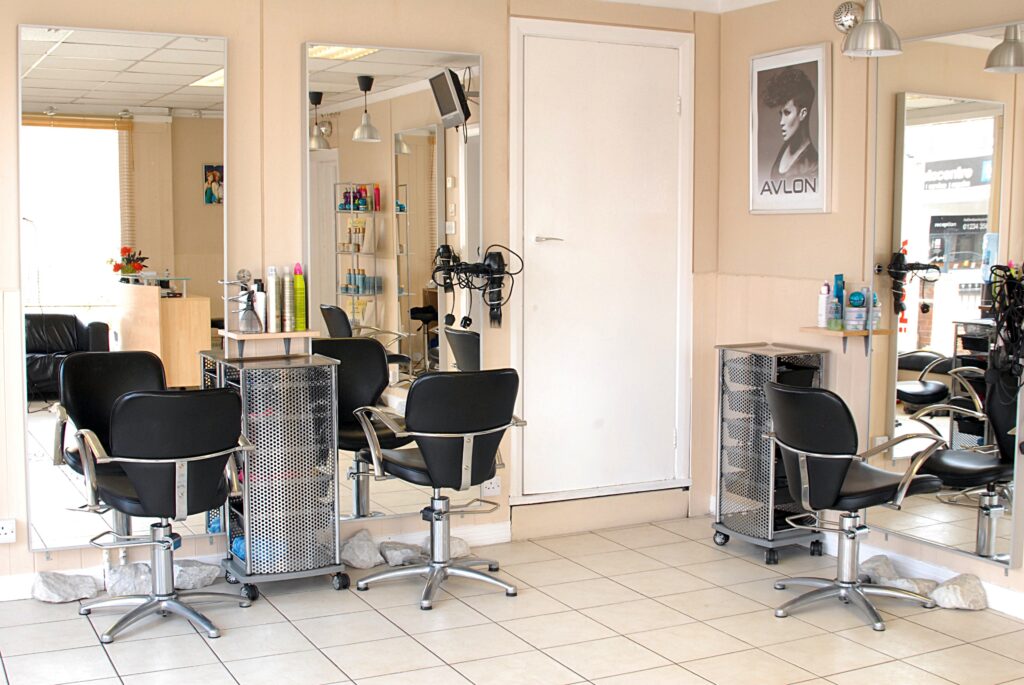
“Entire categories of high-pollutant-potential venues – hairdressers, nail salons, laundries – are effectively absent from the data.”
Clear evidence, cloudy interiors
Consider just a few headline numbers in the State of Indoor Air in Australia. Just 110 office buildings across the entire nation have been assessed for indoor air quality, representing around 0.08% of Australia’s Class 5 building stock. In retail and wholesale, the evidence narrows further: two studies, covering 18 buildings, or approximately 0.006% of those classes.
Entire categories of high-pollutant-potential venues – hairdressers, nail salons, laundries – are effectively absent from the data. More than 100 schools have been studied nationally, but just five hospitals. Regional contexts are barely represented, despite clear differences in climate, smoke exposure, building stock and maintenance capability.
While the science connecting indoor air quality to human health is unequivocal, our understanding of what is actually happening inside our buildings is incomplete. We are debating standards, investments and policy settings with remarkably little baseline data.
No silver bullets, only systems
The National Science and Technology Council’s 2024 systematic review of indoor air and viral transmission reinforced what building scientists have long understood. Ventilation matters, long-range airborne transmission is real, and a suite of interventions – including increased outdoor air, high-efficiency particulate air filtration (HEPA) and ultraviolet disinfection – can materially reduce risk.
This work, backed by the Chief Scientist, also confirmed that no single strategy applies. The silver bullet of IAQ remains elusive.
At the state level, the Burnet Institute’s Pathway to Clean Indoor Air in Victoria project, backed by the Victorian government, is testing multiple lines of defence in real buildings, including HEPA filtration, ventilation upgrades and sensor‐based air monitoring.
These developments matter, and they signal a change in expectations. High quality indoor air – and the systems that sit behind it – is no longer being treated as a design aspiration or post-occupancy optimisation. It is essential infrastructure that must perform reliably under pressure.
What the next decade will demand
HVAC&R specialists have always seen IAQ as an issue of business continuity, not just comfort. But the operational consequences of IAQ now sit squarely on the shoulders of board directors, as well as building managers.
The evidence-based foundation being laid will change the nature of “proof”. Generalised claims about healthy buildings, human wellbeing or productivity won’t cut it – especially when COVID continues to take its toll (and for those thinking the pandemic is a distant memory, nearly half of deaths from acute respiratory infection last year were from COVID-19).
The opportunity for HVAC&R professionals is crystal clear. Indoor air can be made measurable and therefore manageable. The tools exist. The policy conversation is changing. What is required now is disciplined application – building by building. That is the work of the next decade.
Dr Bronwyn King AO, internationally recognised public health leader and specialist in clean indoor air, will explore this topic further during the ARBS seminar program from May 5-7 in Melbourne. www.arbs.com.au
PREV
NEXT
Comments
Advertisements
Recent news
- Seeing all-electric stars in the NABERS Annual Report
- City Facilities Management secures decade-long Coles deal
- Delivering energy wins through cooling innovation
Latest events
- Adam Morgan shines in Shanghai
- IOR opens nominations for J&E Hall Gold Medal
- Nominations open for IIR scientific prizes
Leave a Reply