 Willow Aliento
Research silos holding back refrigeration sector
A team of international experts have identified a lack of integration between key areas of refrigeration research for the food sector. In a recently-published paper, they scope the evidence across energy efficiency, GWP, heat recovery and modelling and benchmarking, advocating for a coordinated approach.
In the paper, Heat recovery, low-GWP refrigerants, renewable integration and advanced control in food-industry refrigeration: a systematic review, authors Alexandru Panait, Răzvan Calotă and Alina Girip from the Technical University of Civil Engineering, Bucharest, Romania, analysed 101 peer-reviewed publications issued between April 2015 and April 2026.
They mapped content across four domains: heat recovery and useful heat valorisation, energy efficiency and low global warming potential (GWP) refrigerants, renewable energy sources, and modelling, validation and control.
What they found is there is a dearth of integrated and “experimentally validated” studies, with most research pursuing one of these areas in isolation.
The authors note that in Europe, refrigeration accounts for approximately 23.9% of food- process energy use, and that the wider food-process sector requires supplies of low- and medium-temperature heat.
“This combination creates a thermodynamic opportunity: refrigeration systems consume electricity to remove heat, while many food operations simultaneously require hot water, space heating, cleaning-in-place, drying, pasteurisation or product preheating,” state the authors.
“The rejected heat is therefore not merely a loss; depending on temperature level and demand coincidence, it can become a useful energy stream.”
In addition to the thermodynamic aspects and energy efficiency imperative, the sector’s environmental challenge is “compounded by the continued presence of R404A, R134a and other high-GWP refrigerants in existing installations.”
EU Regulation 2024/573 which has been in force since March 2024 introduces stricter provisions around both new equipment into the EU market and service of existing installations. From January 1, 2025, this regulation also prohibited self-contained equipment, except chillers, containing fluorinated greenhouse gases with a GWP of 150 or more, with some exemptions for safety or specific applications. From January 1, 2030, a further level of restriction comes into effect.
The authors argue, however, that GWP cannot be the only criteria for refrigerant selection.
“Changing the working fluid modifies compressor power, volumetric capacity, pressure ratio, temperature glide, safety classification, lubricant compatibility and discharge temperature. Those changes also alter the quantity and quality of recoverable heat,” they state.
For the best outcome, refrigerant replacement, energy efficiency and heat recovery need to be assessed within the same system boundary, they suggest.
Furthermore, renewable energy integration adds another layer of interaction into the system, including solar output, storage, thermal storage and other factors. This makes modelling and optimisation “central to technology selection”.
The review of existing research looked at four key questions:
- Which energy-recovery routes have been quantified and where is the recovered energy used;
- How do low-GWP alternatives affect performance, safety and heat-recovery potential;
- How are renewable resources and thermal storage integrated with food refrigeration;
- Which modelling and control methods have been validated sufficiently for industrial decision support?
The evaluation of the existing research enabled the team to identify some specific research gaps including insufficient evidence of long-term refrigerant retrofit reliability and safety; more research that evaluates refrigerant selection and useful heat recovery together within integrates retrofit experiments, and research to address the gap between investment timing and regulatory compliance.
“Few studies evaluate the risk of stranded retrofit investment against the placement and servicing restrictions of Regulation (EU) 2024/573,” they state.
“Future work should combine technical performance with equipment lifetime, expected regulatory horizon, refrigerant availability, technician competence and end-of-life recovery.”
The call to action is for integrated research to be undertaken, and quickly.
“The urgent priority is therefore a comprehensive demonstration that unites refrigerant substitution, staged heat recovery, renewable-energy and storage integration, and dynamic monitoring and control on an operating food-industry installation, evaluated against a measured baseline across representative periods in each season using technical, energy, economic, environmental and operational indicators that capture the overall efficiency gain of the installation.”
Read the full open access paper in the International Journal of Air-Conditioning and Refrigeration here.
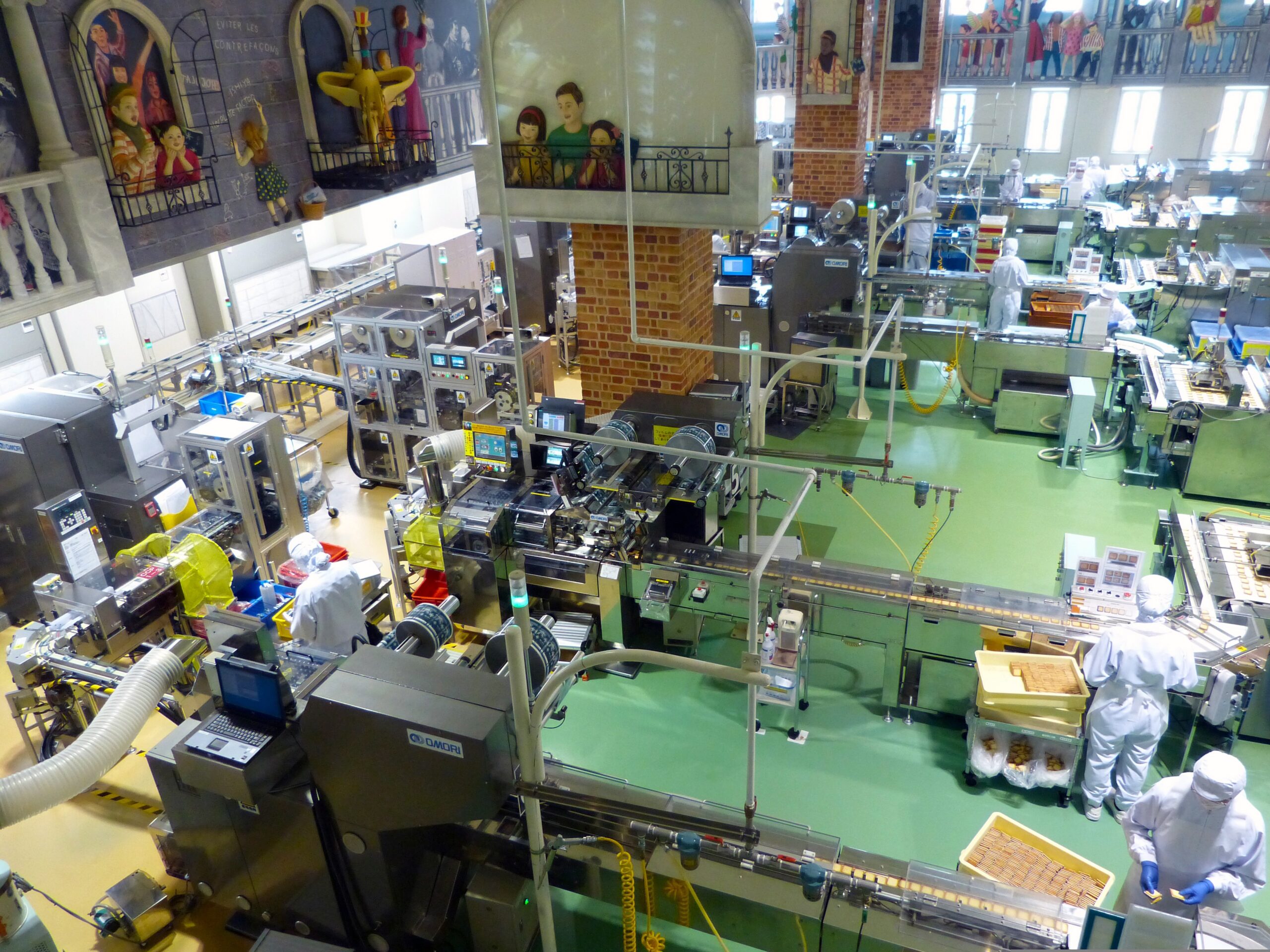
Main image: Factory in Sapporo, Japan by C E Goh via Pixabay.
PREV
NEXT
Comments
Advertisements

Recent news
- Research silos holding back refrigeration sector
- Tell the ABCB how it can make compliance simpler
- Opening the national policy reform window for indoor air quality
Latest events
- Opening the national policy reform window for indoor air quality
- South Australia’s HVAC&R Stars
- Making ripples, tending waves
Leave a Reply