 Willow Aliento
Global reach, local innovation
In a global economy where air conditioners look the same in the eyes of the customer, whether they’re in Uttar Pradesh, Ulan Bator or Ulladulla, leading air conditioning manufacturer Daikin makes a strong case for localisation.
The recent release of the Alira X split system range is a good example. Developed specifically for the extremes of the Australian climate zones, it also features a gecko-resistant electrical box for Queensland outdoor units.
Now that’s not a thing one sees mentioned generally. However, according to Ron Liu, Daikin Australia’s Sydney-based Research & Development Manager, it addresses a frequent issue encountered by tradies working on the units.
Geckos, frogs, snakes and other squatters will enter the electric boxes of outdoor units, Liu says. This can cause units to malfunction, and in the case of snakes, can also pose a direct risk to the safety of homeowners or technicians.
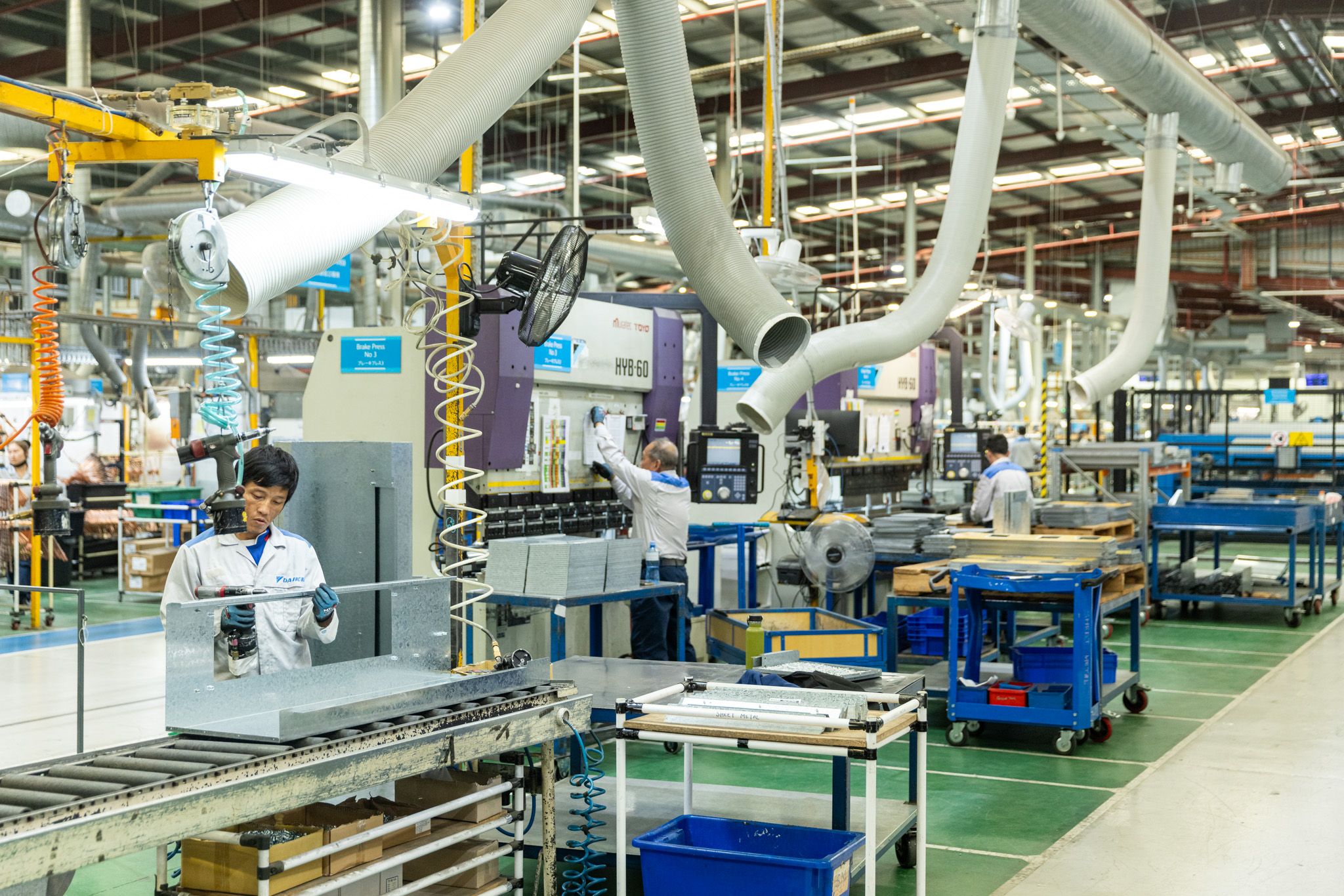
Because Daikin has manufacturing, R&D and service people in Australia all working collaboratively with local dealers, special needs for the local market can be identified and addressed.
Alira X are the first units to feature the freeloader-resistant enclosure, and Liu says it will be introduced to other models and units in the future as well.
Electrification and comfort
The operational aspects of the split system have also been tailored for Australian conditions, in particular, the growing trend for households to switch from gas heating to split systems for heating in winter.
“Through conversations with our dealers and customers, I’ve come to deeply understand what Australians love about gas heating: the instant warmth that fills a room almost immediately,” Liu says.
Heat pump air conditioners have conventionally taken some time to heat up, Liu explains, which is why Daikin has focused on improving that experience.
“So, it’s not continuous heating. There are some challenges there, but we are trying to take those as an input. We are trying to make some changes to our product.”
The Alira X range has faster heating, with new Rapid Heat and Long Time Heat technologies. Liu says people generally feel most uncomfortable in the early morning if a home becomes cool for a prolonged period such as overnight. Shortening the time it takes to warm the space and extending the operable heating time both help.
The company also suggests the switch to a reverse cycle unit will deliver lower winter heating costs compared to traditional electrical resistance heaters.
Increased occurrence of heatwaves in Australia and a stronger awareness of the need to manage humidity and reduce mould risks are also recognised. The new units are reliable in temperatures up to 50oC, and incorporate Streamer Technology and Mould Proof Operation, helping manage allergens, odours and mould.
Innovation flows across the world
Liu explains that there are monthly or bi-monthly knowledge sharing sessions between R&D teams located around the world. The goal is to share innovations and find ways to adapt initiatives from one region for others, if appropriate.
“We start by understanding what the local market needs, then shape our design direction to deliver the right solution for Australia.”
The outdoor cooling bench Daikin has helped develop in Tokyo, for example, which was piloted there in August may be something that can be adapted for deployment in Brisbane for the coming Olympic Games, Liu says. He stresses that there is currently no concrete plan to do so, but as a product type, the bench is an exciting initiative.
“We look at what’s working in other markets and ask how we can adapt it locally. It’s a great way to accelerate development while staying relevant to local needs,” Liu says.
Generally, similarities in climate zones and local conditions are an enabler of cross-border collaboration. Australia’s situation, for example, has climate similarities with Malaysia, and also there are market similarities with Europe and North America.
“From a design perspective, we think about both local and global manufacturability from the outset,” Liu says. “That dual focus helps us create products that work beautifully here in Australia while contributing to Daikin’s broader global offering.”
Development trends inspire innovation too
Trends in the Australian property sector, such as the growing number of purpose-built student accommodation projects also generate new products or refinements to existing product lines.
Liu explains student accommodation has always been a focus for the company, particularly now with so much new build and refurbishment activity.
Creating products specific for the needs of that typology is part of positioning Daikin as a major provider for the sector.
“The room area is normally not that big, less than 10 sqm typically,” Liu explains.
“Student accommodation has its own unique requirements, and we are developing dedicated products specifically designed to meet them.”
Similarly, for the aged care sector, the company has been developing products specific for the requirements of those facilities.
Make it local
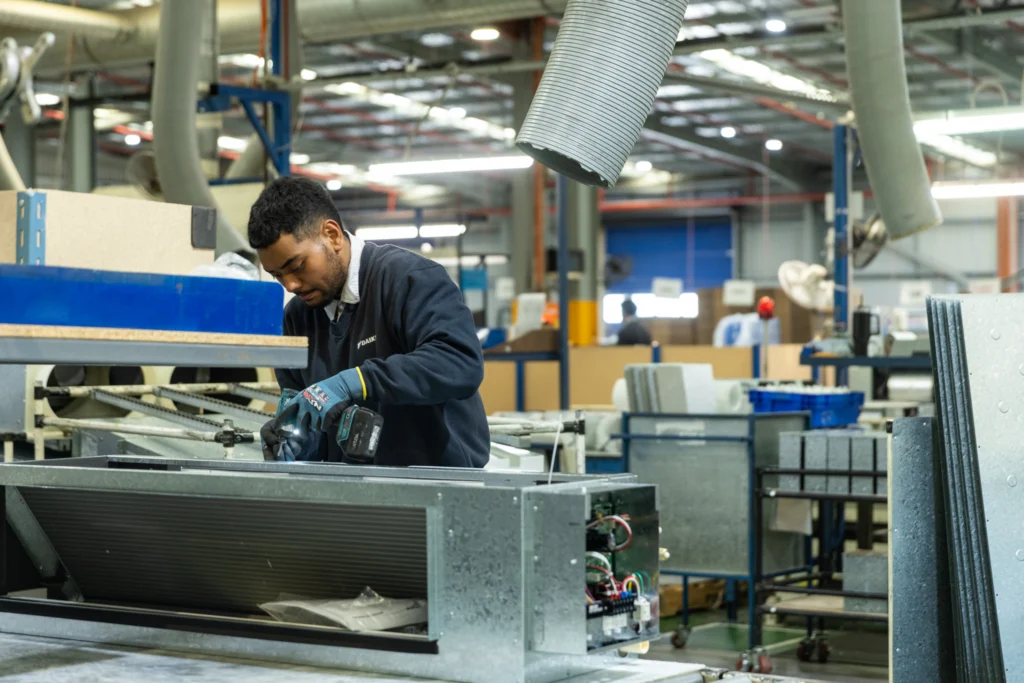
“Local manufacturing brings with it meaningful opportunities for Daikin”, Liu says. “One of the most exciting things is the ability to engage with local communities and help people understand how their daily choices can make a positive impact on the environment and on global warming,” Liu explains.
“With a local presence, we can do exactly that, and with our local manufacturing and service team, we can truly understand the specific needs of the Australian market and respond to them quickly and effectively.”
Creating a local community which understands the importance of air conditioners to the environment is also important, he says.
“We see Daikin as a local advocate for the environment, and we’re committed to fostering a positive air conditioning culture in the Australian market.”
As manufacturers there are also issues similar to those experienced by many car manufacturers. Global supply chains can become disrupted, and not all parts, components or materials are made onshore.
The costs of labour, the availability of sufficient skilled labour and managing productivity and cost competitiveness are also pressure points.
“We’re committed to creating opportunities for local workers and operators to contribute and grow with us,” Liu says.
“Daikin’s Graduate Engineer program focuses on attracting young talent and mentoring them into skilled professionals across manufacturing, R&D and other departments, ensuring Australia has the workforce it needs for the future.”
What’s next?
Of course, here at HVAC&R News we are always asking, “what’s next?”
For Liu, that is one of the reasons he’s stayed in the industry so long.
He explains there is a draw in being able to make a contribution to the lives of people in the community around him, and to the environment.
“Working in R&D, you can see the tangible difference you’re making to communities right here in Australia,” he says.
The heat and the humidity are a defining feature of conditions, and an increasing issue.
“The Australian market has high expectations, and that pushes me to think deeply about the role air conditioning plays in people’s everyday lives,” Liu says.
“And that’s what makes this work so meaningful. We solve real community challenges and contribute to something that genuinely improves people’s lives.”
PREV
NEXT
Comments
Advertisements
Recent news
Latest events
- Adam Morgan shines in Shanghai
- IOR opens nominations for J&E Hall Gold Medal
- Nominations open for IIR scientific prizes
Leave a Reply