 Laura Timberlake
A new path to reduce F-gas emissions
With global demand for air conditioners and heat pumps growing every year, a new three-year research initiative will explore how countries can move away from using fluorinated gases, or F-gases.
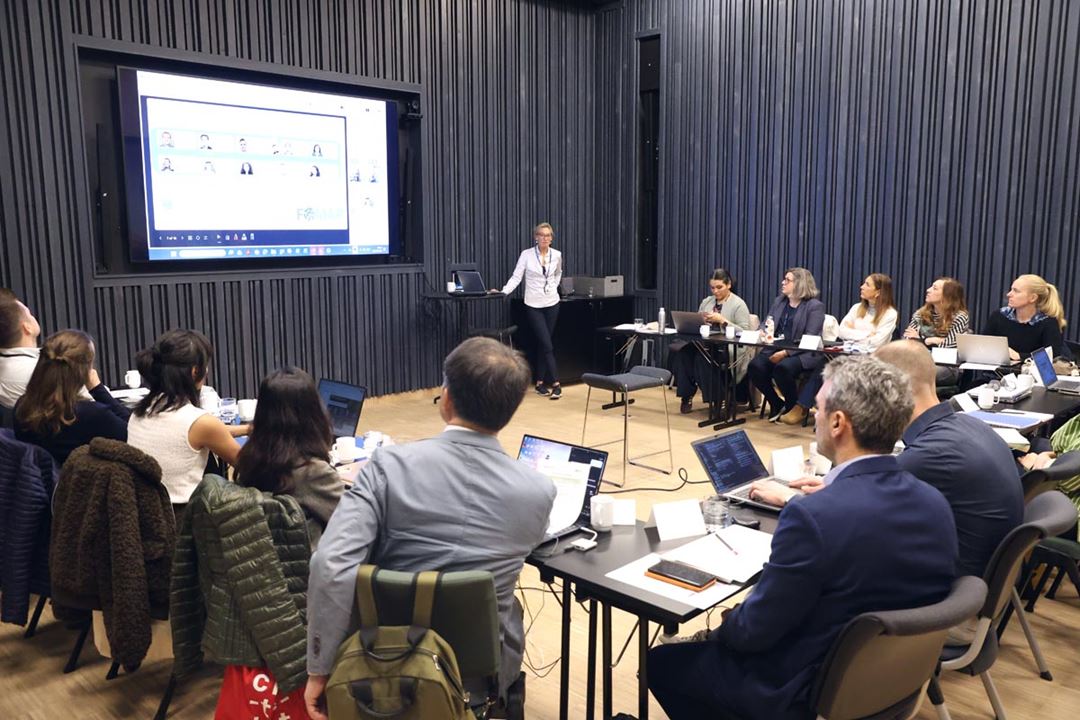
Coordinated by SINTEF Energy Research and funded by the EU’s Horizon Europe program, the F-MAP project will review emissions databases and estimations and use an open-source framework for energy system modelling. The tool will help scientists, industry stakeholders and governments assess how to reduce F-gas emissions.
Fluorinated gases are still commonly used across the refrigeration, air conditioning and heat pump (RACHP) sector, and many of these have a much higher global warming potential (GWP) than alternative natural refrigerants. Combined with estimates from the International Institute of Refrigeration (IIR) that the need for air conditioning will increase 2.5-fold by 2050, the need to phase out F-gases becomes more urgent.
According to SINTEF, the F-MAP initiative will offer a robust, transparent and science-based way for industry and policymakers to compare mitigation strategies across regions, sectors and time horizons, and to see how those strategies interact with the wider decarbonisation of the energy system.
Senior Research Scientist at SINTEF Cecilia Gabrielii says in a statement that the technologies to replace F-gases already exist, but what’s missing is a transparent way to compare them.
“We want to give authorities and industry a tool that shows what the transition could cost, how fast it could go, and what it means for emissions in their own country,” she says.
The tool is built on an open-source optimisation framework called EnergyModelsX, which was developed by SINTEF. The code and data will be freely available and easy for non-specialists to use. Users will be able to calculate the cheapest way to meet an emissions target, or the most effective way to cut emissions.
The project partners include SINTEF Ocean and NTNU (Norway); CNR and ISPRA (Italy); International Institute of Refrigeration (France); ENERGIJA (North Macedonia); Kwame Nkrumah University of Science and Technology (Ghana); and Seoul National University (South Korea).
According to SINTEF, the partners will collate information on how much F-gas is used, how much is already contained in installed equipment, and how much leaks out over the equipment’s lifetime.
The project is running from September 2026 until August 2029, and will receive approximately €2.99 million (AU$4.8 million) in funding.
Feature image of the F-MAP project kick-off in Trondheim in September, courtesy of SINTEF.
PREV
NEXT
Comments
Advertisements

Recent news
- ebm-papst expands cold chain and cooling solutions
- A new path to reduce F-gas emissions
- An international tribute to the late Pat McInerney
Latest events
- An international tribute to the late Pat McInerney
- Spreading ripples at Women of HVACR Summit
- Opening the national policy reform window for indoor air quality
Leave a Reply