 Nick Johns-Wickberg
Fighting the hidden killer
With Standards Australia recently adopting a mould remediation standard, we look at how this hidden killer can harm both building occupants and HVAC&R technicians.
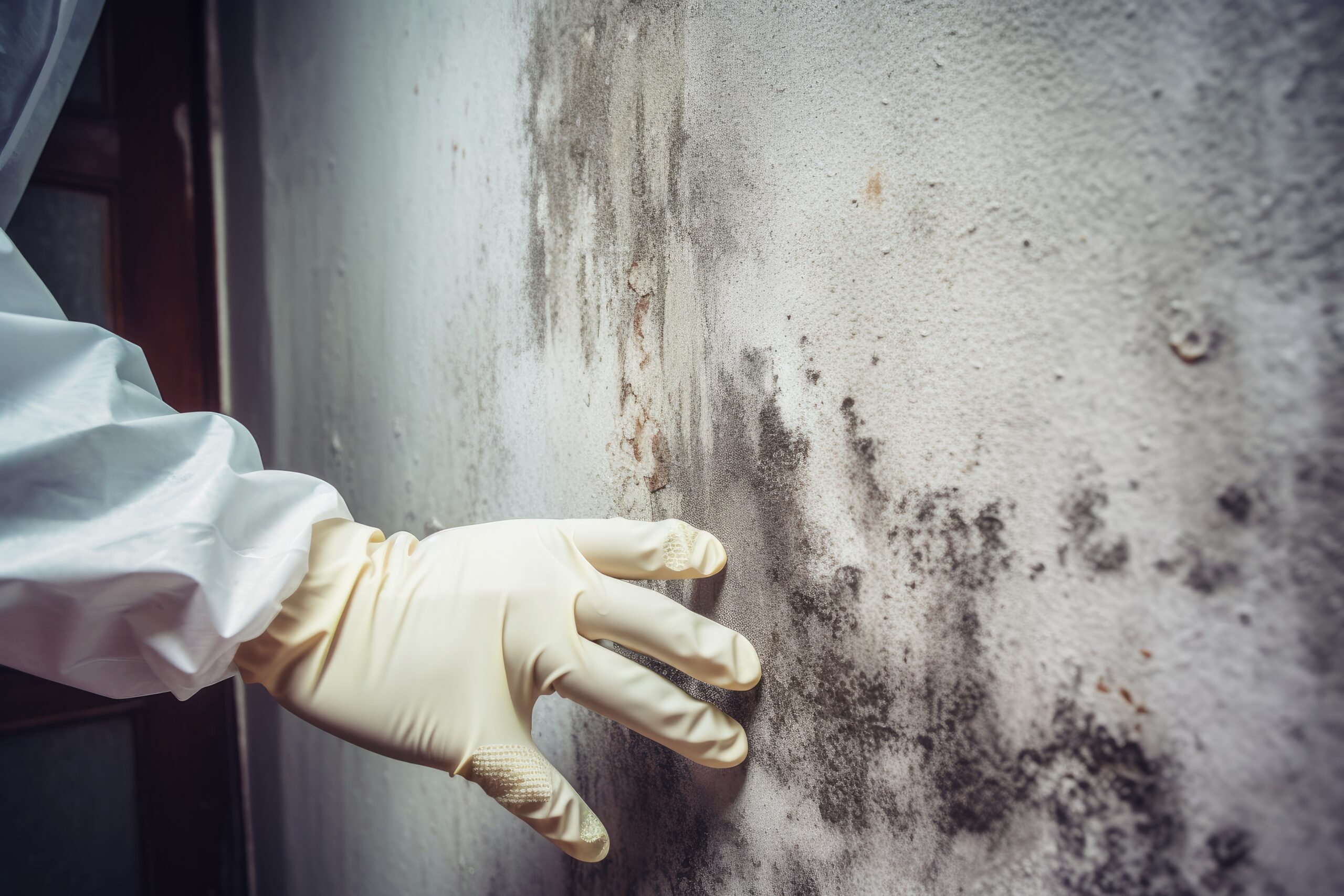
Throughout a career spanning over 43 years, Jenny Smith, Affil.AIRAH, was proud to call herself Australia’s first female fridgie. She worked on every conceivable type of HVAC&R system, from residential split systems to commercial air handling units, industrial HVAC systems in manufacturing plants, freezers and cool rooms. Her years in the industry allowed her to establish her own small business, where she worked full-time in the trade.
In a physically demanding job where safety is paramount, Smith was always aware that her career could be cut short if she didn’t protect herself from the standard occupational hazards. She didn’t realise that the real danger was something much more insidious.
“I truly thought I’d die from electrocution, get ripped off a roof or chewed into a machine,” Smith says. “But none of those happened. I got taken out by mould.”
Jenny’s battle with CIRS
At first, Smith had no idea that this hidden killer was making her so sick.
“Around 14 years ago as my 50th birthday was approaching, I decided I was going to be the fittest I could ever be. And I was already super fit and running, roller skating, velodrome riding – plus I work a pretty full-on job.
“The problem was that I kept falling asleep all over the place – on top of rooftops and at traffic lights – as if I was narcoleptic. That was my first real symptom.”
“I was getting gaslit by doctors just trying to get a diagnosis – I got misdiagnosed many times.”

It wasn’t until a conversation with Dr Tim Law at an AIRAH conference that Smith even considered that mould could be the cause of all her woes.
On Law’s advice, she took a visual contrast sensitivity (VCS) test. This involves looking at a series of greyscale images to identify distinct shapes and patterns.
While a VCS can’t definitively diagnose mould-related illness, it can be an effective screening test; people suffering from mould exposure typically have poor capillary bloodflow, which can affect the rod cells in their retinae and make it more difficult to distinguish those patterns.
Smith’s results were shocking. She was soon diagnosed with a severe case of chronic inflammatory response syndrome (CIRS), which was known as sick building syndrome at the time.
The prognosis was clear: as passionate as Smith was about being a fridgie, the risks of further mould exposure were too high. She had to quit the job she loved.
But the career that followed is perhaps even more surprising.
Understanding mould
Instead of running from this danger, Smith decided to face the challenge head-on by training as a mould testing technician with the Australian College of Environmental Studies (ACES). More than 400 restorers, remediators and tradespeople – including HVAC&R technicians – have completed the nationally accredited three-month course, which includes the theory behind how water damage causes microbial growth and leads to adverse health effects.
Smith enrolled in the course in part because she was filing an insurance claim for exposure to mould and couldn’t find a doctor who knew enough about it to give her an official diagnosis.
“I couldn’t find anyone to tell me and the insurance company was just talking at me, so I literally educated myself,” Smith says.
Dr Nicole Bijlsma is the building biologist and mould expert who founded ACES and teaches the mould technician course. Like Smith and many others who work in this field, she has significant personal experience with mould-related health issues.
“I started ACES in 1999 to educate people about the health hazards in the home,” Bijlsma says. “That began because I had 10 miscarriages after moving into our first home. I realised that something was wrong with the house itself when my neighbour said no one successfully had kids there.
“I was working as a naturopath and acupuncturist for 15 years and many of my patients weren’t getting well. They were talking about mould, so I started doing house visits, realised the extent of the problem and saw the need for education.

“We now know mould is a far bigger problem than we ever realised, and you usually can’t see or smell it. Most of the homes I test haven’t had a recent water event.”
This lack of understanding is apparent is in how people – both occupants and many professionals – try to remediate mould in buildings.
“Killing mould is irrelevant, because as long as you’re breathing in mould – dead or alive, whether it’s viable or not – it can cause serious adverse health effects,” Bijlsma says. “We have to get out of this mentality of killing the mould – the focus should be on physical removal.”
Day-to-day survival
CIRS is a chronic, lifelong medical condition that has permanently affected Smith’s wellbeing. To continue working her rewarding job and living a functional existence, she needs to remain hypervigilant.
“I wear the full mask, goggles and PPE suit when I’m onsite,” she says. “I strip off after the job in the driveway so I can get back into my car in another PPE suit and drive home in my jocks.”
Smith treats her small, custom-made and tightly air-controlled home in Darwin like an exclusion zone. She showers outdoors four or five times a day – every time she needs to enter her home – to keep moisture out, and she has deliberately excluded materials such as drywall (plasterboard) and carpet that can be breeding grounds for mould and fungi.
“I just had to think outside the box, which is ironic because I’m actually living in a glass box,” she says. “I live in this box because I control the 6m by 4m space in here. It’s got all this fantastic equipment, and I make sure that no moisture gets inside the building envelope.
“I control every millimetre and I’m safe in here.”
Setting the standard
In November this year, Standards Australia endorsed and adopted standard 520 from the Institute of Inspection Cleaning, Restoration, and Certification (IICRC). According to Standards Australia, AS-IICRC S520 “specifies the procedures to be followed and the precautions to be taken when performing mould remediation in residential, commercial and institutional buildings, and the systems and personal property contained within those structures”.
Bijlsma sat on the committee that reviewed AS-IICRC S520. She says the standard is particularly important due to the vertical integration in the industry; it’s common for building rectification companies, restoration companies and hygiene companies to be owned by the same conglomerate, reducing their incentive to act in occupants’ best interest.
“Under this new standard, if anybody suspects they have health effects in water damaged buildings and there’s not an independent third party involved, all stakeholders must be notified in writing.”
The standard also outlines requirements for remediation and management.
“Remediation will mean setting up containment under negative air pressure with scrubbers,” Bijlsma says.
This means no “fogging” – a remediation process that is intended to create an antimicrobial mist to eliminate airborne mould spores, but actually introduces more moisture, potentially worsening the problem.
She says that the introduction of the new standard will “put the industry on notice” and encourage better and safer working practices.
Keeping fridgies safe
While Bijlsma and Smith welcome AS-IICRC S520, they realise much more extensive education is required to keep those at the coal face – especially HVAC&R technicians and wet washing professionals – safe.
As a working mould tester, Smith is often staggered by some of the unsafe practices she sees onsite.
“I just want to educate people a little bit better because there’s lots of us out there just doing crazy stuff,” Smith says. “I got to witness it this week.
“I was working with a company onsite in Darwin and I watched an HVAC technician pull the filters out of a ducted system. The filters were black with mould.
“He took them out while the system was running and dropped them down onto the floor off the 4m platform. All the mould not only became airborne, but was sucked back up into the return air.
“Worse than that, he had no protection whatsoever. He didn’t just do the wrong thing for himself – he did the wrong thing for everyone else in the building.”
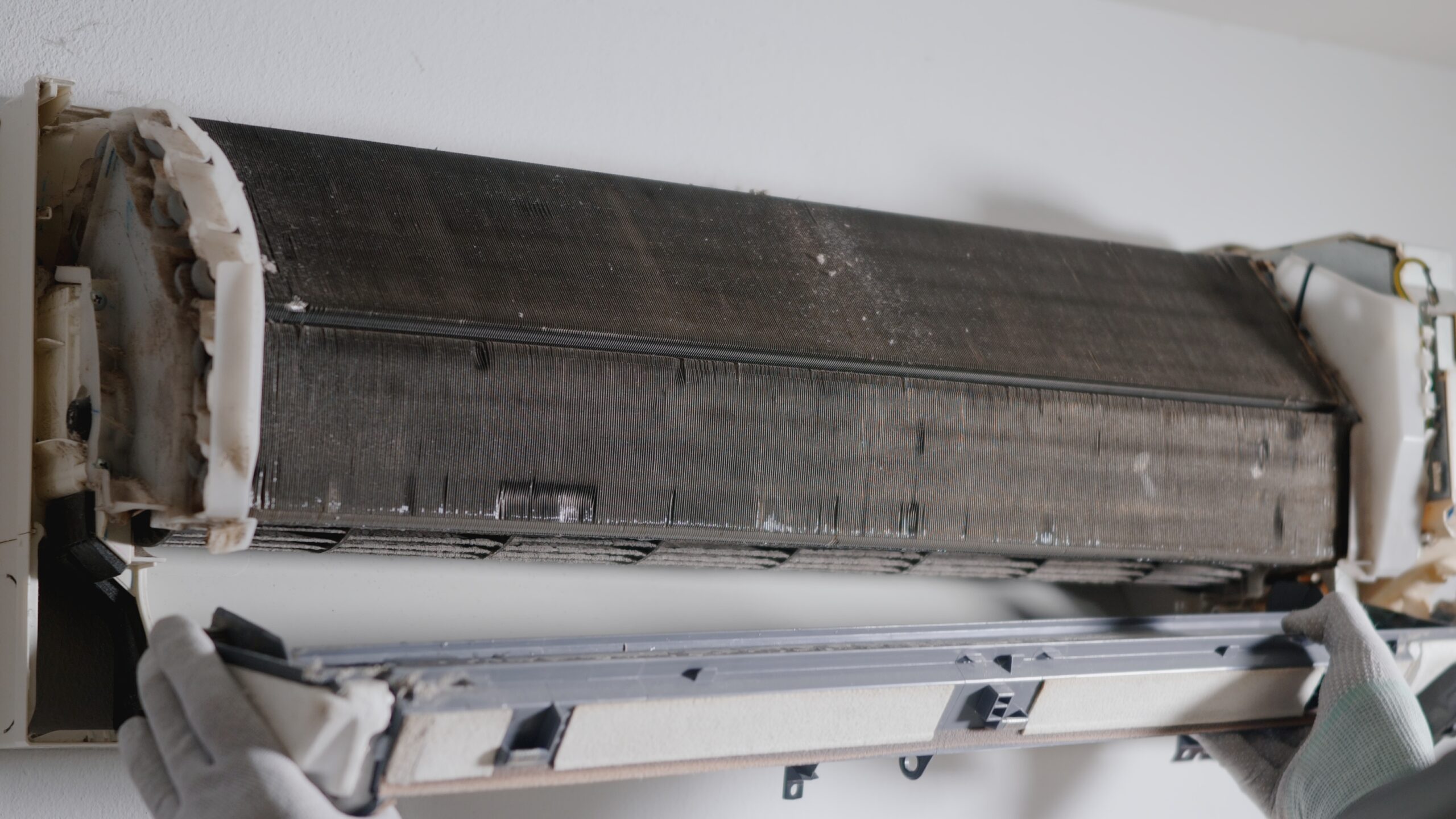
Smith asked the technician why he wasn’t wearing a face mask. He hadn’t even considered that he might need one.
The incident Smith refers to is shocking not because it’s outlandish, but because it likely happens every day around the country.
“That’s what happened to me; I got sick because I didn’t know that mould posed a danger.”
She says the first step is to instil a culture of wearing the correct protective equipment and following safe handling procedures every day.
“I want fridgies to understand the risks to themselves and how PPE can protect them.”
But, as Bijlsma points out, the onus shouldn’t just be on individual fridgies to protect themselves; that cultural shift needs to come from above.
“It’s got to start with management,” she says. “If they don’t take it seriously, nothing will change.
“And more importantly, these safety procedures need to be legislated. Otherwise, we’ll continue to see that ‘she’ll be right’ attitude.”
Stock images courtesy of EyeEm via Freepik
PREV
NEXT
Comments
Advertisements


Recent news
- ARBS 2026 Awards finalists announced
- Government announces shift in refrigerant management
- Program confirmed for REB26 at the MCG
Latest events
- ARBS 2026 Awards finalists announced
- Program confirmed for REB26 at the MCG
- Workshop: lowering heating hot water temperatures in electrification retrofits
Leave a Reply