 Nick Johns-Wickberg
Report forecasts skyrocketing energy use in Australian data centres
A report authored by Baringa and commissioned by the Clean Energy Finance Corporation (CEFC) has found that data centres could use as much as 11% of Australia’s energy by 2035.
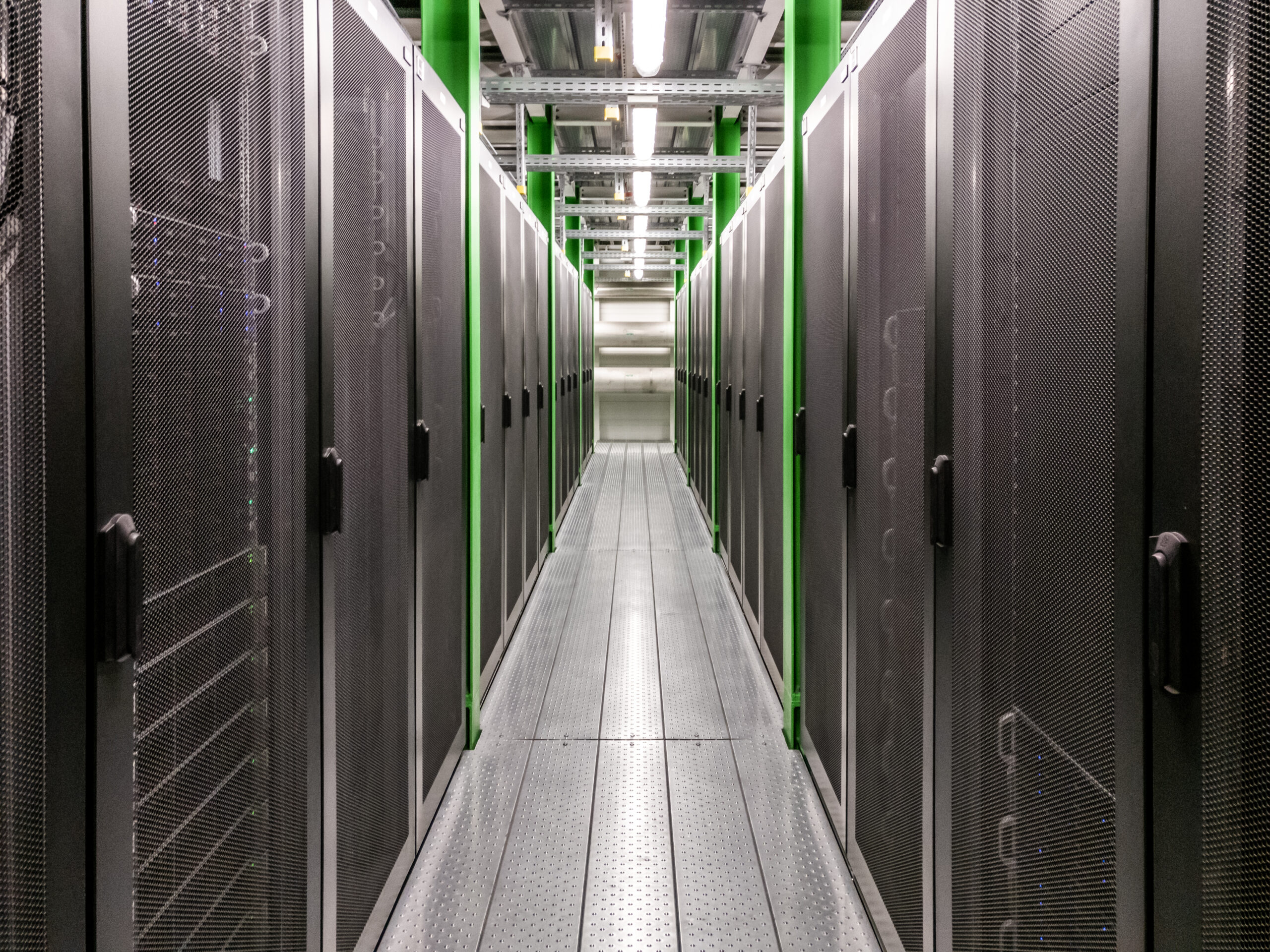
The report, titled Getting the balance right: data centre growth and the energy transition, compares the current baseline against four possible future scenarios for data centre use. It analyses how each scenario would affect the Australian energy market in terms of consumption, emissions, and energy prices.
Given that cooling can constitute up to 40% of a data centre’s energy usage, the continued growth of the data centre market in Australia is sure to present opportunities and challenges for HVAC&R businesses and professionals.
Here are some of the key insights from the report.
A rapidly growing sector
At present, Australia sits second in the world for hyperscale data centre investment, behind only the USA. It’s the third-largest market in the Asia-Pacific region – after China and Japan – representing 10% of the region’s data centre capacity. And while Australia’s mix of developed infrastructure, renewable energy growth and abundant available land make it an attractive destination for future developments, three-quarters of planned data centres are expected to be built in Sydney and Melbourne.
According to the report, Australia’s current operational data centre capacity is 0.3GW and consumes around 3TWh of electricity, representing around 1% of the nation’s energy usage.
This is expected to grow exponentially over the coming decade, with the report forecasting an increase from 0.3GW of operational capacity to 2.2–3.2GW. This would lead to up to 24TWh of annual electricity consumption by 2035, representing 8–11% of Australia’s total energy consumption.
More energy required
Of course, this significant increase in national energy consumption brings with it the need for more clean energy production. According to the report, projections using Australia’s baseline renewable energy production targets show that, by 2035, data centres could increase national emissions by 14%, while also driving up electricity prices by as much as 26% in NSW and 23% in Victoria.
To negate this, the report recommends building an additional 3.2GW of renewable energy capacity – supported by an additional 1.9GW of large-scale battery storage – over the next 10 years. It suggests that private investment supported by government incentives and regulations could be the most effective way to raise the funds required to build this additional capacity.
Overall, the report forecasts investment in data centres of between $85–135 billion by 2035.
The cost of cooling
From p38–41, the report examines the role of cooling in data centres and looks at how future technology advancements could improve both performance and energy efficiency.
One of the concepts raised in the report is power usage effectiveness (PUE), which measures the proportion of energy dedicated to data centre processes as opposed to support services like cooling and heating. A PUE of 1.0 – which is impossible to obtain in reality – would mean 100% of power is used for computing. The higher the PUE, the more energy is used for support services. For example, a PUE of 1.6 would mean that, for every 1kW used for computing, 0.6kW is used to power support services.
According to the report, large hyperscale data centres have achieved PUEs as good as 1.19, while smaller, less efficient data centres can have a PUE as poor as 1.91. The average PUE in Australia in 2023 was 1.44, 0.01 above the global average. For future projections, the report assumed an average PUE of 1.3 to reflect improvements in energy efficiency.
Improving efficiency
Two of the cooling methods the report touches upon are traditional air cooling and evaporative cooling. It finds that, while the latter is more efficient, it consumes significantly more water.
The report also projects that both of these methods are likely to be superseded by a mix of the following approaches:
- Liquid cooling, where a chilled liquid in a closed coil is placed near or mounted directly on computing components to remove heat at the source
- Immersion cooling, where whole servers or large components are submerged in an oil- or synthetic-based fluid that is non-conductive and thermally conducive. The liquid is cooled by heat exchangers in either a single-phase system where the fluid remains liquid, or a two-phase system where heat is removed as vapour condenses
- AI-optimised management, where sensors collect real-time data that is used to optimise system performance, potentially reducing energy use by up to 30%.
Thirsty work
Data centres have become infamous for their water consumption, especially for cooling requirements. A recent report by BSI Group and WaterWise has found that data centres are among the 10 industries that consume the most water worldwide. In hyperscale data centres that use evaporative cooling, this can add up to more than 25 million litres of water consumption annually.
‘Donating’ waste heat
One innovative approach explored in the report is the reuse of waste heat for purposes outside of the data centre itself. With hyperscale data centres generating so much excess heat, “donating” the excess hot water of charge to help power public heating services is one way for data centre owners to offset their environmental impact.
The report cites real-world examples of this, including Facebook’s data centre in Denmark, which provides up to 100GWh of waste heat to help power the city of Odense’s district heating system. Equinix is using its Paris data centre for similar purposes, providing 10GWh of waste heat for free over 15 years to heat homes, public facilities, and even the swimming pool for the 2024 Olympic games.
With district heating networks being far less common in Australia than they are in Europe, waste heat from data centres would likely be used for other purposes locally. The report refers to an example in Tibet, where waste heat from data centres has been used for industrial processes such as aquaculture and agriculture. Suggestions for Australia include reusing waste heat for manufacturing and agricultural purposes in Sydney, as well as for residential heating services in Melbourne.
Positive potential
While there’s a lot of focus on the extremely high energy and water requirements for data centres at present, the report offers a more optimistic view of their role in the future.
It frames the data centre of the future not as a burden, but as a potential “dynamic energy and digital node” that generates low emissions, promotes clean energy usage, and can help stabilise the grid.
The report highlights the necessary roles of both policy action and market pressure to encourage data centre owners and operators to treat sustainability as an essential component of design, rather than an optional add-on.
The need for clear policy
The report identifies potential gaps and opportunities in existing policy around data centres, highlighting ways in which governments at all levels can act to create a clearer pathway. It focuses on four areas:
- Coordinating locations: policy should encourage data centre investment in strategic locations where the appropriate network capacity exists
- Clean energy: governments should incentivise and enable data centres to invest in the clean electricity market to reduce their impact on electricity prices and emissions
- Visibility: there should be increased transparency around data centres’ expected electricity usage over time to facilitate planning and manage network capacity
- System security: the appropriate system settings must be in place to understand and manage any technical impacts of connecting large loads, as well as incentivising demand flexibility.
The report highlights Singapore and the European Union, two jurisdictions where a combination of incentives (including direct funding and financial instruments such as tax breaks) and regulations (including standards, codes of conduct, and reporting requirements) have been put in place to improve efficiency and reduce environmental impacts from data centres. It goes on to discuss which policy levers could be appropriate in Australia and which would need to be significantly modified.
The report concludes with recommendations for investors, policymakers and industry to help ensure that this boom in data centres is beneficial to Australia’s economy without being detrimental to its environment.
Continuing the conversation
AIRAH’s 2026 HVAC Innovation Conference (HVAC26) will include a presentation by the CEFC explaining the report in more detail.
You can register for HVAC26 – which will take place in Sydney from March 16–17 – via the AIRAH website.
Read the full report
You can access the full 73-page report for free via the CEFC website.
Featured image courtesy of Wirestock via Freepik
PREV
NEXT
Comments
Advertisements


Recent news
- Automatic Heating celebrates 100 years in business
- Review of incentives for commercial debarbonisation
- Packed to the rafters
Latest events
- Workshop: lowering heating hot water temperatures in electrification retrofits
- IIAR announces dates for online refrigeration workshop
- IWBI announces program for sustainability conference
Leave a Reply