 Nick Johns-Wickberg
Keeping it local: HVAC&R manufacturing in Australia
Despite the challenges facing Australian manufacturing, HVAC&R businesses are increasingly looking to build their capacity locally.
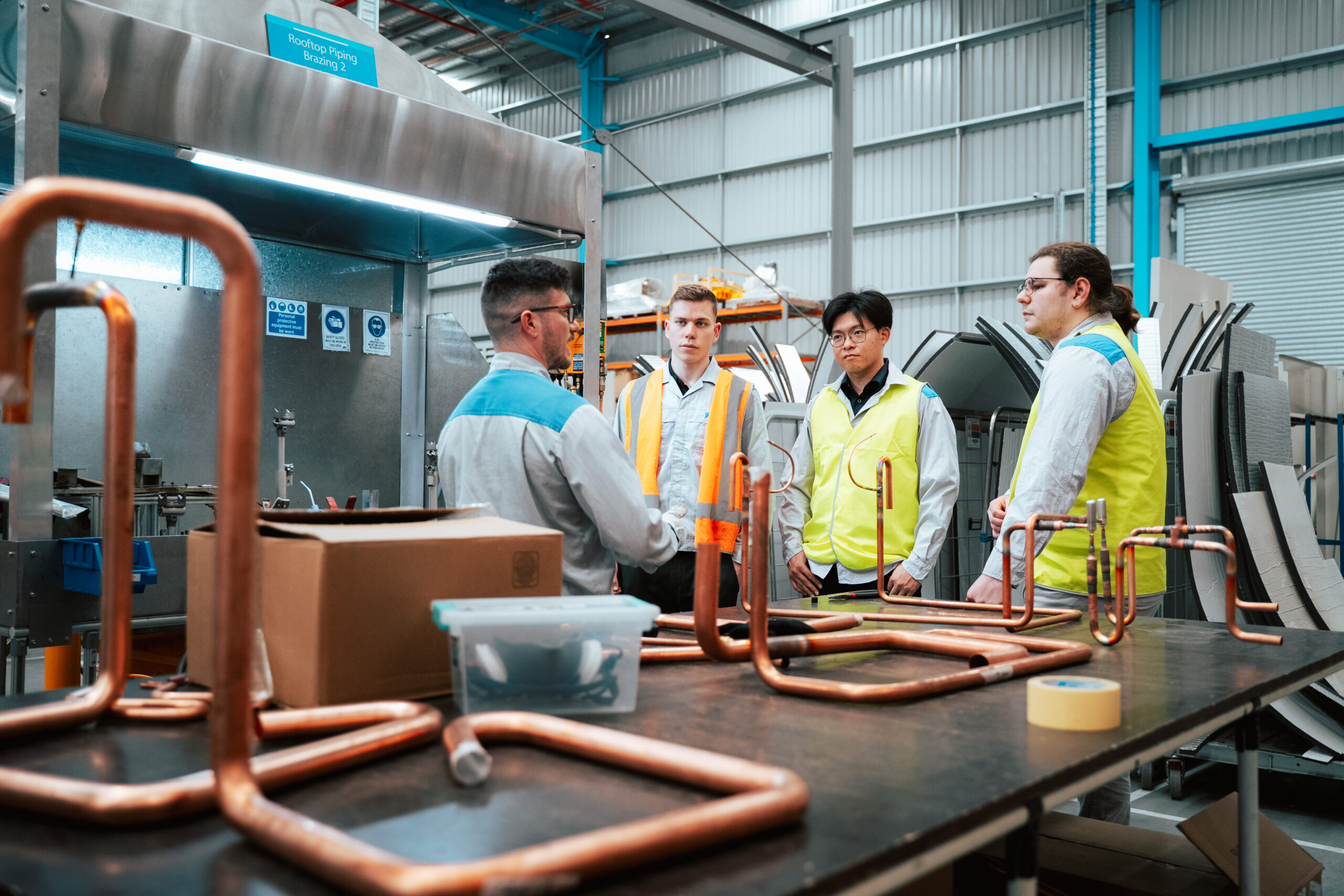
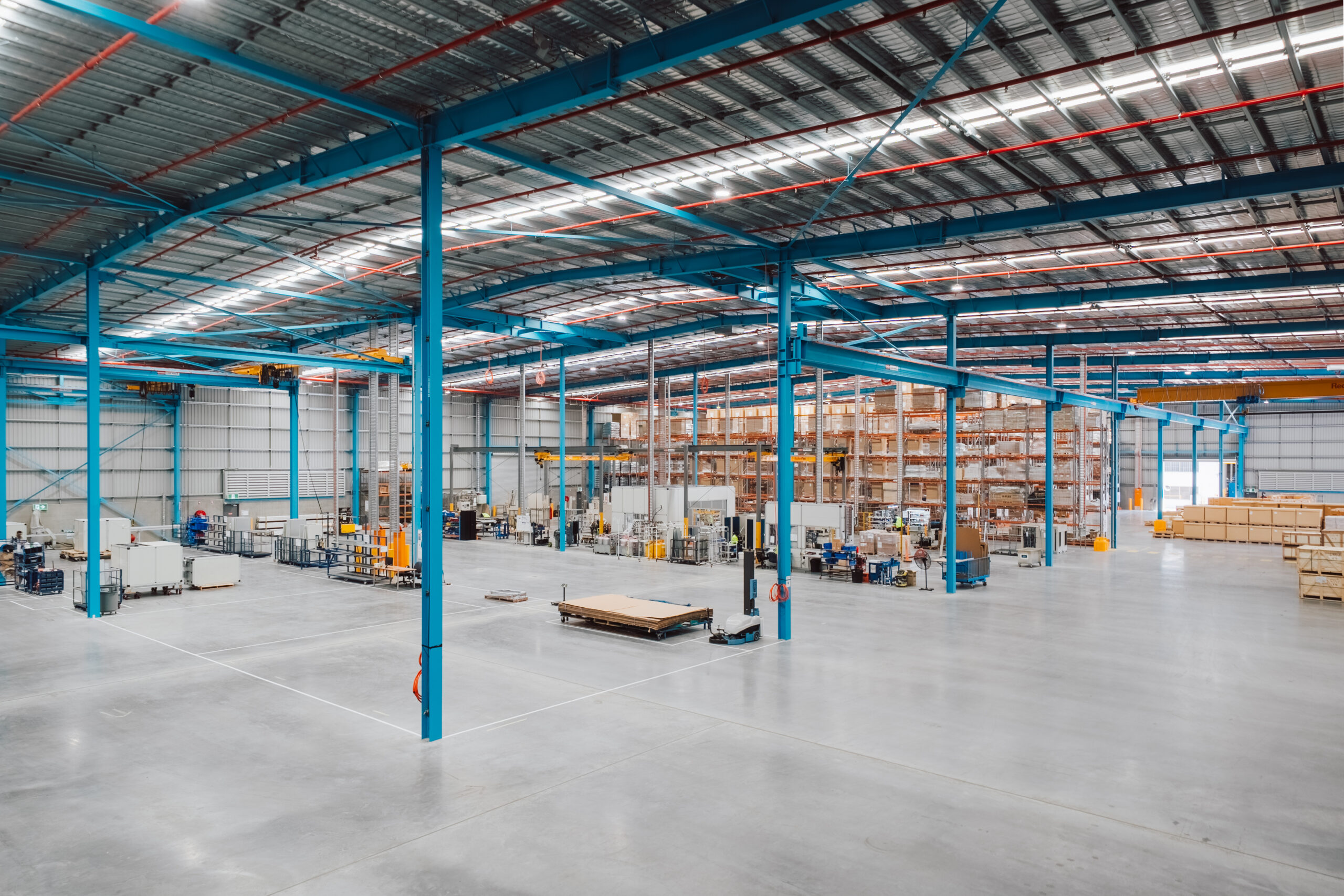
On December 10 this year, Daikin unveiled its new Australian manufacturing facility in Chipping Norton in Western Sydney. The $28.6 million, 7,500m2 factory is adjacent to Daikin’s existing 8,800m2 facility and will be primarily used to manufacture air handling units (AHUs) and packaged rooftop products, with flexibility to expand operations in the future.
It raises the question: When sectors such as the auto industry have found it impossible to continue manufacturing in Australia, why are HVAC&R businesses investing locally?
Local security
In the June–July 2024 issue of HVAC&R News, we spoke to several Australian HVAC&R companies that have decided to invest in local manufacturing.
One of the messages from that article was that manufacturing in Australia provides a level of quality assurance that is difficult to replicate offshore. Companies can design products specifically for the Australian market, maintain better control over their supply chain, and ensure that their products are put together safely, effectively and efficiently.
Daikin Australia Manufacturing General Manager Nick MacDonald understands manufacturing in Australia better than most, having previously worked in the auto industry. He agrees that quality control and reliability are key benefits of local manufacturing, while acknowledging that Australia will likely never return to generating roughly a quarter of its GDP from manufacturing, as it did in the 1960s.
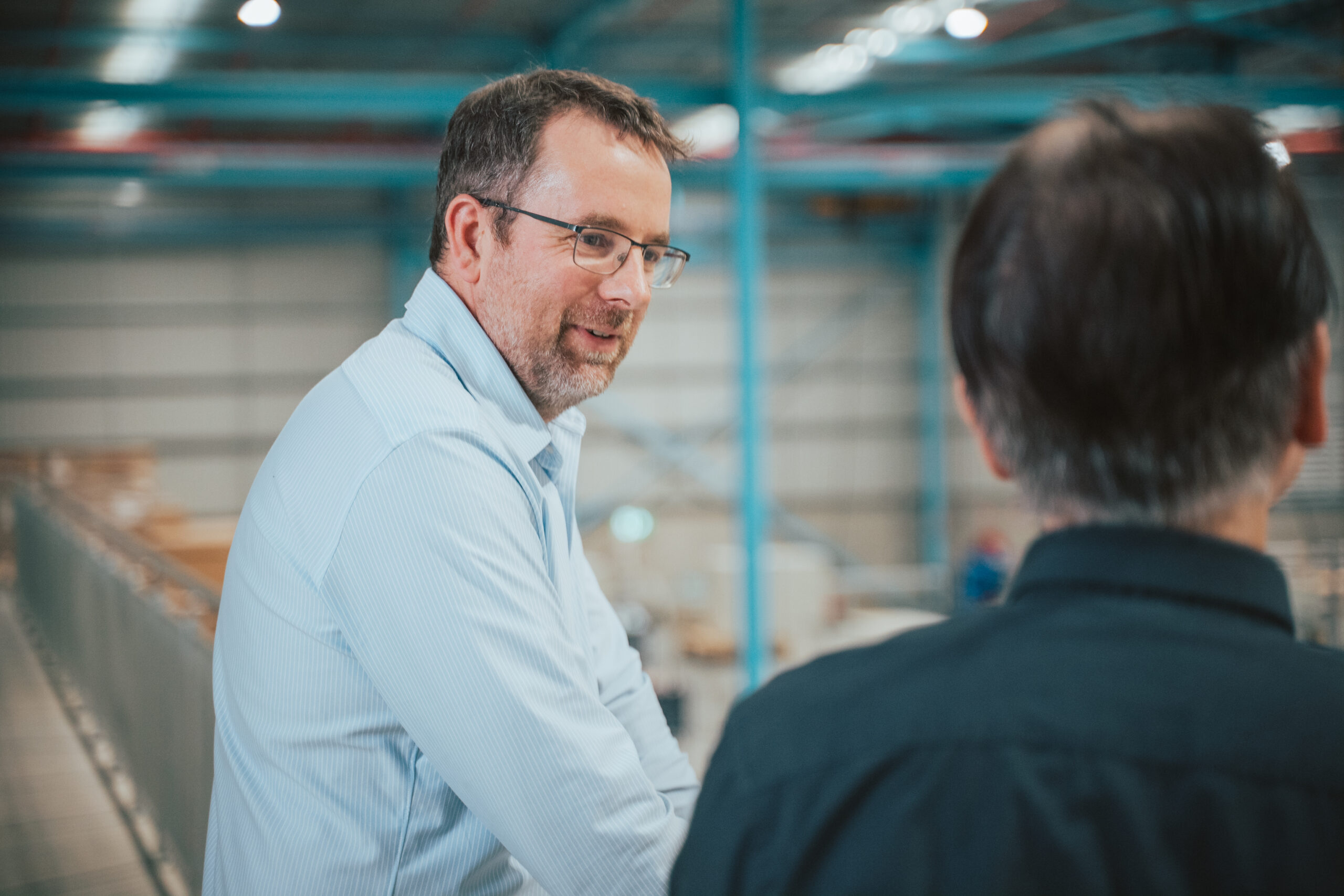
“Manufacturing in Australia is tough, so if you try to do what the rest of the world does, then that’s really challenging,” MacDonald says.
“Companies like ours can and do have success when they target particular areas that are in demand on the local market but aren’t as well served by overseas offerings. Our local products are quite focused on the local market.”
This means building products that qualify for the certified Australian Made mark and are designed specifically for Australian conditions and regulations. According to Daikin Australia Managing Director Hideaki Furihata, this approach is guided by the company’s global philosophy.
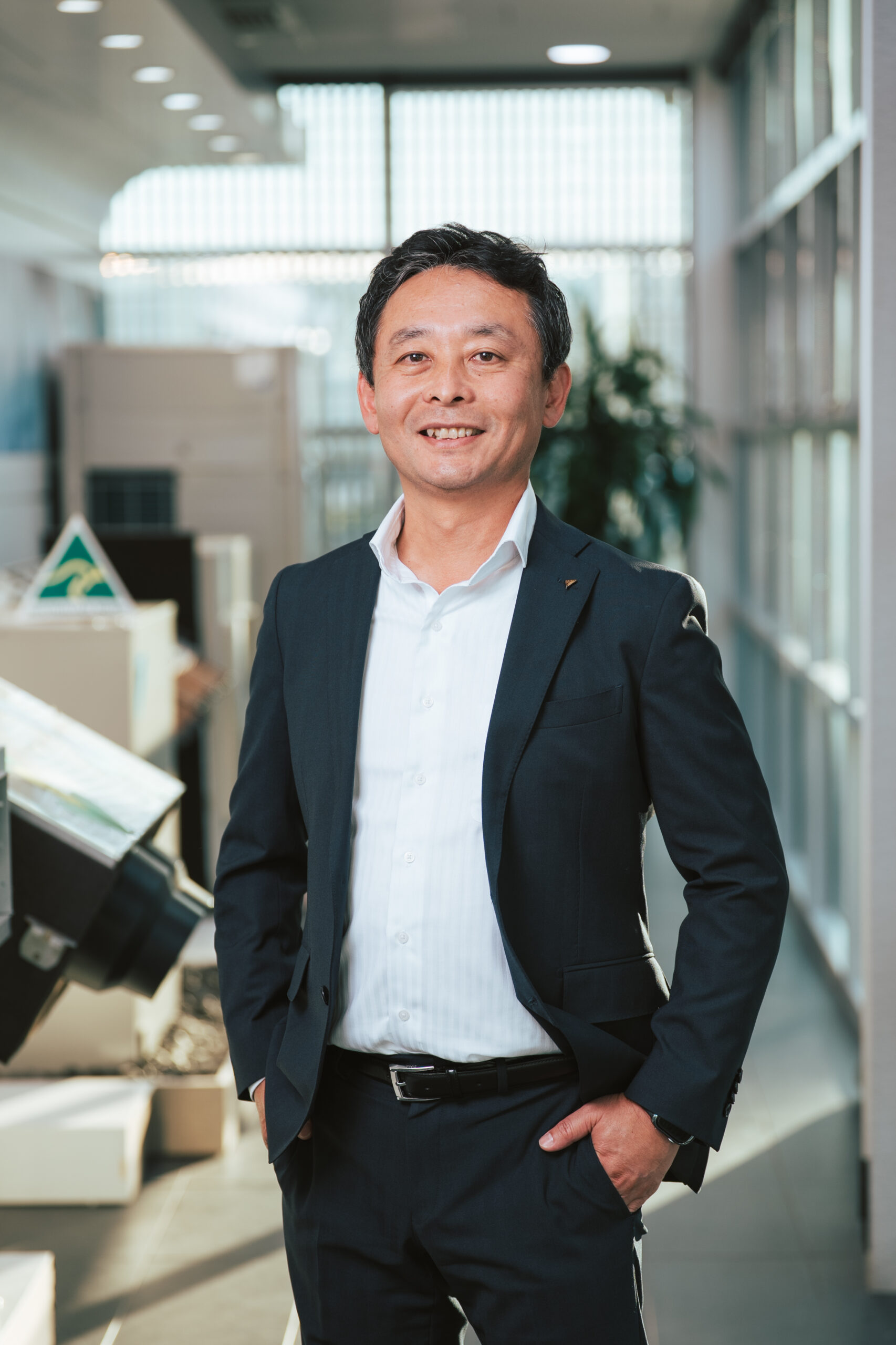
“Even though we’re a Japanese brand, we always want to have local plant,” Furihata says. “Our strategy as a global company has been to have local facilities wherever possible. This allows us to better understand and serve the local market and the local people.”
Pandemic planning
In last year’s article, respondents highlighted supply chain disruptions from COVID-19 as another key reason for bringing manufacturing back to Australian shores. While Daikin acknowledges this as a key reason to invest in Australian facilities, Furihata says the company had decided to build the new Chipping Norton facility even before the pandemic struck.
And while Daikin’s facility stayed operational and actually increased production throughout the pandemic, MacDonald says the experience has provided valuable learnings.
“We definitely learnt our lessons from that period and we’re doing our best to apply them to the new factory,” he says.
Work smarter, not harder
Just as products need to be suited to local conditions, so do factories. One of the requirements of successful manufacturing in Australia is finding technical solutions to maximise efficiency.
“AHUs are highly customised,” MacDonald says. “Every unit is different for every different customer, which means the design is different and there’s a lot of modification and customisation to the design of the product.
“That’s all very labour-intensive. To do that in Australia in a cost-effective manner, we need to digitise and automate the process as much as possible.”
As well as autonomous mobile robots, the new facility also uses software that allows the machinery to build AHUs to customised specifications with minimal human intervention.
“We’ve adapted a system that enables the sales team to select a product in conjunction with the customer. Once the solution is finalised, that product specification and design flows into the factory to the automated production equipment in a digitised manner.
“The machines make it, then we put it together. It eliminates a lot of manual drafting and opportunity for error.
“We could not build AHUs without this system.”
Clean manufacturing
With the effects of climate change becoming more apparent – and HVAC&R’s role coming under the spotlight – carbon neutrality is a top priority for many in the industry. While manufacturing has traditionally contributed to carbon emissions, Daikin is striving for net-zero greenhouse gas emissions across all product manufacturing factories by 2030.
“The main mechanism Daikin Australia will employ for net zero manufacturing is to have onsite photovoltaics to generate power that we consume,” MacDonald says. “We’ve also implemented measures around the use of highly energy-efficient manufacturing equipment.
“Our current factory employs around 550kW of generation on the roof. Our new factory will go online with a roughly equivalent amount in 2026. Between those two arrays, we will offset more than 50% of the power consumption at this site.”
MacDonald says the company will use carbon offsets to neutralise other operating emissions from the facility.
Lifelong skills
One of the messages that came out of our 2024 feature story was how hard it is to find workers with the appropriate enthusiasm and experience to work manufacturing jobs in Australia.
Daikin’s response to this is what the company calls a “skills dojo”. The term comes from the Japanese word for classroom, and the concept is simple: all workers receive onsite training when they begin their employment, and complete ongoing upskilling throughout their employment. It means that even school leavers can thrive, as long as they’ve got the right attitude.
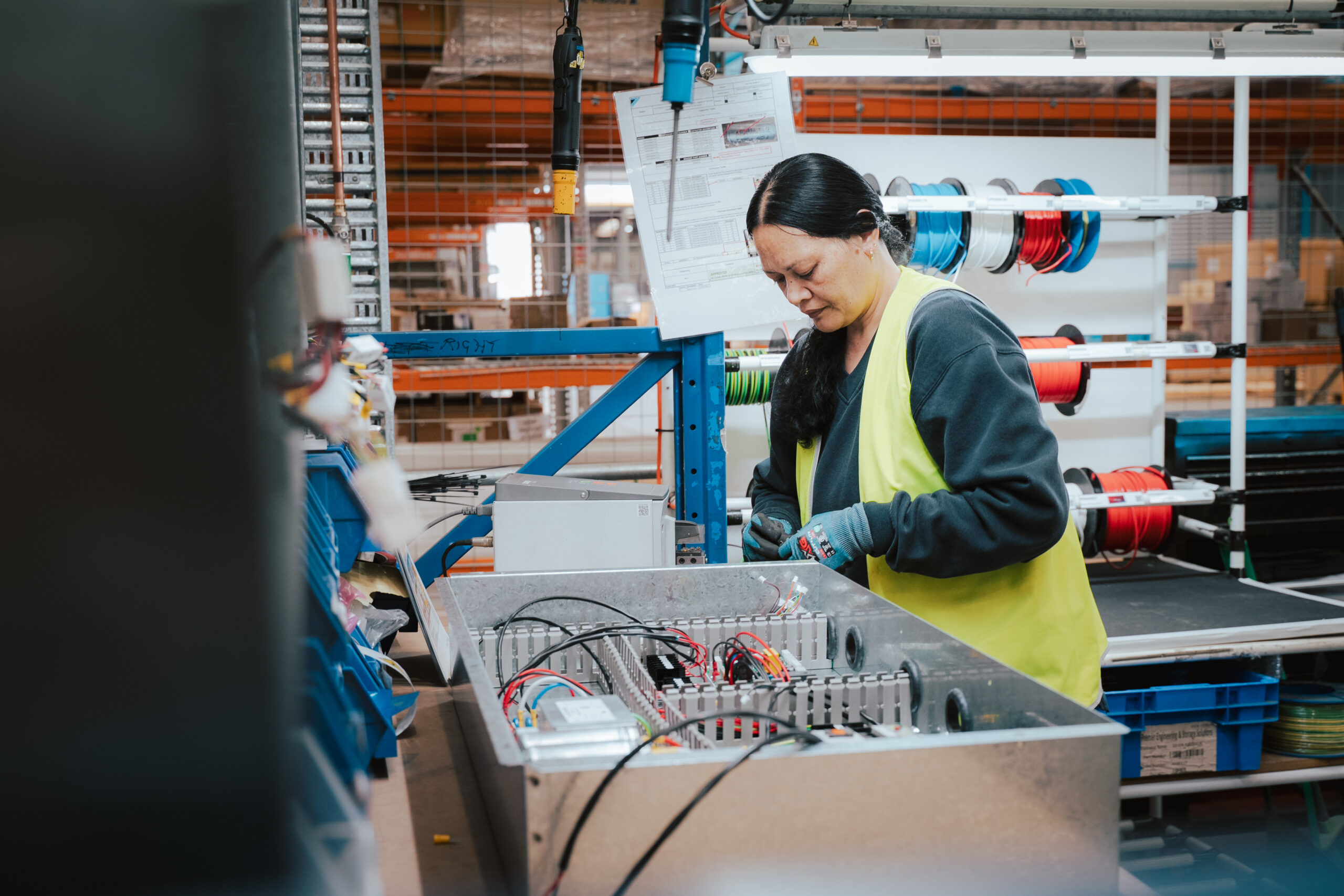
“The purpose of the factory skills dojo is to upskill our workers, many of whom come to us with limited exposure to manufacturing,” MacDonald says. “They receive training in shop floor manufacturing skills, all the way from safe operation of equipment to skills and techniques such as metal forming, brazing, and electrical wiring.
He likens the program to continuing professional development (CPD) and says all employees – from the shop floor to the C-suite – participate.
“Each department organises that ongoing upskilling, and it’s never finished,” MacDonald says. “Our trainers have KPIs around how many hours of training they deliver per person per month to make sure we’re getting training to the people who need it.”
Furihata notes that the company adopts this policy globally.
“We spent around $100 million to build our own dedicated training centre a few hours from Osaka,” he says. “There, we gather people from all over the world, sometimes for competitions and sometimes for conferences.”
The two trainers who run the skills dojo at Chipping Norton spent three months training at the Japanese facility.
Building community
Daikin says its new facility has already generated more than 60 full-time jobs. MacDonald sees this not just as an economic positive, but as something for the local community to build upon.
“I could talk for hours about the importance of manufacturing to the local economy and the community,” he says.
“There are members of my team who joined us as their first job out of school. They’ve come to us just with year 12. They’ve learnt how to become manufacturing professionals. They’ve learnt how to operate a factory and are now well on their way to building wonderful careers.
“That has a massive positive impact on the local community and on the lives of the people involved. It’s one of the things I gain great personal satisfaction from.”
PREV
NEXT
Comments
Advertisements


Recent news
- ASHRAE calls for abstracts for 2027 Winter Conference
- Victoria pushes ahead with NCC 2025
- NZ opens plasma-powered refrigerant destruction facility
Latest events
- ASHRAE calls for abstracts for 2027 Winter Conference
- ARBS 2026 Awards finalists announced
- Program confirmed for REB26 at the MCG
Leave a Reply