 Nick Johns-Wickberg
Total control: where instrumentation and control meets HVAC&R
We examine the important role instrumentation and control technicians – or “instros” for short – play in optimising HVAC&R systems.
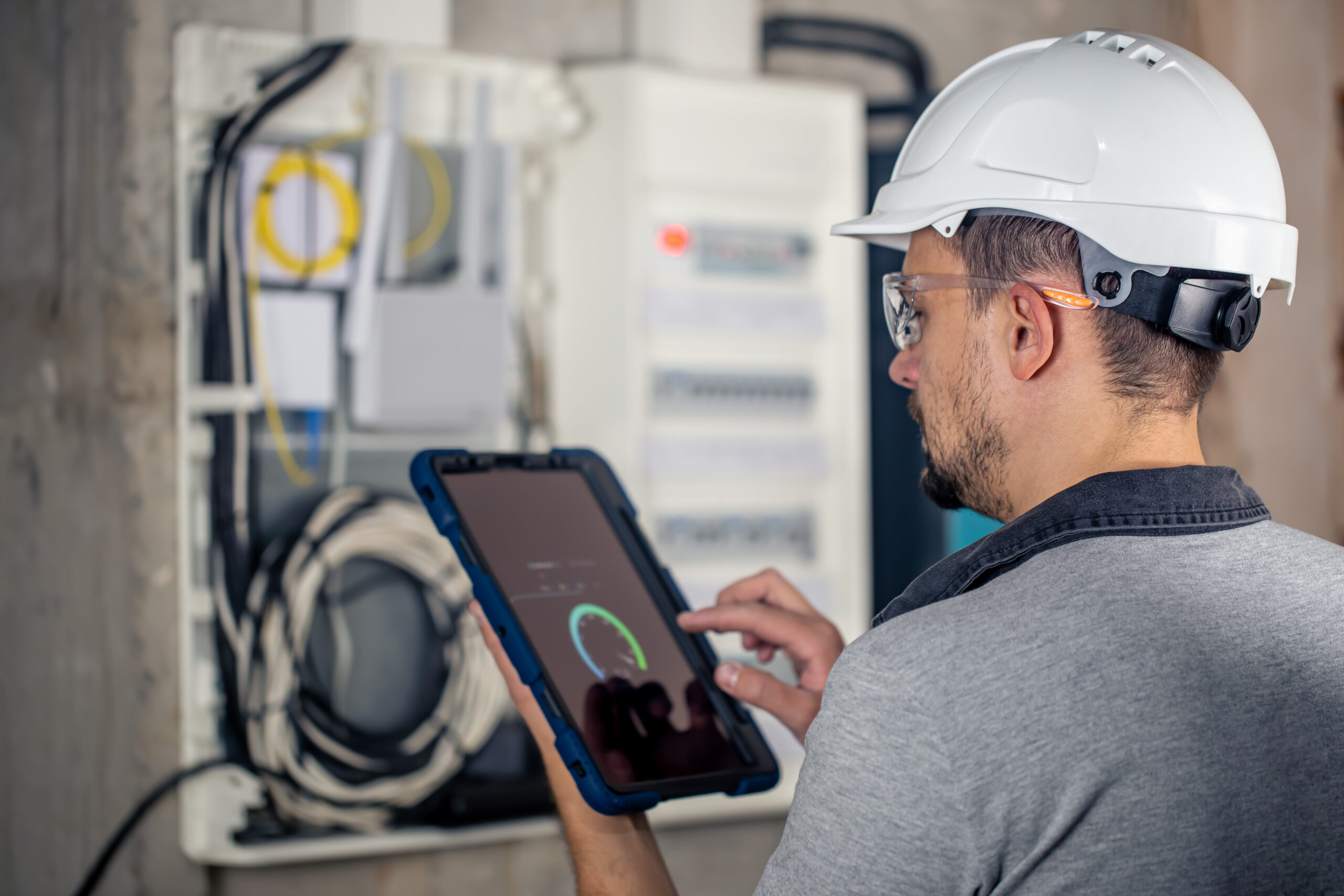
As automation and AI optimisation becomes more widespread in HVAC&R systems across Australia, the instrumentation that allows these systems to function smoothly is more important than ever. But who installs, maintains and repairs instrumentation and control (I&C) systems, and what does their career pathway look like?
In this feature, we’ll look at the vital Australian trade that is even more hidden than HVAC&R.
What is I&C?
Modern industrial processes require complex and highly specialised machinery. For that machinery to function properly, it needs to be controlled using instrumentation that is correctly installed, commissioned, fine-tuned and maintained.
This is where I&C technicians come into the picture. These highly trained professionals have a deep understanding of both the theory underpinning mechanical operation and the specific processes they work with.
Glen McMurtrie is the Leading Vocational Teacher in TAFE Queensland’s Project Instrumentation department, where he runs the Certificate III in Instrumentation and Control (UEE31220) course. As he explains, working as an instro requires both broad and extremely specialised technical knowledge.
“A common trait amongst I&Cs is they know their process,” McMurtrie says. “If they work at a brewery, that doesn’t make them the brewer, but they know typical flow rates, temperatures, pressures, and pH associated with the process.
“Calibration for custody transfer and quality compliance is a large part of what we do.
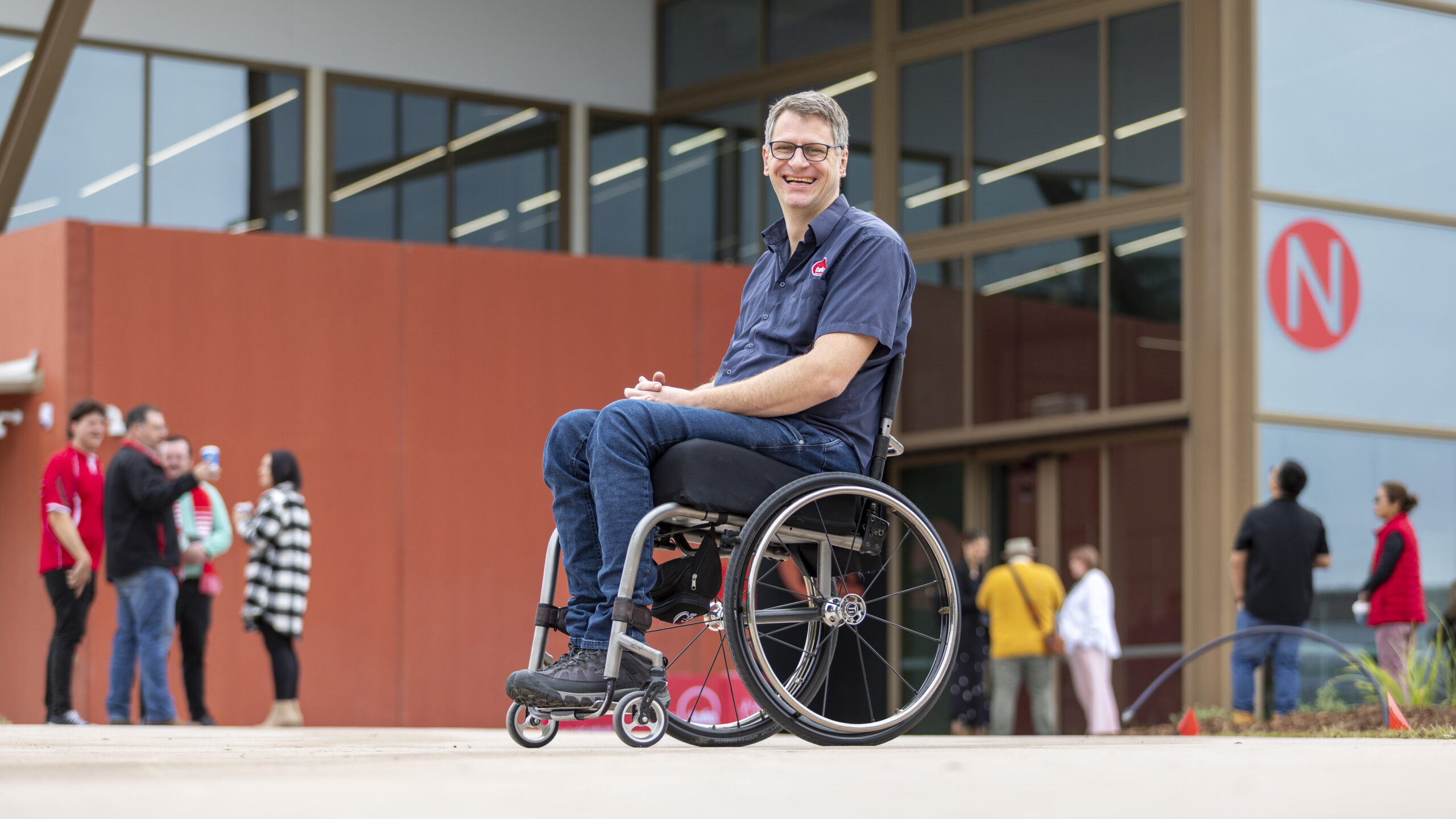
“Add to that final control elements like control valves and drives, general troubleshooting and control optimisation, and you’ve got yourself a very multifaceted tech.”
For example, an I&C technician could work in energy production or mining, ensuring that multimillion dollar equipment is performing safely and efficiently as intended. In that role, they would be responsible for:
- Installing and maintaining equipment
- Calibrating and optimising the equipment once installed
- Monitoring system performance and repairing faulty equipment where necessary
- Keeping thorough and accurate documentation to ensure compliance.
It’s not just industrial processes where I&C technicians thrive; they also have a huge role to play in the built environment. As McMurtrie says: “BMS techs from the major vendors train with us and a lot of what we do directly correlates with HVAC&R.”
Instros in HVAC&R
I&C is as important in an HVAC&R setting as it is in any other industry. One company that works at the intersection of the I&C and HVAC&R sectors is Reliable Controls, a global provider of smart building controls systems that is headquartered in Canada.
Levi Tully is the Executive Vice-President of Sales at Reliable Controls. He says I&C acts as the “nervous system for the built environment”.
“The role of instrumentation and controls in HVAC and building services is fundamental,” Tully says. “You cannot manage what you do not control. Even fundamental thermostatic control requires a degree of instrumentation and control. Optimisation of the built environment requires significantly more, and effective autonomous automation even more.”
Perhaps the most obvious example of this is a building management system (BMS), a highly complex network of sensors, instrumentation and high-tech software that controls and optimises HVAC performance in commercial buildings.
While RAC technicians take care of the physical HVAC infrastructure within the building, instros are responsible for the electronic side of things. Tully says their work – which includes installation, commissioning, maintenance, repair, and software and network support – is vital in ensuring optimal system performance. After all, one malfunctioning component can throw an entire building into disarray, causing temperature fluctuations and excessive energy use.
“True sustainability in the built environment comes at the convergence, not divergence, of people and technology,” Tully says. “Controls technicians provide a crucial and multidisciplinary insight into the optimisation of not just built environment systems, but also the human experience in the built environment.”

I&C technicians have arguably an even more important role in refrigeration, where their work involves an additional safety component. For example, in industrial refrigeration systems that use ammonia as a refrigerant, any gas leak can be not only toxic, but potentially lethal. Ensuring that leak detectors and pressure relief systems operate as intended is part of the instro’s remit, as is ensuring that temperature and energy use is accurately monitored.
So, what’s involved in becoming an instro?
Instrumental training
The Certificate III in Instrumentation and Control (UEE31220) consists of 12 weeks of training that can be done all at once, or spread over a year or two to cater to those who already have work commitments.
McMurtrie identifies measurement as one of the foundations of I&C both as a profession and as a training course.
“There’s an old saying that ‘if you can’t measure it, you can’t control it’,” McMurtrie says.
“The first eight weeks of the course cover all the basics of measurement, installation, calibration, and signal protocols. Some of the process variables HVAC&R techs will be familiar with, including temperature, pressure, and flow. However, some may be foreign: level, density, weight, pH, conductivity, ORP, turbidity, O2, and gas composition.
“The final four weeks is all about control – proportional-integral-derivative (PID) control, to be exact.”
This stage of the course focuses heavily on practical skills and coming to grips with complicated control equipment. Being able to provide the right resources to students is crucial.
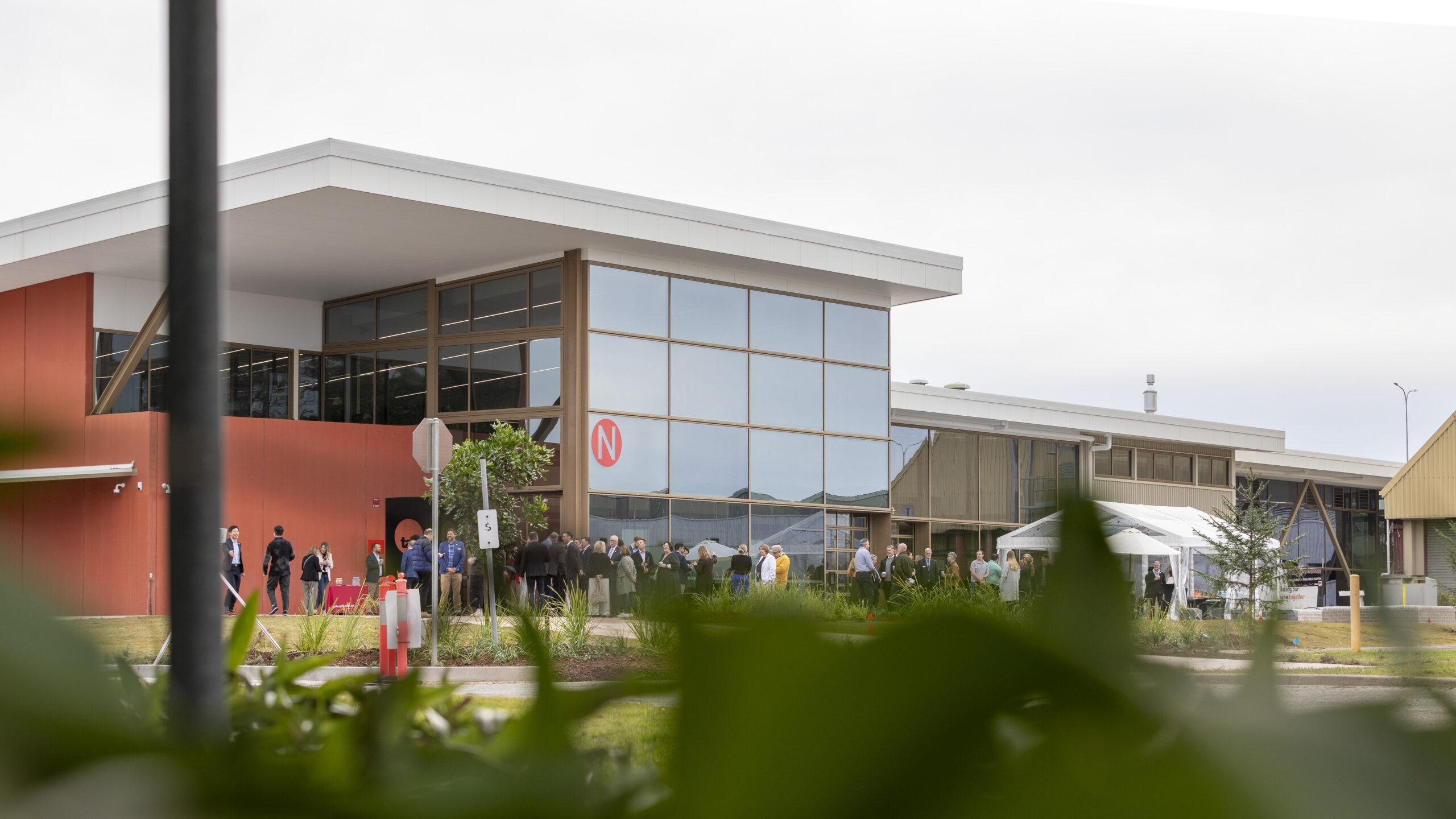
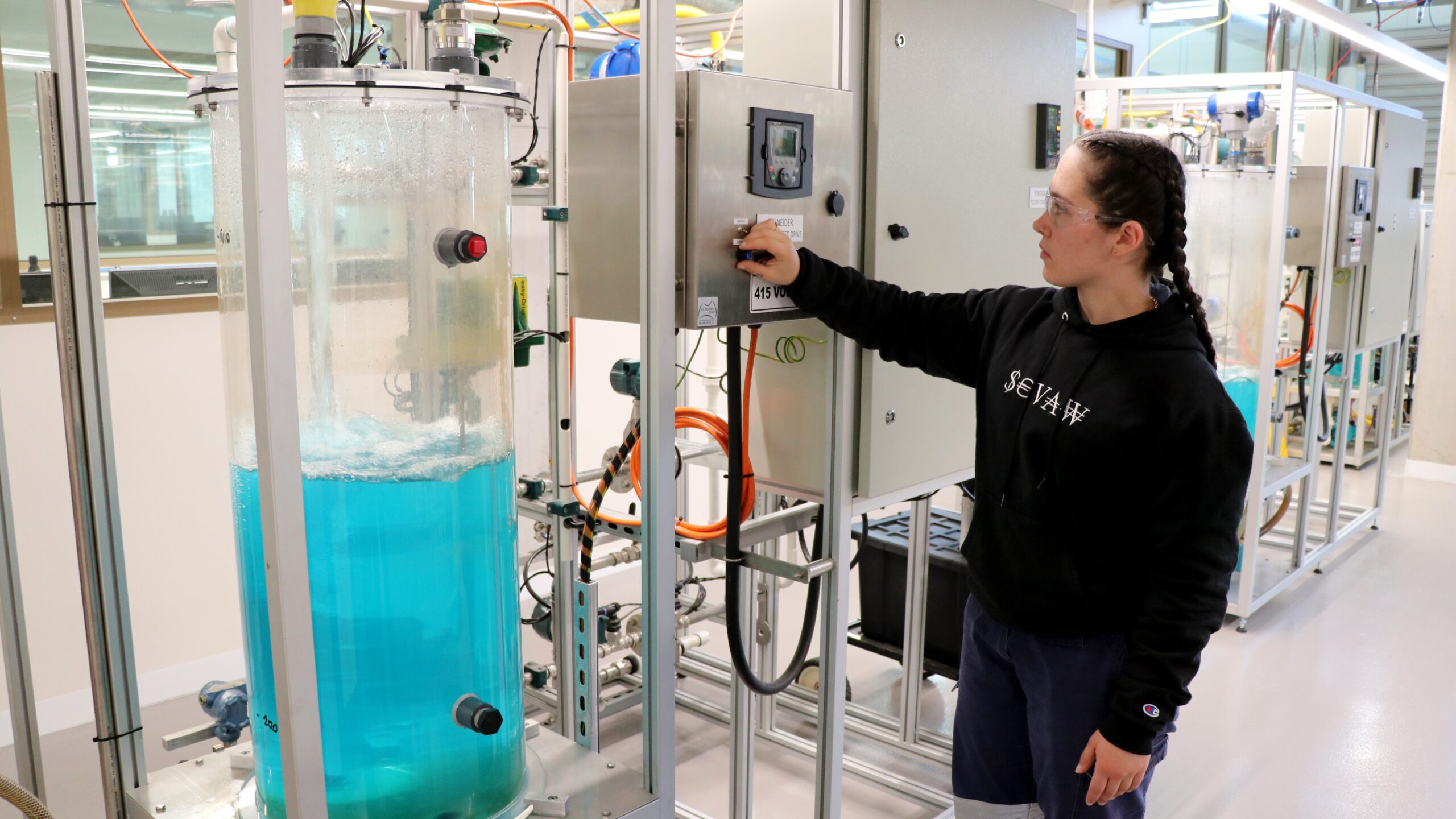
“We’re fortunate here at TAFE Queensland to have just moved into a dedicated $40 million facility located near the airport at Eagle Farm,” McMurtrie says. “This has allowed us to have dedicated areas for classroom delivery, workshop calibration and repairs, and finally a wet area where ‘live’ process simulators are located. These simulators contain the various instruments and final control elements found across multiple industries.
“We’re lucky to have a variety of industrial controllers here on campus – everything from relatively simple panel mount controllers through to Rockwell Compact Logix and Factory Talk SCADA. We’re the only TAFE with a fully-fledged distributed control system (DCS) on site too. The Yokogawa Centum VP allows the students to control real live working process from a simulated control room environment.”
Fully automated future?
It’s clear just how important I&C will be in a built environment that is becoming increasingly automated. But are we destined for a future where humans have little to no role in operating and maintaining BMS and HVAC systems within buildings?
From everyone we’ve spoken to, the answer is a resounding “No”.
“There will never be a point where human intervention in HVAC controls will be minimised to the point of zero,” says Reliable Controls President Tom Zaban. “A human will always need to be involved in the design, implementation, validation, and maintenance of the systems that humans engineer.
“Anything that humans create will require humans to maintain, even if it means maintaining the robots that construct and manage the buildings for us.”

Reliable Controls Training Manager Nathan Wilson points out that, even if a building’s HVAC system were to be fully automated, the maintenance burden on technicians would be significant.
“The types of systems that could run buildings without human involvement have a short service life; either the hardware fails or there are security or performance issues that require human involvement,” he says. “At this time, I believe it is even more critical that technicians and building operators have a strong understanding of how systems work.”
Converging knowledge
McMurtrie identifies the significant crossover between I&C and trades like HVAC&R and electrical. In fact, many of his students from Queensland, NSW and the NT come from this kind of background.
“BMS has always been a natural I&C transition for many HVAC&R techs over the years,” he says. “Most of the people we train are industrial electricians, but we need more fridgies!
“HVAC&R is a process, so honestly, they’re like ducks to water in this course.
“Not only do they understand temperature and pressure, but fridgies have an idea of energy/mass balance and inertia in systems – they know that some things can’t just be switched on and off!”
Glen McMurtrie, Leading Vocational Teacher in TAFE Queensland’s Project Instrumentation department
And while there is plenty of crossover between the trades, McMurtrie points out that the I&C training is far more substantial than many might realise.
“We most definitely need to do more to promote awareness and understanding of this often-misunderstood trade,” McMurtrie says.
“A lot of techs, whether they be electricians or HVAC&R professionals, see I&C as just an ‘add on’, another short course or accreditation. I can assure you it’s a lot more than that!
“It wasn’t until I worked at the huge Mount Isa Mines complex in northwestern Queensland that I was exposed to the extent of industrial process control. The sheer scale, amount and variety of instruments, PLCs and DCS was mindblowing.”
Workforce shortage
Like many trades across Australia, I&C is struggling to attract the next generation of talent. It’s a concern given I&C’s increasing importance as process automation becomes more widespread.
“I believe there is a shortage of technicians in general in Australia,” says Reliable Controls Australasia Business Development Executive Vince Dunn, M.AIRAH.
“More focus on formal training by employers would be an improvement, with an understanding that this training is an investment rather than an overhead.”

McMurtrie agrees that there is a significant shortfall in I&C tradespeople, highlighting several challenges in recruiting and retaining professionals.
“We most definitely face a shortage of I&Cs, mainly due to an ageing workforce, younger people’s values and priorities when choosing a career, and competition within the STEM trades,” he says.
“A common complaint among instrumentation vendors is the lack of dedicated, experienced I&C techs who are truly competent in their line of work – especially when dealing with warranty claims and service support for equipment that was incorrectly installed, commissioned, or specified.”
He says increasing exposure among young people who are looking for an engaging and multifaceted career is one of the best ways to address the shortfall.
“I think TAFE is on a winner with ‘try a trade’ days that allow school leavers and the public to come along and see what a trade involves before committing to it,” McMurtrie says. “It’s very satisfying seeing their faces light up when they step into the instrumentation space, and even more so when they realise they’ve found a vocation worth pursuing.”
Global standards
As a global provider, Reliable Controls has a strong understanding of market variations across the world. One of the main differences between North America – where the company is headquartered – and Australasia is the connection between I&C and sustainability.
“Driven in part by the cost of energy, the focus on decarbonisation, energy and water conservation, prescriptive reporting and analytics legislation, strategies, and technology are much more advanced in Australasia than they are in North America,” Tully says. “This level of attention to power consumption and reduction would go a long way toward achieving decarbonisation and greenhouse gas emission reduction in the built environment.”
Wilson adds that, while occupant comfort comes first in North America, Australia’s willingness to reduce energy costs could lead it to adopt cutting-edge AI-powered approaches.
“Something that I expect will gain traction in Australia, but will not succeed in the long term, is centralised, AI-empowered control,” he says. “It has the promise of saving energy, which will be very enticing, but I believe it is critical that automation be distributed with intelligence pushed to the edges.”
For Zaban, standardisation between jurisdictions would improve efficiency and results.
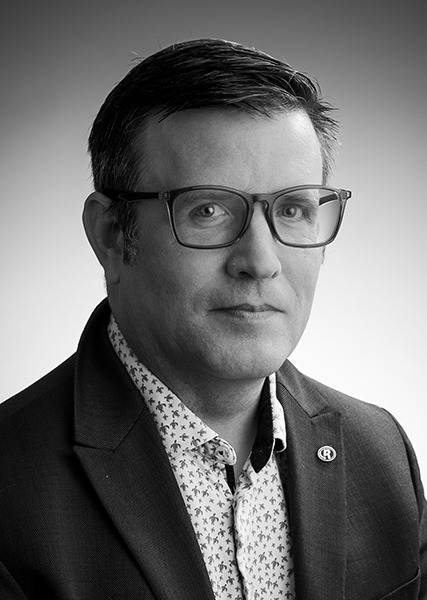
“It would be nice to see wireless communication frequencies become harmonised between North America and Australia,” Zaban says. “It would be even better to see paper size, spelling, currency, decimal point notation, engineering units, and green building certification criteria become standardised.”
Decades of evolution
If you think I&C is a fledgling sector, think again. Reliable Controls is celebrating 40 years in business in 2026 – a good indication of just how long this behind-the-scenes industry has been operating.
As you can imagine, plenty has changed in the I&C space over the past four decades – after all, the Ethernet standard was only established in 1983, an era when the internet as we know it today was unimaginable.
“40 years ago, an experienced controls technician would have interacted with pneumatics more than computer networks,” Tully says. “Early controls networks moved technicians from gauges and centralised control panels in mechanical spaces to distributed control and graphical user interfaces on a workstation.”
As technology has advanced, so too has the instro’s role. Key milestones have included the advent of direct digital control, the adoption of open protocols including BACnet, the use of internet-connected systems, and the significantly increased need for cybersecurity awareness. As such, instros today have similar responsibilities and work using the same foundational principles as those who worked decades ago, but in very different ways.
“Automation technicians have evolved dramatically in the past 40 years, almost entirely related to the convergence of operational technology (OT) and information technology (IT).”
Reliable Controls Executive Vice-President of Sales Levi Tully
“A technician 40 years ago and one today must both understand how to harness complex mechanical and electrical systems to protect the welfare of people and property. But a technician 40 years ago would have been almost as likely to understand IP addressing and networking as a technician today would be to understand how to properly calibrate and maintain a pneumatic controller.”
Given how quickly I&C technology is moving, only a fool would try claim to know what the industry will look like a further 40 years down the track. But one thing is for sure: I&C will continue to play a huge and largely unseen role in our lives.
PREV
NEXT
Comments
Advertisements

Recent news
- General sweetens the deal on ducted systems
- Honeywell releases new gas sensor for high-risk environments
- ASHRAE calls for abstracts for 2027 Winter Conference
Latest events
- ASHRAE calls for abstracts for 2027 Winter Conference
- ARBS 2026 Awards finalists announced
- Program confirmed for REB26 at the MCG
Leave a Reply