 Mark Vender
Our sector in the spotlight: takeaways from HVAC26
At an event that promised to explore the future of our unseen industry, we learnt that HVAC&R is more visible and vital than ever before.
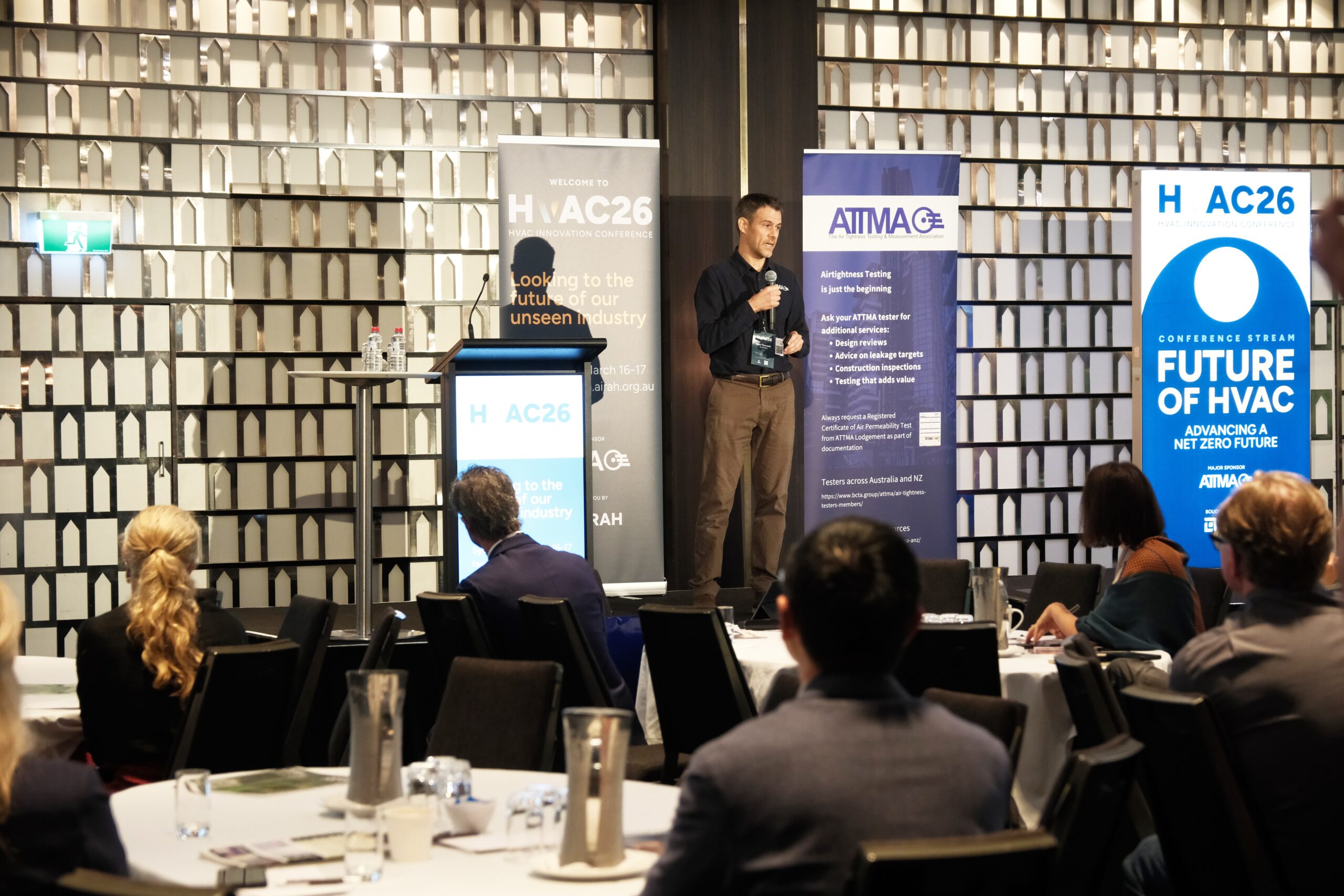
Building services have long been seen – especially by those in the sector – as invisible heroes, maintaining our health and safety unobtrusively, sometimes to the point where the work goes unrecognised. But as the presentations and conversations at AIRAH’s 2026 HVAC Innovation Conference (HVAC26) showed, this is changing.
Following on from the 2024 iteration, this year’s HVAC Innovation Conference once again brought together three of AIRAH’s leading events: the Future of HVAC, Building Physics Forum, and Big Data and Analytics Forum. The event was held March 16–17 at the Sheraton Grand Sydney Hyde Park.
“The HVAC Innovation Conference is AIRAH’s flagship national event, so it’s fantastic to have it back on the calendar,” says AIRAH Conference and Events Coordinator Julia Bassal.
“Over the two days we had about 200 attendees, with lots of conversation and sharing across the three streams of the conference. The feedback from the audience and the speakers has been extremely positive.”
Central piece of the puzzle
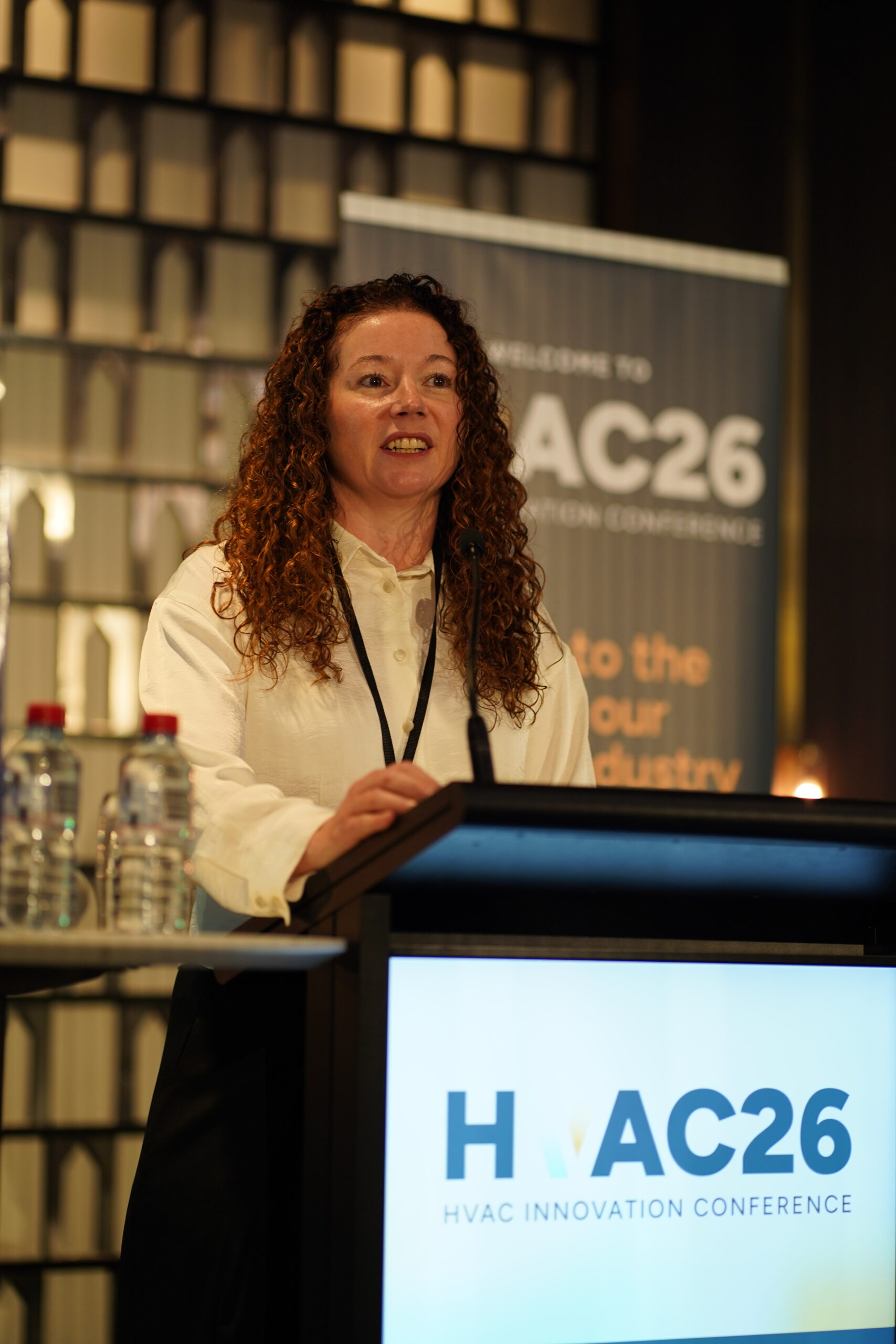
AIRAH President Mikaila Ganado, F.AIRAH, opened proceedings by talking about the huge responsibility of HVAC in modern buildings, not only to ensure the wellbeing and comfort of occupants, but to do so in a way that protects the environment. She noted that although unseen, these systems must be understood, measured and maintained.
The imperative to combine efficiency and safety was underscored by the first keynote speaker. As the recently appointed CEO of the Australian Building Codes Board, Adrian Piani spoke about the 2025 version of the National Construction Code – due to be published on May 1 – as well as the NCC’s future. He laid out what he describes as a five-year journey, which will involve not just simplifying the code, but also greater integration with technology such as AI.
The next keynote speaker, presenting virtually from the US, continued the building codes thread in his presentation “Staying out of trouble – don’t do what we did”. Joe Lstiburek, also known as the godfather of building science, presented in his inimitable style on issues such as airtightness requirements, balanced ventilation, air conditioning and insulation. He pointed out that Australia has the same climate zones as the US and we should learn from their mistakes.
The audience was entertained and edified, looking forward to Joe’s visit to Australia for AIRAH’s IAQ26 conference from August 31–September 4 in Cairns.
Emerging themes
Indoor air quality emerged as a strong theme in the conference, reflected both in the presentations and the interest shown by attendees. Brad Prezant, Affil.AIRAH, spoke about the concept of “equivalent” CO2 as a metric for indoor air quality. Ben Gill, Affil.AIRAH, presented a case study on air decontamination trialled at Echuca Regional Health. And in one of the highlight sessions of the conference, Brett Fairweather, F.AIRAH, and Sonia Holzheimer, M.AIRAH, shared their expert perspectives on the latest version of Australia’s mechanical ventilation standard, AS 1668.2.
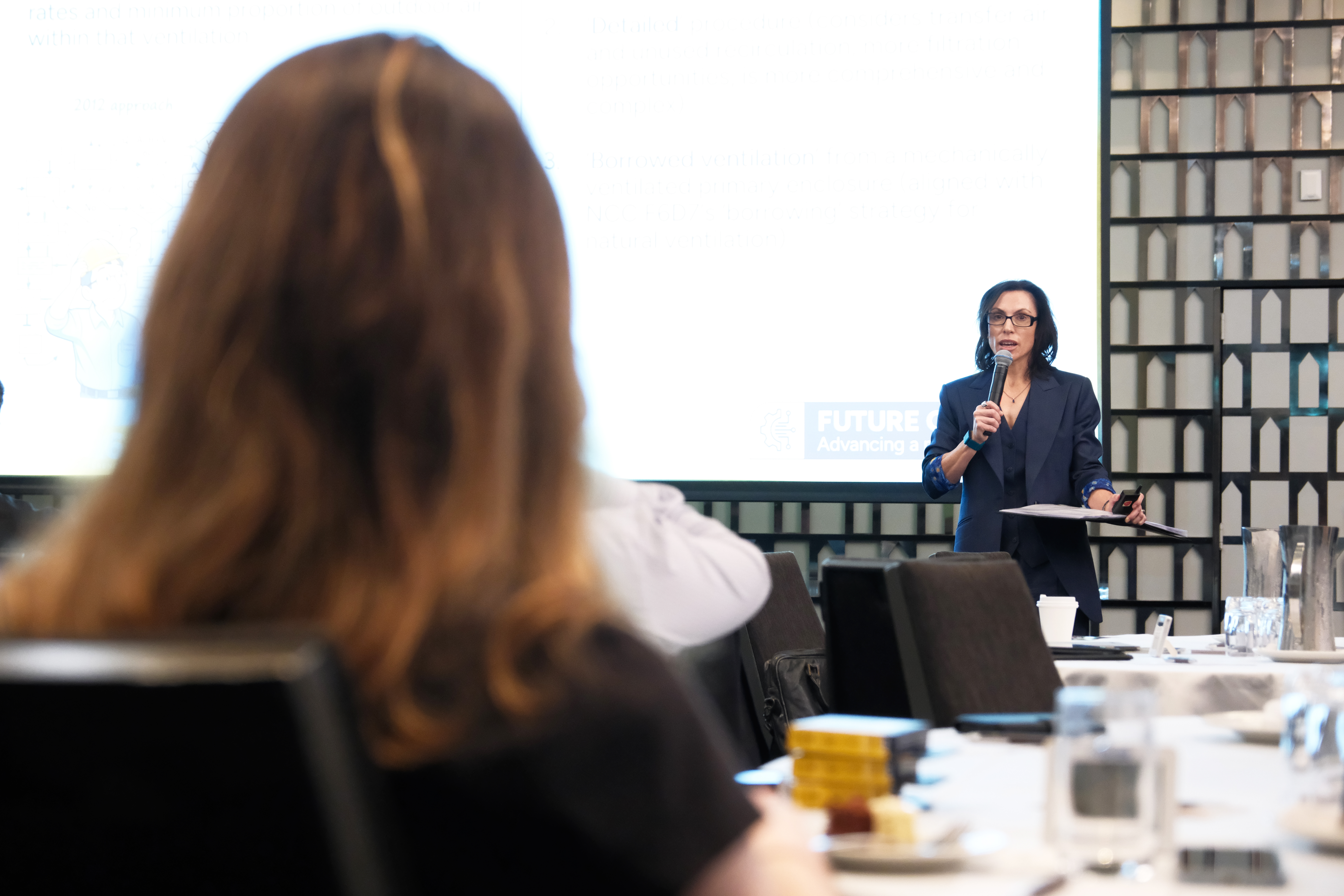
The hot topic of data centres was addressed on day two of the conference by keynote speaker Ramon Sa from the Clean Energy Finance Corporation. He delved into the CEFC’s recent report, Getting the balance right, and pointed out that due to favourable conditions in Australia, it is inevitable that data centres will be built here. The question is whether this will be done in a way that supports the system or undermines it. Later in the day, Philipp Schluter from Camfil took on the topic from a different angle, focusing on filtration in data centres.
Electrification and grid interactivity were also prominent themes. This included a case study on the Sydney Opera House, presented by Craig Roussac from Buildings Alive; a study of electrifying building heating infrastructure from Kanthasamy Mohan, M.AIRAH; and a session on OT infrastructure for grid interactivity presented by NXT Engineering’s Daniel Porragas, M.AIRAH.
To wrap up proceedings, the Energy Efficiency Council’s Rob McLeod shared the findings from the Commercial Buildings Electrification Roadmap, while previewing work planned for stage two of the project. This will include developing electrification playbooks for common building typologies.
A question of physics
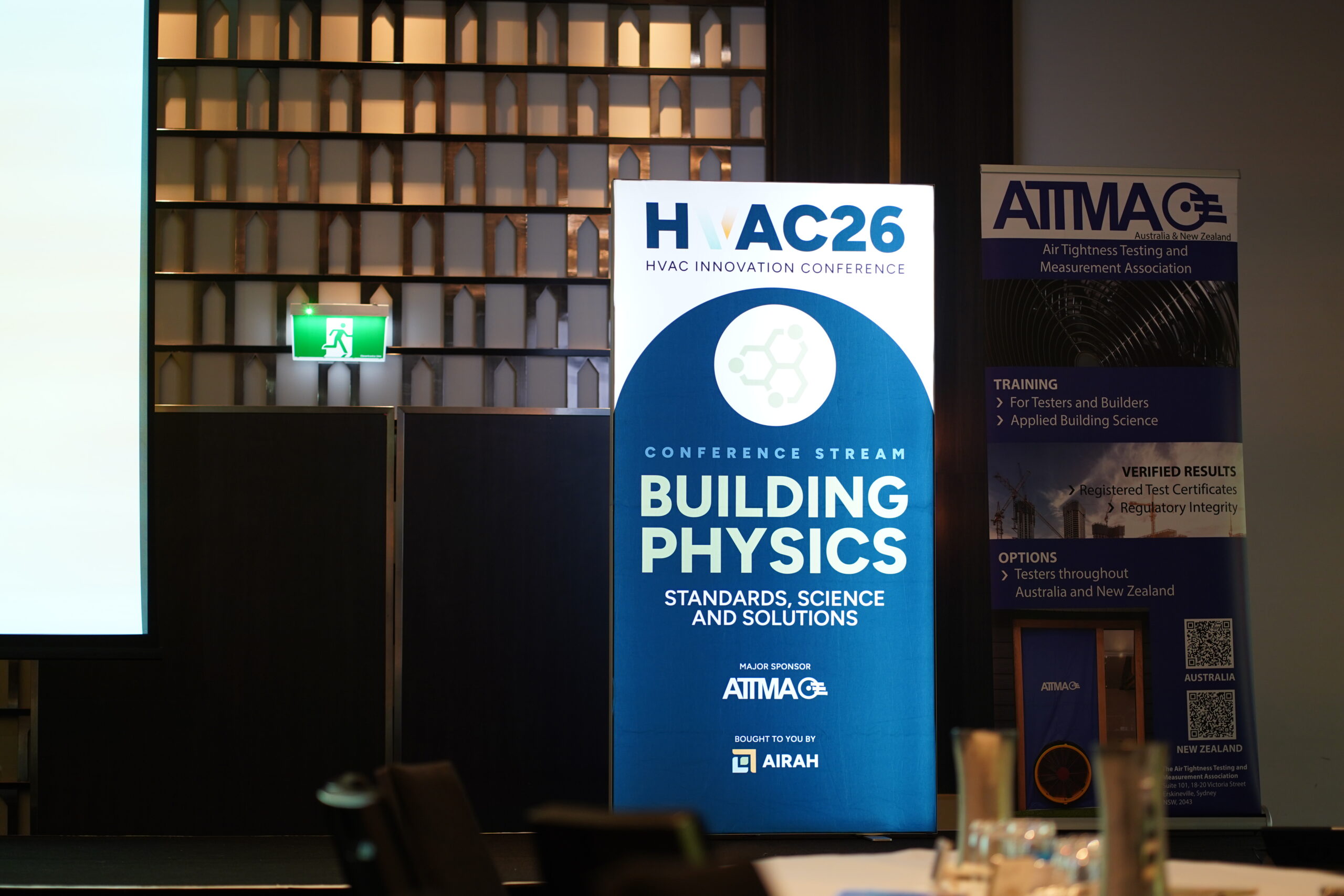
On day one of the conference, the Building Physics Forum ran alongside Future of HVAC.
The forum explored the science behind high-performance buildings, focusing on standards, measurement, and evidence-based design solutions that enable energy-efficient, resilient, and comfortable spaces.
Highlights included a presentation of the RACE for 2030 project to retrofit community housing in the APY Lands in remote South Australia, a panel on cold-formed steel framing in building codes, moisture management to avoid condensation and mould, and air infiltration within NatHERS.
The bigger picture
Another feature of the conference was the larger conversation about policy related to the built environment and HVAC, with government representatives both on the stage and in the audience. Hannah Bubb, Assistant Director in the Buildings Policy team at the Department of Climate Change, Energy, Environment and Water (DCCEEW), presented on the updated Trajectory for Low Energy Buildings. According to Hannah, the Commonwealth government very much recognises the importance of the HVAC&R sector, particularly in today’s world where buildings are required not just to mitigate climate change, but also to adapt to higher temperatures and extreme weather.
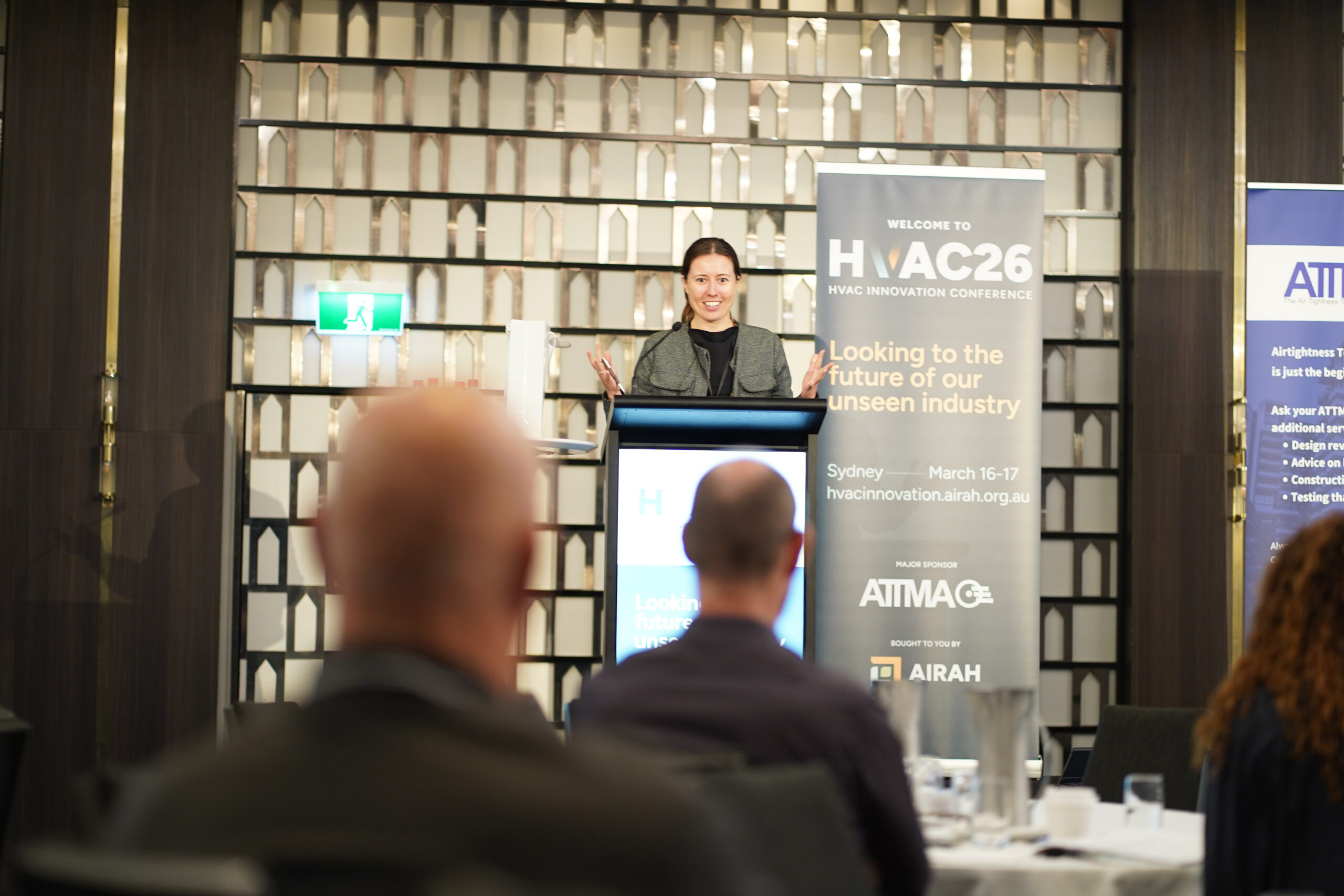
Ron Pulido shared an update from NABERS, including major changes in train for NABERS Energy ratings, and analysis on the interplay between energy efficiency and indoor environment in buildings. Alison Scotland from ASBEC outlined her organisation’s strategic priorities going forwards and where HVAC&R bodies like AIRAH will play a key role, and Adam Bertino from Emerald explained the shifting landscape of government HVAC incentives.
As always, the conference covered diverse topics. A panel of experts discussed challenges around selecting refrigerants and looming shortages of some widely used species. And AIRAH’s Executive, Education and Alliance, David King, presented on the skills gaps in HVAC&R and the role of industry in filling these.
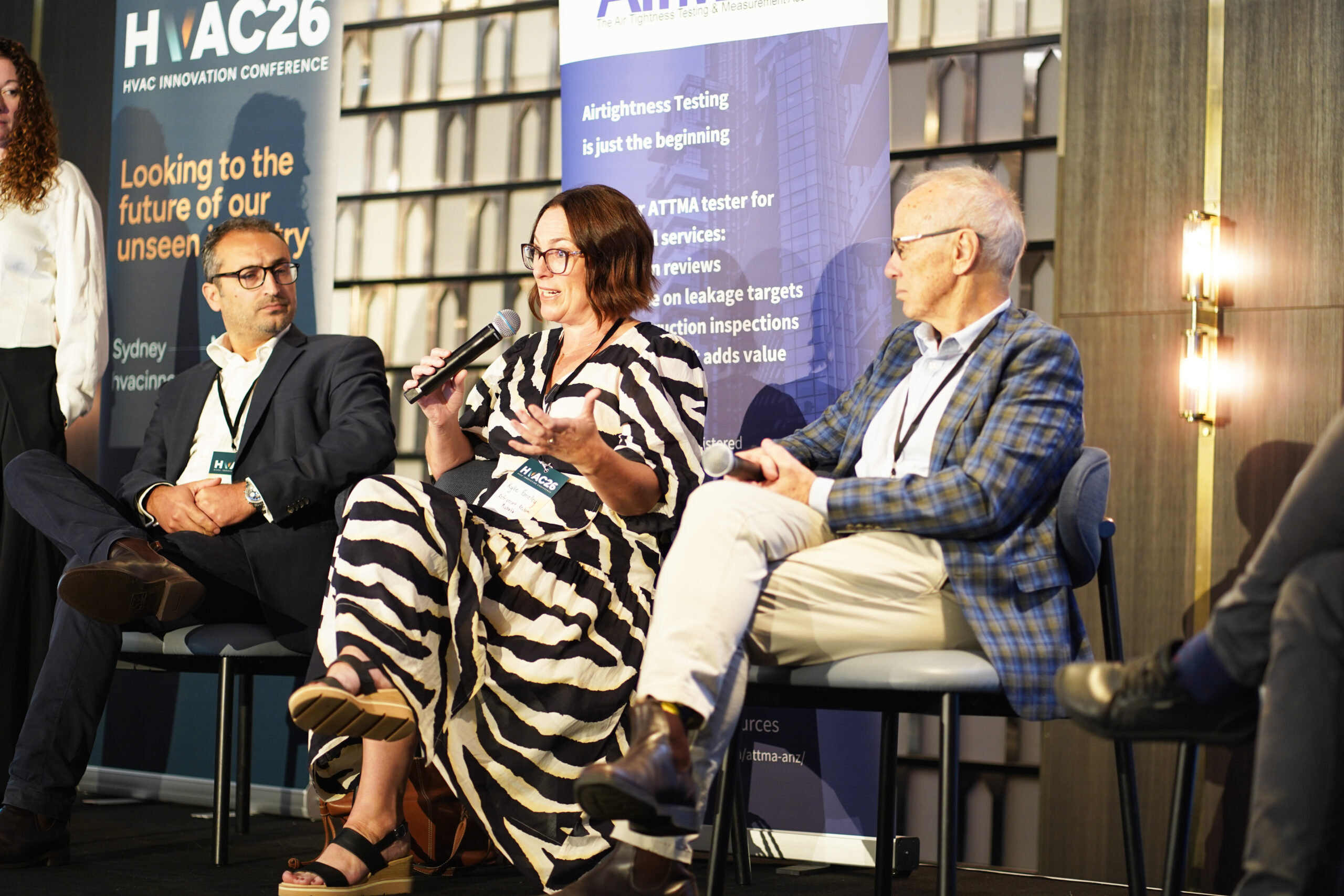
Innovation is the name of the conference, and this was reflected throughout. Whether the topic was data centres, commissioning, modern methods of construction, air quality or life-cycle analysis, the presenters shared knowledge from the leading edge of the industry.
“I’m here because I want to see what we’re doing and where the future of HVAC is going, and this is the best one in Australia for it,” said Ken Thomson, F.AIRAH, from Fusion Modulair.
Buildings with brains
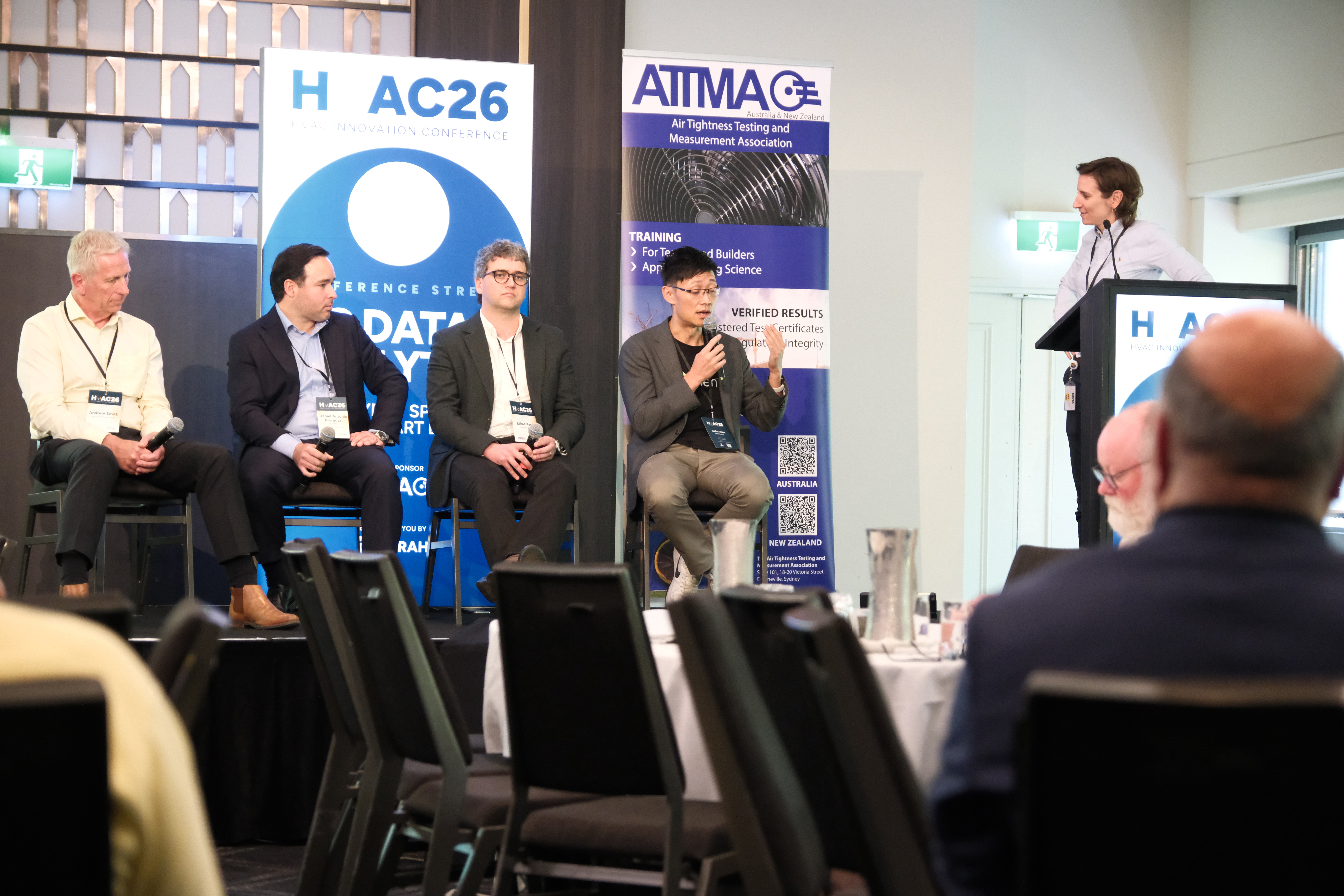
The Big Data and Analytics Forum ran on day two of the conference. It examined how smart data and analytics are transforming the operation and management of buildings. It explores how insights from connected systems can enhance efficiency, sustainability, and occupant experience.
Major themes included the growing maturity of analytics in driving real-world building performance improvements, and the shift from data collection to actionable insights.
“There’s a clear appetite for more collaboration across industry, and for tools that make analytics more accessible to end-users,” says Chris Stamatis, M.AIRAH, associate director of AIRAH’s Big Data and Analytics STG.
“It was great to see so much engagement across different sectors.”
Ready for a recap?
Registered attendees can access recordings of the presentations from Future of HVAC, Building Physics and Big Data and Analytics at the conference website.
Industry support
The 2026 HVAC Innovation Conference was strongly supported by industry.
Major sponsor: ATTMA
Sponsors: A.G. Coombs, TAFE NSW, AMS, CopperTree Analytics, Optergy
Trade display sponsors: Seeley International, Testo, Condair
Supporting partners: Green Building Council of Australia, ASBEC, EEC, AMCA Australia
Education sponsor: AIRAH Professional Development
PREV
NEXT
Comments
Advertisements
Recent news
- Automatic Heating celebrates 100 years in business
- Review of incentives for commercial debarbonisation
- Packed to the rafters
Latest events
- Workshop: lowering heating hot water temperatures in electrification retrofits
- Our sector in the spotlight: takeaways from HVAC26
- IIAR announces dates for online refrigeration workshop
Leave a Reply