 Nick Johns-Wickberg
Recipe for success: implementing ammonia refrigeration
We look at how a clever upgrade has turned the outdated and inefficient system at Arnott’s Biscuits into a blueprint for environmentally friendly industrial refrigeration.
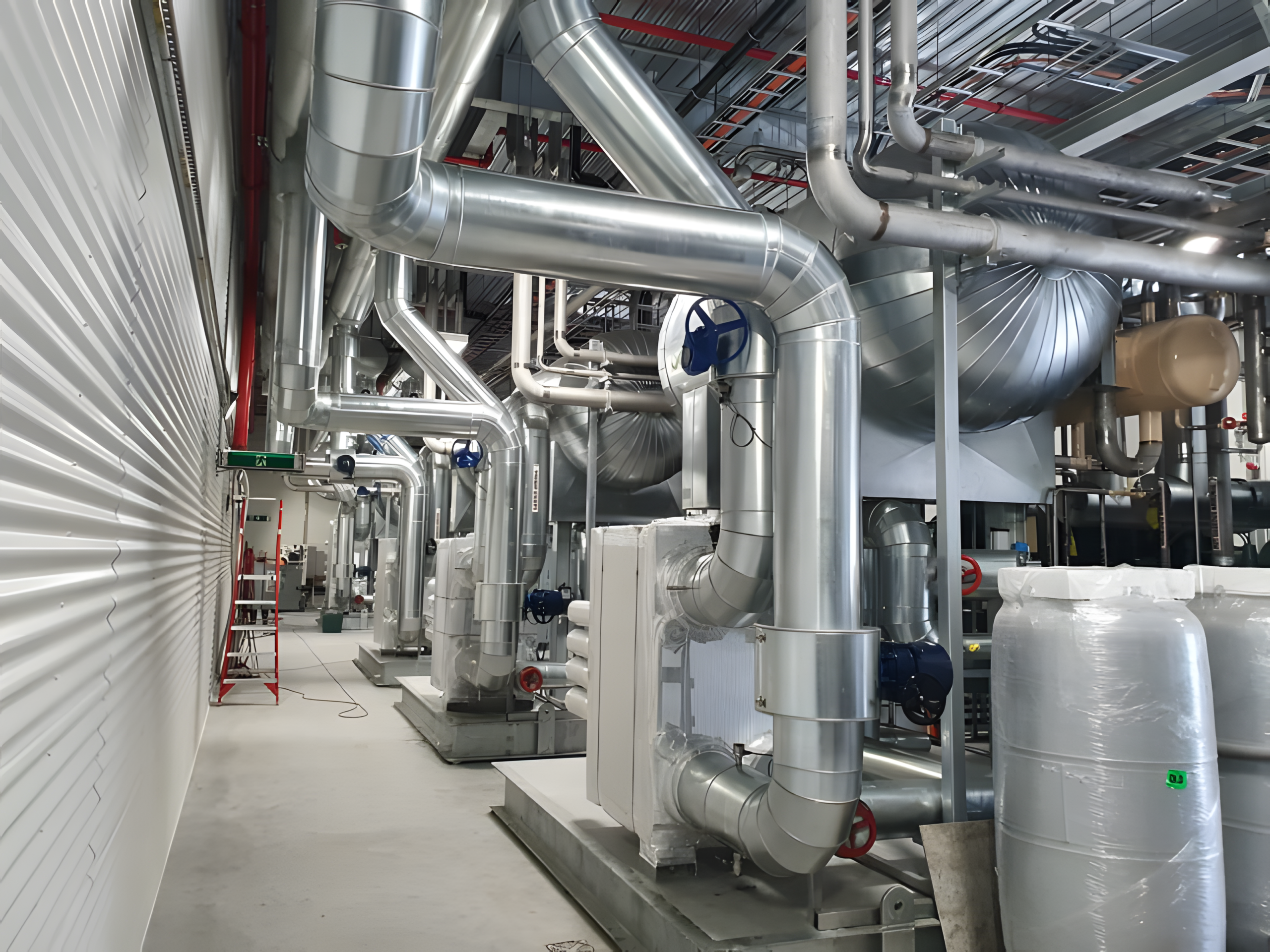
When it was time for iconic Australian brand Arnott’s Biscuits to replace the refrigeration system at its Queensland facility, opting for an innovative, all-natural, low-GWP system might have seemed like risking it for the biscuit. In reality, it was the safest investment the company could make.
Here’s how Arnott’s moved from a system reliant on high-GWP, ozone-depleting refrigerants to a natural alternative that has minimal environmental impact.
Going natural
Realising that its existing system was coming towards end of life, Arnott’s engaged Brisbane-based refrigeration and insulation specialists Advanced Insulation & Fabrications (AISMF) to manage the whole upgrade process, from design and fabrication through to installation. Central to this was replacing the ageing chillers – which use R22 refrigerant – with a high-performance ammonia system.
The project involved constructing a new central plant room to supply cooling across the entire site. This meant providing refrigeration in the factory space, as well as air conditioning in the administrative areas within the building. AISMF replaced the ageing R22 chillers and other equipment that relies on synthetic refrigerant with a system that runs on ammonia – also known as R717 or NO3 – to increase overall cooling capacity and support future growth.
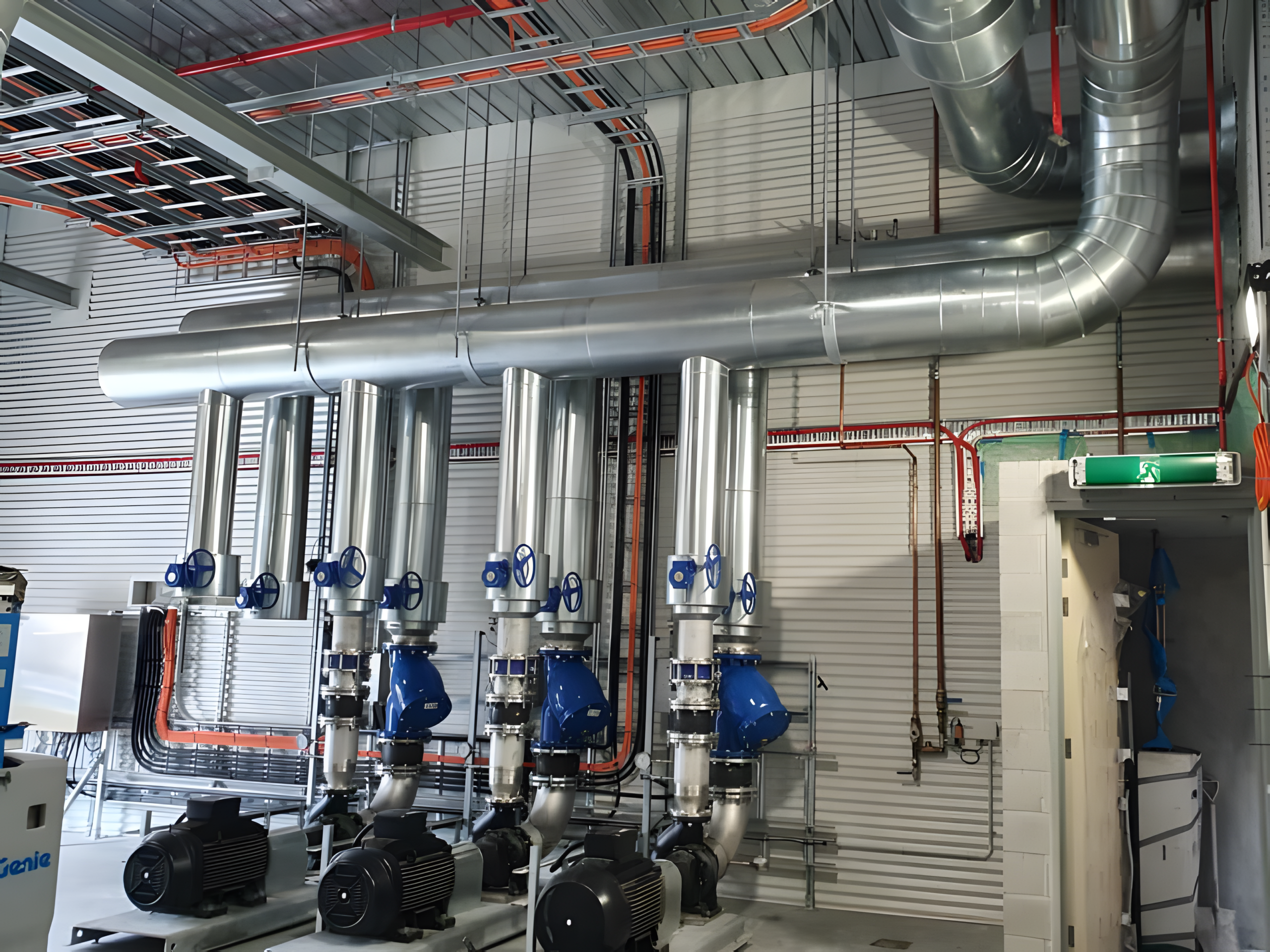
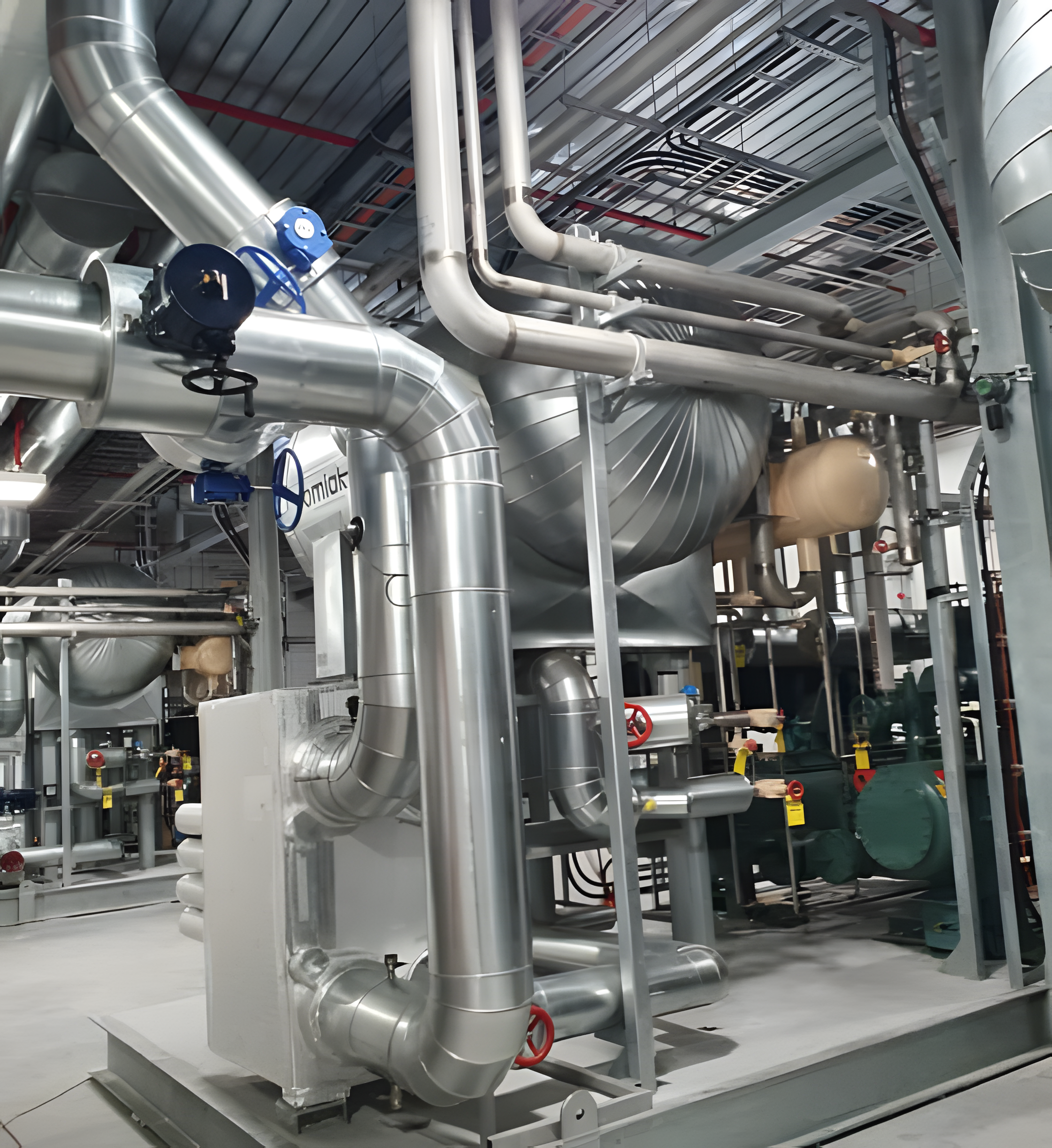
Designed and built to FM Global requirements, the new system delivers 8,000kW of refrigeration across four independent systems, each connected to a common chilled water and glycol reticulation network. The installation features four vessels and more than two kilometres of pipework ranging in size from 20NB to 450NB (nominal bore).
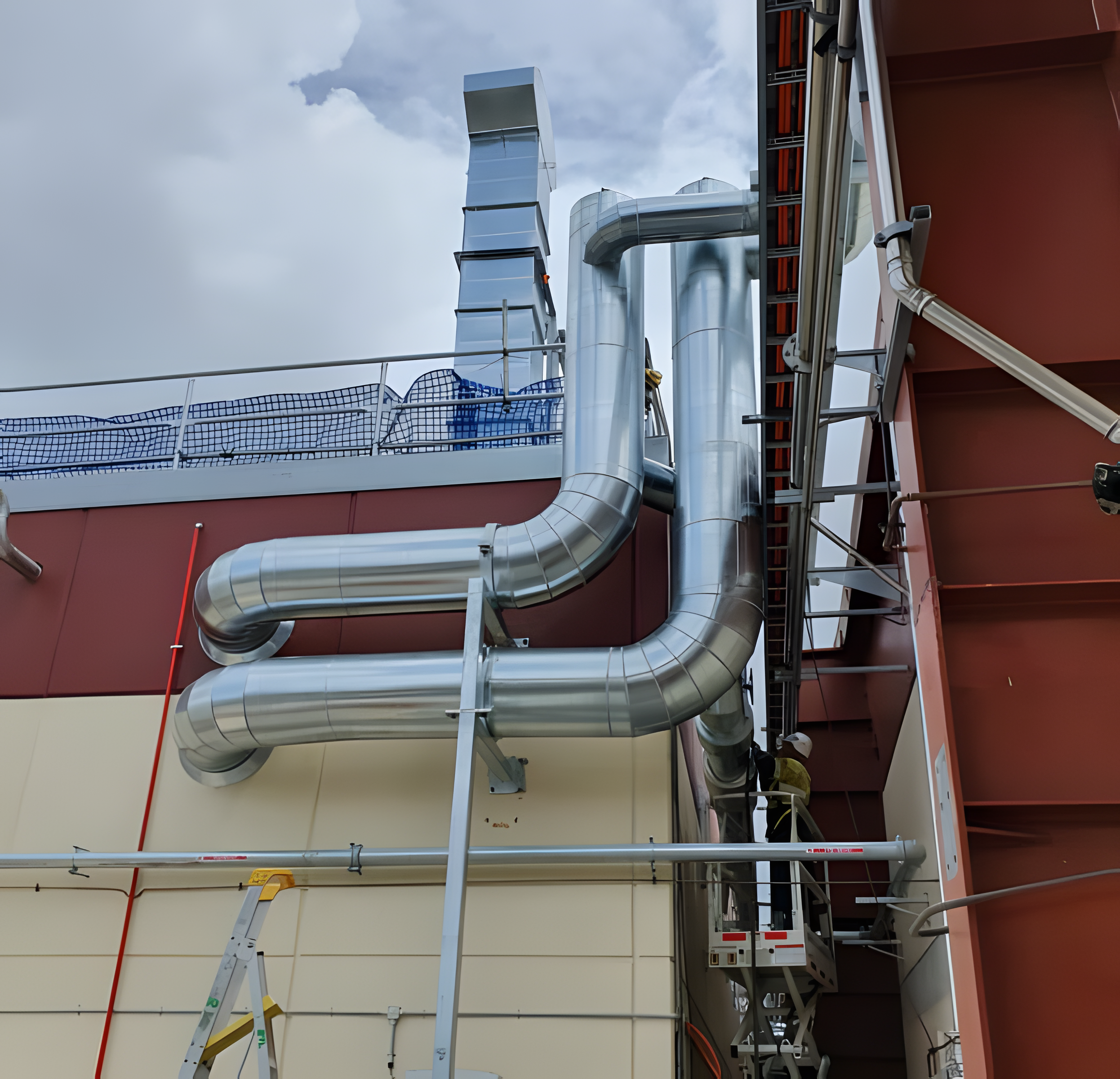
Ammonia refrigerant is safely contained within the plant area, while chilled glycol and water are reticulated throughout the facility to meet all process and air conditioning loads. To maximise insulation and longevity, all internal areas have been metal-sheathed with 304-grade stainless steel and foam-injected, while all external areas use galvanised metal sheathing, also foam-injected for durability.
The problem with R22
After the hole in the ozone layer was discovered in the 1970s and 1980s, governments around the world saw the need to act. In 1987, all United Nations members ratified the Montreal Protocol, under which they agreed to phase out chlorofluorocarbons (CFCs) and hydrochlorofluorocarbons (HCFCs), two of the chemical groups that were found to cause ozone depletion.
R22 is an HCFC with a global warming potential (GWP) of around 1,700 and an ozone depletion potential (ODP) of 0.05. Once common in air conditioning and industrial cooling systems, R22 is now coming towards the end of its phase-out around the world. In Australia, HCFCs such as R22 have been banned in new systems since 2020, and from January 1, 2030, they will no longer be manufactured in or imported into Australia at all.
By replacing the R22 chillers, AISMF says Arnott’s has moved well ahead of this national transition.
“This upgrade represents a significant step forward for large-scale manufacturing refrigeration in Australia,” says AISMF Contracts Manager John Sexton.
Safely managing ammonia
While it’s often talked about among the new generation of natural refrigerants, ammonia has actually been used in refrigeration since the 19th century. It’s a relatively cheap, naturally occurring chemical compound that has both a GWP and ODP of zero, and it has optimal thermodynamic properties for refrigeration, absorbing huge quantities of heat during evaporation. Indeed, industrial ammonia refrigeration systems can be up to 20% more efficient than similar systems using other refrigerants.
On paper, ammonia looks like the ideal refrigerant for industrial settings. So why was it shunned in favour of synthetic alternatives for the best part of a century?
The answer, of course, is safety. Ammonia is toxic to humans: exposure to 300ppm of ammonia in the air is immediately dangerous, while above 500ppm it becomes lethal. And while it’s not classified as a flammable refrigerant, it can be mildly flammable in certain circumstances.
When ammonia was first used as a refrigerant in the 19th century, it was next to impossible to manage these safety risks. Nowadays, clever design, strict regulation and improved technology – including leak detectors and extraction fans – make ammonia a safe and environmentally friendly option in the right settings.
In the Arnott’s facility, AISMF used glycol/water reticulation to distribute cooling throughout the building, meaning the only area of the facility where ammonia is physically present is the central plant room. This greatly reduces the likelihood of human exposure to ammonia in the unlikely event of a fault occurring.
Future-proofed factory
Although ammonia once seemed like a refrigerant of the past, technological and design advances have paved the way for it to become the first-choice refrigerant of the future in many industrial applications. Indeed, both Arnott’s and AISMF see the system overhaul as an investment that will bear fruit over a generation.
“By moving from R22 to natural refrigerant, we’ve not only increased efficiency and reliability but delivered a safer, cleaner, and more sustainable cooling solution built for the next three decades,” Sexton says.
However the cookie crumbles, it seems that this innovative investment will be worth the dough in the long run.
Project at a glance
AISMF was engaged to replace the ageing synthetic refrigerant chillers utilised across the site. The new system serves both factory and administration process cooling and air conditioning loads.
The client’s objectives were to:
- Remove ageing plant, R22 and other synthetic refrigerants from the site
- Increase overall cooling capacity to meet current and future growth
- Use natural refrigerants to meet all cooling loads
- Achieve high levels of system efficiency without impacting operational reliability
- Ensure the safety of site and maintenance staff at all times
- Deliver 30-year plant life expectancy.
This involved implementing a range of measures:
- All external areas metal sheathed with galvanize and foam injected.
- A new central plant room constructed to meet the full site’s cooling requirements
- The refrigeration plant and components designed to FM Global requirements
- 8,000kW of refrigeration across four separate systems connected to a common chilled water and common glycol reticulation system
- Four vessels, with well over 2km of pipework ranging from 20NB to 450NB
- Ammonia refrigerant limited to the plant area with chilled glycol/water reticulated to all cooling loads throughout the facility
- All internal areas metal sheathed with 304 grade stainless steel and foam injected.
All images courtesy of AISMF and Arnott’s Biscuits
PREV
NEXT
Comments
Advertisements


Recent news
- Conex Banninger and Reese launch enhanced fitting range
- Recipe for success: implementing ammonia refrigeration
- Updates to NABERS embodied carbon
Latest events
- The path ahead for the VEU – industry webinars
- Additional keynote announced for HVAC26
- PSO to host focus groups at AIRAH Hobart Industry Night
Leave a Reply